
Last updated: May 31, 2026
A mid-year bookkeeping review allows you to identify errors and reconcile accounts before the high-pressure year-end tax season begins. This guide is for small business owners and startups who want to clean up their financial records and ensure their books are accurate for the second half of the year.
Most entrepreneurs focus on growth while letting daily financial tasks slide. By the time June or July rolls around, minor inconsistencies have often snowballed into significant data gaps. A professional bookkeeping cleanup at this stage prevents these errors from becoming permanent or expensive.
What is a mid-year bookkeeping review?
A mid-year bookkeeping review is a systematic check of all financial transactions from January 1st through June 30th. This process ensures that every dollar in and out of your business is accounted for, categorized correctly, and reconciled against your bank statements.
Performing this review now gives you six months of clean data to use for forecasting and budgeting. It also ensures that your bookkeeping cleanup service is proactive rather than reactive. If you wait until January to look at your June transactions, you are much more likely to forget details or lose receipts.
Mistake 1: Leaving bank accounts unreconciled
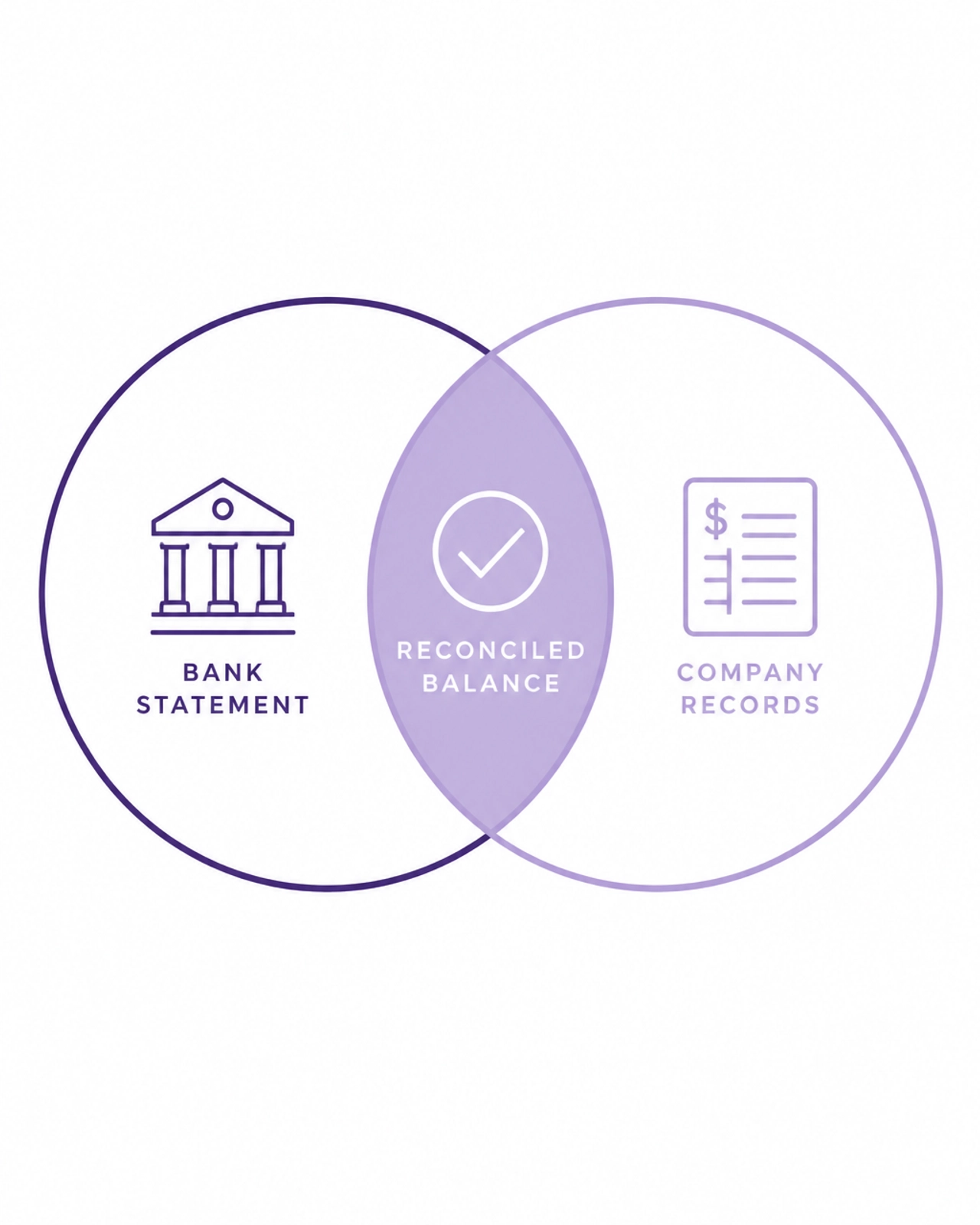
Reconciliation is the process of matching your internal accounting records (like QuickBooks or Xero) with your actual bank and credit card statements. Many business owners assume that because their bank feeds are connected, the data is automatically correct. This is a common misconception.
Bank feeds can skip transactions, create duplicates, or fail to account for bank fees and interest. If you haven't reconciled your accounts since January, your "Cash" balance on your balance sheet is likely incorrect.
How to fix it:
Download your bank statements for every month of the year so far. In your accounting software, use the reconciliation tool to match the ending balance of each statement. Investigate any discrepancies immediately. If you see transactions in your software that do not appear on your statement, they may be duplicates that need to be deleted.
Mistake 2: Mixing business and personal expenses
Commingling funds is one of the most frequent errors for first-time business owners and solo entrepreneurs. Using a business card for a personal grocery trip or a personal card for a business software subscription creates a "messy" trail.
This mistake makes it difficult to track the true profitability of your business. It also creates a massive headache for your CPA during tax season.
How to fix it:
If you have paid for business items with personal funds, record them as an "Owner's Contribution" rather than an expense. If you used business funds for personal items, categorize them as an "Owner's Draw." Moving forward, commit to a strict separation of accounts. If you don't have a dedicated business credit card yet, now is the time to open one.
Mistake 3: Overusing "Miscellaneous" and "Uncategorized" accounts
When you aren't sure where a transaction belongs, it’s tempting to put it in a "Miscellaneous" or "Uncategorized Expense" bucket. While this keeps the books "moving," it renders your financial reports useless.
A Profit and Loss statement with 15% of expenses sitting in "Miscellaneous" does not tell you where your money is actually going. This lack of clarity prevents you from making informed decisions about cutting costs or reinvesting.
How to fix it:
Review every transaction currently sitting in an uncategorized account. Check the vendor name and the amount. Most of the time, a quick search of your email or calendar will remind you what the purchase was for. Reassign these to the correct account in your Chart of Accounts.
Mistake 4: Missing contractor W-9 forms
If you work with freelancers or contractors and pay them more than $600 in a calendar year, you are generally required to file a Form 1099-NEC. To do this, you need their legal name, address, and Taxpayer Identification Number (TIN).
Waiting until January to ask a contractor for a W-9 is a recipe for stress. Contractors may have moved, changed their business structure, or become unresponsive.
How to fix it:
Run a report of all vendors you have paid this year. Identify any individuals or LLCs that are not corporations. If you do not have a W-9 on file for them, send a request today. Many modern tools like QuickBooks Online have built-in features to request these digitally.
Mistake 5: Not reviewing your accounts receivable (AR)
Revenue is not the same as cash in the bank. If you have sent out invoices but haven't followed up on them, your books might show you are "profitable" while your bank account is empty.
Mid-year is the perfect time to look at your Aging AR report. This report shows you exactly who owes you money and how long those payments have been overdue.
How to fix it:
Run an "Accounts Receivable Aging Summary" report. For any invoices older than 30 days, send a friendly reminder. For anything older than 90 days, a phone call is usually necessary. If you realize an invoice will never be paid, you may need to write it off as bad debt to keep your records accurate.

Mistake 6: Filing sales tax incorrectly
Sales tax rules are complex and vary by state. Many LA-based businesses struggle with tracking taxable vs. non-taxable sales, especially if they sell products online. Failing to set aside sales tax funds is a common mistake that leads to a cash flow crunch when the filing deadline arrives.
How to fix it:
Confirm that your accounting software is correctly calculating sales tax based on your customers' locations. Reconcile your "Sales Tax Payable" account on your balance sheet against the reports from your POS or e-commerce system. Ensure all previous filings have been submitted and paid.
Mistake 7: Waiting until December for a bookkeeping cleanup
The biggest mistake is simply waiting. Many business owners tell themselves they will "fix it later." By December, you are busy with holiday sales, staff parties, and planning for the new year. Attempting a six-month or twelve-month cleanup in a single week often leads to more errors and higher fees from professionals who are already at capacity.
How to fix it:
Start your mid-year bookkeeping review this week. Even if you only spend 30 minutes a day on it, you will have a much clearer picture of your business by the end of the month.
What does professional bookkeeping cleanup cost?
For most small service-based businesses in 2026, a professional cleanup typically ranges from $1,200 to $6,000 depending on the complexity and how many months are behind. This is a one-time investment that often pays for itself by uncovering missed tax deductions and preventing late-payment penalties. You can view our pricing and packages to see how we structure our services.
Want us to handle this?
If your books are messy and you’d rather focus on your business, we can help. Book a short call with our team to discuss a cleanup plan.
Your Mid-Year Bookkeeping Checklist
- Reconcile all accounts: Bank, credit cards, and loans.
- Clear uncategorized items: Assign every transaction to a real category.
- Review W-9s: Ensure you have forms for all contractors.
- Clean up your AR: Follow up on every unpaid invoice.
- Separate funds: Fix any personal expenses paid by the business.
- Verify sales tax: Ensure your settings and filings are accurate.
- Run financial statements: Review your P&L and Balance Sheet for the first half of the year.
About the Author
Books LA is a specialized bookkeeping firm based in Los Angeles, California. Led by Jelena Arkula, our team is certified in QuickBooks Online and Xero. We focus on helping LA-based startups and small businesses maintain clean, accurate, and paperless financial systems.
Disclaimer: Books LA does not provide income tax advice. We work closely with CPAs for income tax matters. You should always confirm tax-related decisions with your CPA.
Frequently Asked Questions
What is the difference between a mid-year review and a cleanup?
A mid-year review is a standard check-up for businesses that are already keeping up with their books. A bookkeeping cleanup is a more intensive project designed to fix months or years of errors, missing data, and unreconciled accounts.
How long does a bookkeeping cleanup take?
Most cleanup projects take between two and four weeks depending on the volume of transactions and the complexity of the errors. Larger projects involving multiple years can take longer.
Can I do the cleanup myself?
You can certainly attempt it using the checklist provided above. However, if your accounts haven't been reconciled in months or you have significant commingling of funds, a professional can often spot errors you might miss.
What do I need to provide for a cleanup?
Generally, you will need to provide access to your accounting software and your bank/credit card statements in PDF format. You may also need to provide payroll reports and sales tax filings.
Why shouldn't I just wait until tax season?
Waiting until tax season is more expensive because accountants are busier and have less time for deep cleanup work. Additionally, cleaning your books now gives you data you can actually use to grow your business for the rest of the year.
Does Books LA work with my existing CPA?
Yes. We focus on the day-to-day and monthly bookkeeping accuracy so that your CPA has a clean "trial balance" to work with at the end of the year. This often saves you money on your tax preparation fees.
Is cloud-based bookkeeping secure?
We use industry-standard tools like QuickBooks Online and Xero, which utilize high-level encryption. We also provide secure client portals for document sharing to ensure your financial data remains private.
How much does ongoing bookkeeping cost after the cleanup?
Ongoing monthly bookkeeping usually starts around $300 to $500 per month for small businesses and scales based on transaction volume and specific needs like accounts payable or payroll management.