

Last updated: May 31, 2026
AI for bookkeeping automates repetitive data entry and bank reconciliation in tools like QuickBooks Online and Xero, but it cannot handle complex financial strategy or deep cleanup of messy records. This guide is for startup founders who want to know how to leverage AI without sacrificing the accuracy needed for tax compliance and investor reporting.
What does AI for bookkeeping look like in 2026?
Bookkeeping has moved beyond manual data entry. In 2026, tools like QuickBooks Online (QBO) and Xero have integrated artificial intelligence directly into the core of their software. This transition means that the "accounting brain" is no longer just a passive ledger but an active participant in your business.
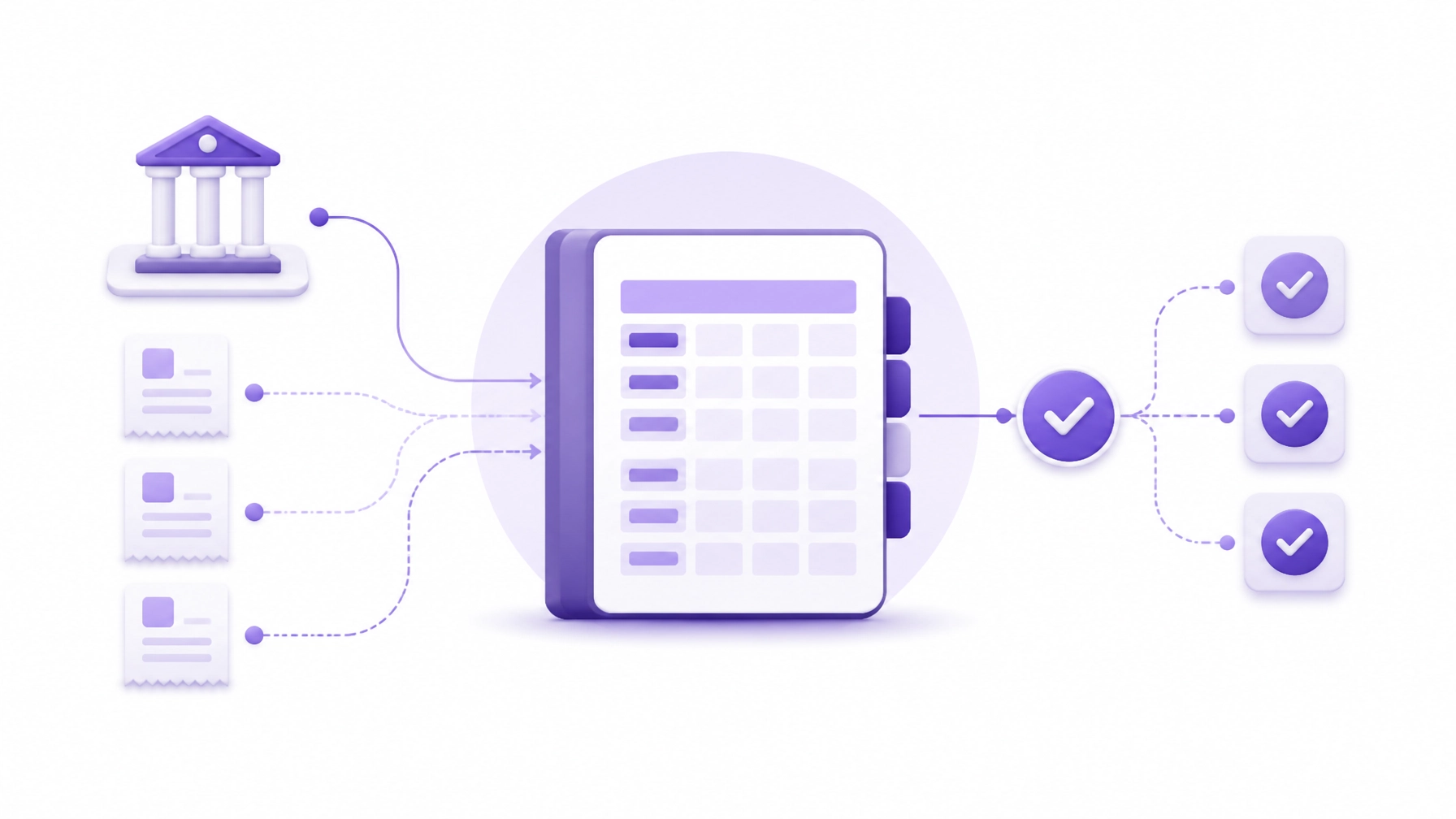
For a startup, AI for bookkeeping manifests in several ways. The most prominent is the automated bank feed. Instead of typing in every transaction from a paper receipt, the software pulls data directly from your bank and credit card accounts. The AI then looks at historical patterns and suggests a category for that expense. For example, if it sees a charge from Amazon Web Services, it knows to suggest "Web Hosting" or "Software Subscriptions" based on how you categorized it last month.
Another major advancement is the rise of AI agents. QuickBooks recently introduced its Accounting Agent, which acts as a digital assistant. You can ask it questions like "What was my burn rate in April?" or "How many transactions are still waiting to be reconciled?" This reduces the barrier to entry for founders who may not have a background in finance but need to keep their finger on the pulse of their company cash flow.
How does AI help with startup bookkeeping?
Efficiency is the primary driver for using AI in startup bookkeeping. When you are in the early stages of a company, your time is your most valuable asset. Spending four hours a month wrestling with a spreadsheet is a poor use of founder resources.
AI helps by:
- Reducing manual errors: Humans make typos. AI does not. By pulling data directly from source documents and bank feeds, the risk of transposition errors is significantly reduced.
- Speeding up the month end close: Automation allows for real time reconciliation. Instead of waiting until the end of the month to see your P&L, you can often see an accurate snapshot within 24 hours of a transaction occurring.
- Cost savings at scale: While the subscription prices for QBO and Xero have risen to fund these AI developments, the labor cost often stays lower because a bookkeeper can manage more data in less time.
- Pattern recognition: AI is excellent at spotting anomalies. If a recurring subscription suddenly doubles in price, an AI assistant can flag it for review before you even notice the change in your bank balance.
Where does AI still fall short for startups?
Despite the hype, AI is not a replacement for a human professional. There are several critical areas where automation fails, often leading to "messy books" that require expensive professional cleanup later.
One major limitation is complex revenue recognition. If your startup is a SaaS company with annual contracts paid upfront, AI often struggles to defer that revenue correctly over twelve months. It sees a large deposit and wants to count it all as income today. Without a human to set up the proper accrual logic, your financial statements will mislead you and your investors.
Equity and debt are also major pitfalls. AI does not understand the nuances of a SAFE (Simple Agreement for Future Equity) or a convertible note. If you receive a $500,000 investment, the AI might suggest it as "Other Income" rather than a liability or equity account. This error can lead to a massive tax headache if not caught immediately.
Finally, AI cannot provide strategic advice. A piece of software can tell you that you spent $10,000 on marketing last month, but it cannot tell you if that was a good investment based on your current customer acquisition cost (CAC) goals. It cannot help you prepare for a Series A round or explain why your gross margin is slipping compared to industry benchmarks.
If you have realized your automated system has created a mess, our bookkeeping cleanup service can help you get back on track before your next board meeting or tax deadline.
Should you use QuickBooks Online or Xero for AI automation?
Choosing between the two giants often comes down to your specific business model and where you are located. Both have leaned heavily into automation, but their approaches differ slightly.
| Feature | QuickBooks Online (QBO) | Xero |
|---|---|---|
| Primary AI Tool | QuickBooks Accounting Agent | Xero Analytics & Hubdoc |
| Best For | US-based startups, high feature depth | International teams, clean UI |
| Pricing (Approx.) | $115/month (Plus) | $90/month (Established) |
| User Access | Limited per plan | Unlimited users |
| Integration | 750+ Apps | 1,000+ Apps |
QuickBooks is generally considered the powerhouse for US startups. Its AI assistant is deeply integrated, helping with everything from finding tax deductions to predicting cash flow. However, the price has seen significant increases as of May 2026.
Xero is often favored by founders who appreciate a cleaner, more intuitive user interface. Its AI is less "assistant" focused and more "workflow" focused. It excels at automating the flow of documents via Hubdoc, making it easy to capture receipts and bills with high accuracy.
What is the cost of AI bookkeeping vs human pros?
There is a common misconception that AI makes bookkeeping free. In reality, you are trading labor costs for software costs. As of mid-2026, a high level QBO subscription for a growing startup can cost over $1,300 per year.
When you hire a professional firm like Books LA, you aren't just paying for data entry. You are paying for the oversight that prevents the AI from making expensive mistakes. A typical startup might spend $400 to $800 a month for professional bookkeeping. While this is higher than a software subscription alone, the value comes from the "investor ready" state of your books.
If the AI mis-categorizes $50,000 of equipment as an expense instead of an asset, your tax return will be wrong. The cost of a CPA to fix that error during tax season often exceeds the cost of having a professional bookkeeper maintain the accounts correctly throughout the year.

How to combine AI with a professional bookkeeper
The most successful startups use a hybrid approach. They lean on the AI in QBO or Xero to handle the daily "grunt work" like fetching bank transactions and matching receipts. Then, they bring in a professional bookkeeper to handle the high level tasks.
A professional bookkeeper will:
- Set up the foundation: AI only works if the Chart of Accounts is designed correctly for your specific industry.
- Review for accuracy: A human pro will perform a monthly close process, ensuring that every balance on the balance sheet matches reality.
- Handle exceptions: When the bank feed breaks or a strange transaction occurs, a pro knows how to fix it without creating "duplicate" entries.
- Coordinate with your CPA: We work directly with CPAs to ensure your books are ready for income tax preparation, saving you from being the middleman in technical financial conversations.
Ready to see how a professional touch can transform your startup finances? You can request a bookkeeping review to see where your current automated setup might be falling short.
Summary of next steps for founders
If you are currently relying 100% on AI for your startup bookkeeping, your first step should be a quick audit. Look at your Balance Sheet. If you see accounts with names like "Uncategorized Asset" or "Opening Balance Equity," your AI has failed you.
Don't wait until tax season or a due diligence request from an investor to fix these issues. Set up your bank rules carefully, but always have a human eye review the results once a month.

About the Author: Jelena Arkula
Jelena is the founder of Books LA, a boutique bookkeeping firm based in Los Angeles. She is a Certified QuickBooks ProAdvisor and Xero Partner with more than 20 years of bookkeeping experience and 10 years in banking, helping startups and small businesses clean up their books and scale their financial operations. Books LA specializes in paperless, cloud based workflows that give founders the clarity they need to grow.
FAQ
Is AI bookkeeping accurate enough for taxes?
Not on its own. AI frequently mis-categorizes transactions, which can lead to incorrect tax filings. You should always have a professional review your books before submitting them to a CPA for tax preparation.
Does AI replace the need for a bookkeeper?
No. AI replaces the data entry portion of bookkeeping. You still need a professional for strategic setup, complex transactions, and quality control.
How much does AI bookkeeping software cost in 2026?
QuickBooks Online Plus is approximately $115 per month, and Xero Established is around $90 per month. Prices vary based on the specific features and user counts your startup requires.
Can AI handle my startup payroll?
AI can automate the calculations and filings, but it cannot manage the human elements like employee classification or state specific nexus issues without professional guidance.
What happens if the AI makes a mistake in my books?
You are ultimately responsible for the accuracy of your financial statements. Mistakes left uncorrected can lead to IRS penalties or issues during investor due diligence.
Is Xero or QuickBooks better for AI automation?
QuickBooks currently has a more centralized AI assistant (Accounting Agent), while Xero focuses on a broad ecosystem of automated app integrations. Both are excellent choices if managed by a professional.
What is a "cleanup" and why do I need it?
A cleanup is the process of fixing past errors in your books, such as unreconciled accounts or mis-categorized expenses. It ensures your historical data is accurate and reliable for future planning.
Does Books LA provide income tax advice?
No. Books LA does not provide income tax advice. We focus on day to day bookkeeping and financial management. We work closely with CPAs who handle the final tax filings for our clients.
How long does it take to set up an automated bookkeeping system?
A basic setup can be done in a few hours, but tailoring it to a startup's specific needs (like job costing or revenue recognition) typically takes a few weeks of monitoring and refining bank rules.
Can I switch from QuickBooks to Xero easily?
While migration tools exist, they are rarely perfect. Switching usually requires a professional to ensure that all historical data and AI learning patterns are transferred correctly without data loss.
Disclaimer: Books LA does not provide income tax advice. We work with CPAs for income tax matters. Readers should confirm all tax filing requirements and professional advice with their own CPA.