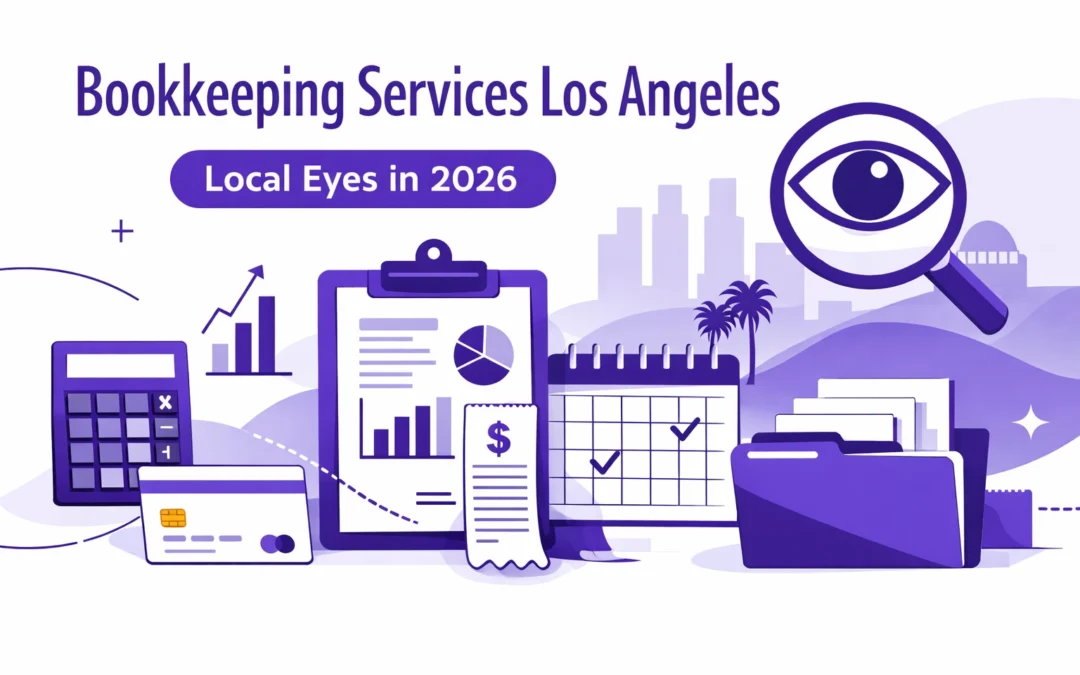
Bookkeeping Services Los Angeles: Why Your Small Business Needs Local Eyes in 2026

Bookkeeping Services Los Angeles: Why Your Small Business Needs Local Eyes in 2026

Last updated: March 6, 2026

Fast Answer: Hiring local bookkeeping services in Los Angeles provides your business with a partner who understands city-specific regulations like the City of LA Business Tax and local payroll nuances. This guide explains why local expertise beats generic national platforms and how a specialized LA bookkeeper can protect your cash flow this year.

Running a small business in Los Angeles involves navigating a unique set of challenges that remote, one-size-fits-all accounting firms often miss. Because the city has its own specific filing requirements and economic pace, having a professional who knows the local landscape is a massive advantage. We see many business owners struggle with "California-sized" headaches that could have been avoided with a simple, local check-in.

Specifically, we are going to dive into the exact reasons why proximity matters in 2026. You will learn about the local tax traps to avoid, the benefits of personalized service, and how to vet a bookkeeper los angeles residents actually trust. Whether you are a creative agency in Silver Lake or a tech startup in Santa Monica, your books deserve a local perspective.


About the Author

Jelena Arkula is the owner of Books LA, a boutique bookkeeping firm based right here in Los Angeles. She and her team specialize in QuickBooks Online (QBO) and Xero, providing clear financial paths for service-based businesses and creative entrepreneurs. Since we are local, we understand the hustle of the LA market and the specific rules that keep our city running.

Disclaimer: We are bookkeepers, not CPAs. We do not provide income tax advice or file federal/state income tax returns. We focus on daily operations, sales tax, and payroll. Always consult with your CPA for income tax matters.


Why are local bookkeeping services in Los Angeles different?

Most people think bookkeeping is just about data entry, but in Southern California, it is about compliance with a complex web of local rules. For example, the City of Los Angeles requires a Business Tax Registration Certificate (BTRC) and annual renewals based on gross receipts. If your bookkeeper is located in another state, they might completely overlook these city-level requirements.

Consequently, you could end up with surprise penalties or late fees that drain your bank account. A local bookkeeping services los angeles provider knows exactly when these deadlines hit. They understand that doing business in Santa Monica is different from doing business in Unincorporated LA County. Since we live here, we see the local tax changes as they happen, not six months too late.

Furthermore, local bookkeepers often have established relationships with local CPAs. This means that when tax season rolls around, the handoff of your clean books is seamless. Because we speak the same language as your local tax professional, your year-end filing becomes a stress-free experience rather than a frantic scavenger hunt for receipts.
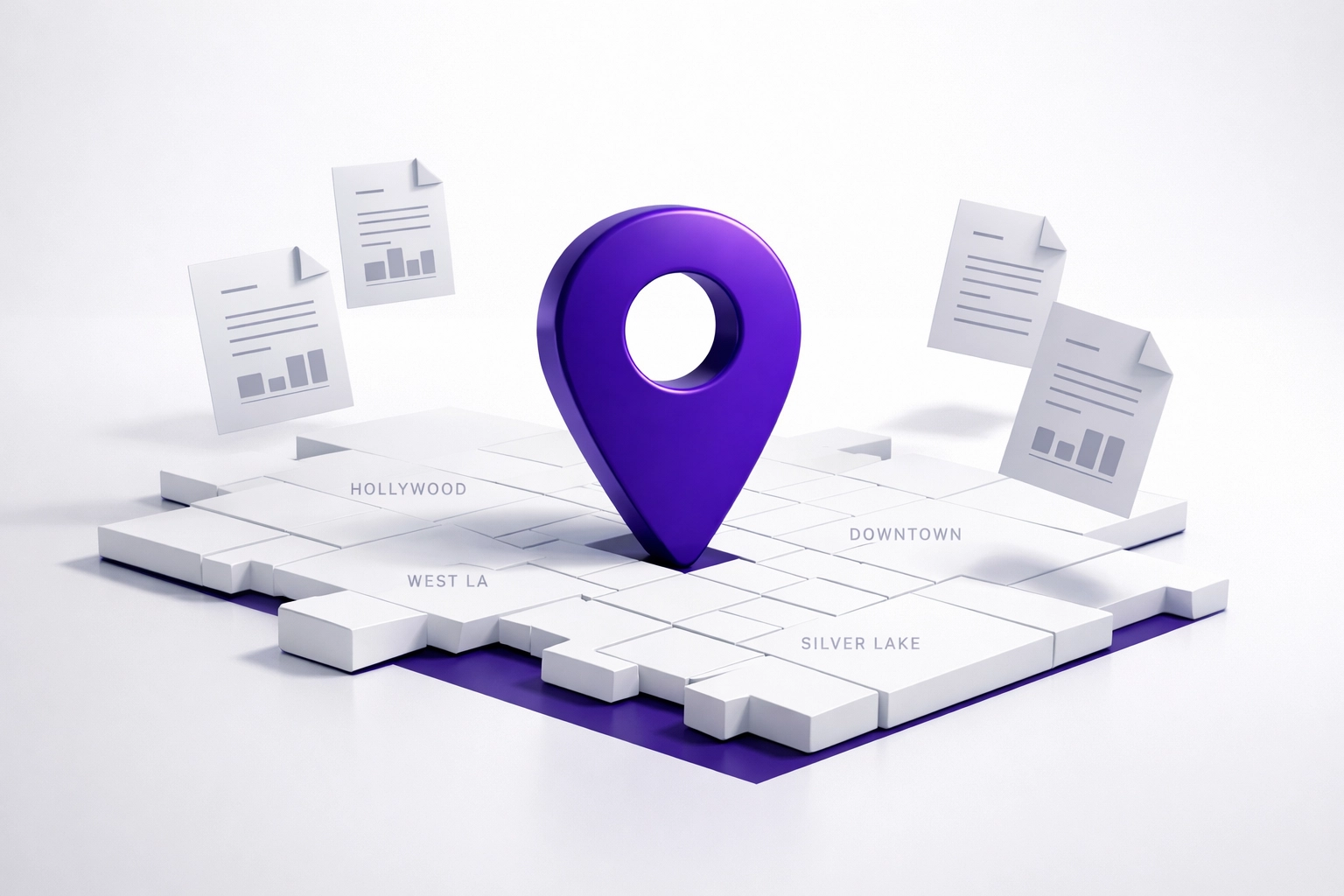
Purple location pin over an LA map representing local bookkeeping services and tax compliance.

What specific LA taxes should my bookkeeper handle?

While your CPA handles the big income tax return, your daily bookkeeper keeps the wheels turning on local compliance. In Los Angeles, this usually starts with the Gross Receipts Tax. This tax is notoriously confusing because the rates vary depending on your business category. If your transactions are not categorized correctly from day one, you might overpay or trigger an audit.

Additionally, many LA businesses deal with specialized payroll requirements. The City of Los Angeles has its own minimum wage escalations and sick leave ordinances that often differ from federal or even state levels. Because of this, having a bookkeeper los angeles expert ensures your payroll platform is configured correctly for our specific zip codes.

Specifically, we focus on:

  • City of LA Business Tax (BTRC) renewals.
  • California Sales and Use Tax filings.
  • Local payroll compliance and minimum wage tracking.
  • County property tax statements (Form 571-L).

By managing these details monthly, we prevent the "mountain of paperwork" that usually accumulates at the end of the year. You can see more about how we structure these tasks on our services page.

How much does a bookkeeper in Los Angeles cost in 2026?

Pricing for bookkeeping services in a high-cost area like Los Angeles generally reflects the level of expertise and the complexity of the local market. Most local firms have moved away from hourly billing in favor of fixed monthly packages. This shift is beneficial for you because it makes your professional fees predictable.

Typically, you can expect to pay anywhere from $500 to $2,500 per month depending on your transaction volume and the number of accounts. For instance, a small consulting firm might be on the lower end, while a busy interior design firm with high inventory and project tracking would be higher. Since every business is different, we always recommend a discovery call to get an accurate quote.

However, you should be wary of prices that seem too good to be true. If a service is charging $99 a month, they are likely offshore or using automated software that does not account for the nuances of your specific LA business. Investing in quality bookkeeping is actually a cost-saving measure in the long run. Proper categorization can save you thousands in CPA fees because they won't have to "clean up" your books before filing.

A professional purple calculator and growth chart showing the value of a bookkeeper in Los Angeles.

What is the process for onboarding with a local firm?

Starting with a new bookkeeper should feel like a relief, not a chore. Initially, we perform a deep-dive review of your existing QuickBooks or Xero files. This allows us to see where the "skeletons" are buried and what needs immediate attention. If your books are a mess, we start with a cleanup phase to get everything back to zero.

Next, we establish a communication rhythm. Even though we are local, most of our daily work happens digitally for efficiency. We use secure portals to share documents and bank feeds to pull data automatically. Specifically, this means you spend less time scanning paper and more time running your business.

Finally, we set up a monthly reporting schedule. Every month, you will receive a Profit & Loss statement and a Balance Sheet that actually make sense. Because we are in the same time zone, we are available for a quick chat if you have questions about a specific expense or a sudden dip in cash flow.


Want a local expert to look at your books?

If you are tired of wondering if your books are actually correct, let’s chat. We help LA business owners get clear on their numbers so they can grow with confidence.
Book a quick review call with Books LA here


How does local bookkeeping improve your cash flow?

Cash flow is the heartbeat of any business, especially in an expensive city like Los Angeles. A local bookkeeper helps you monitor "burn rates" and ensures your accounts receivable aren't lagging. When you know exactly who owes you money and when your bills are due, you can make smarter decisions about hiring or expanding.

Moreover, we help you identify local trends. For example, if we notice that shipping costs are rising across our client base in Southern California, we can alert you to adjust your pricing early. This proactive approach is something you rarely get from a "faceless" national bookkeeping platform.

Specifically, we look for:

  • Duplicate subscriptions you forgot to cancel.
  • Unusually high merchant processing fees.
  • Slow-paying clients that need a nudge.
  • Tax savings through proper expense categorization.
Upward financial arrow and bank card illustrating healthy cash flow for Los Angeles small businesses.

Is virtual bookkeeping better than in-person?

In 2026, the best "local" bookkeeping is actually a hybrid model. While we use the latest cloud technology like QuickBooks Online to keep things fast, being in the same city means we can meet if a major strategy shift is needed. This gives you the best of both worlds: the speed of a digital firm and the trust of a local partner.

Therefore, you don't have to worry about mailing physical checks or dropping off shoe boxes of receipts. We use tools that integrate directly with your bank and your point-of-sale systems. Because we are experts in these tools, we can troubleshoot software issues that might baffle a non-local generalist. Check out our add-ons and apps page to see the tech stack we love.

Ultimately, the goal is to get the bookkeeping off your plate entirely. You didn't start your business to spend your Friday nights reconciling bank statements. By partnering with a bookkeeper los angeles team, you reclaim your time and gain the peace of mind that only comes from professional oversight.
Digital cloud and business folder representing efficient virtual bookkeeping services in Los Angeles.

Common bookkeeping mistakes LA owners make

One of the biggest mistakes we see is co-mingling personal and business expenses. This is a nightmare during an audit and makes it impossible to see your true profit. Because Los Angeles has a high cost of living, it is tempting to "just use the business card" for a personal dinner, but this creates a massive mess in your ledger.

Another mistake is ignoring the City of LA Business Tax until it is too late. The penalties for late filing can be steep, and the city is very active in its enforcement. If you haven't renewed your BTRC by the February deadline, you are already behind.

Specifically, many owners also fail to reconcile their accounts monthly. They look at their bank balance and think they are fine, but they aren't accounting for uncleared checks or upcoming tax payments. This "bank balance accounting" is a recipe for a cash flow crisis.


FAQ: Everything You Need to Know About LA Bookkeeping

Why can't I just use a cheap online bookkeeping service?

Cheap services often use automated algorithms that miss context. They won't know that your "Amazon" purchase was a specific piece of equipment for a project in West Hollywood that needs to be tracked separately. Local eyes catch those nuances.

What documents do I need to provide to get started?

Initially, we need access to your accounting software, bank statements, and any existing tax filings. We use a secure portal for this, so you never have to worry about your data's safety.

Do you handle my income tax returns?

No, we do not file income tax returns. We provide clean, audit-ready books to your CPA, which usually saves you a significant amount of money on their hourly billing.

Is there a long-term contract?

We typically work on a month-to-month basis because we believe our value should keep you with us, not a legal document. However, we do ask for a 30-day notice if you ever decide to move on.

Can you fix my books if they are a mess from last year?

Yes, we specialize in "catch-up" and cleanup projects. We can go back through 2025 or earlier to ensure your records are accurate for your CPA.

How often will we communicate?

We provide monthly reports and are available for email or phone support during business hours. You will never be left wondering about the status of your books.

Do you work with my specific industry?

We focus on service-based businesses, creative agencies, and startups. If your business is in Los Angeles and you use (or want to use) QuickBooks or Xero, we are likely a great fit.


Ready for a cleaner financial future?

Stop stressing over your spreadsheets and start focusing on your vision. Our team at Books LA is ready to help you master your numbers in 2026.
Contact us today for a custom quote
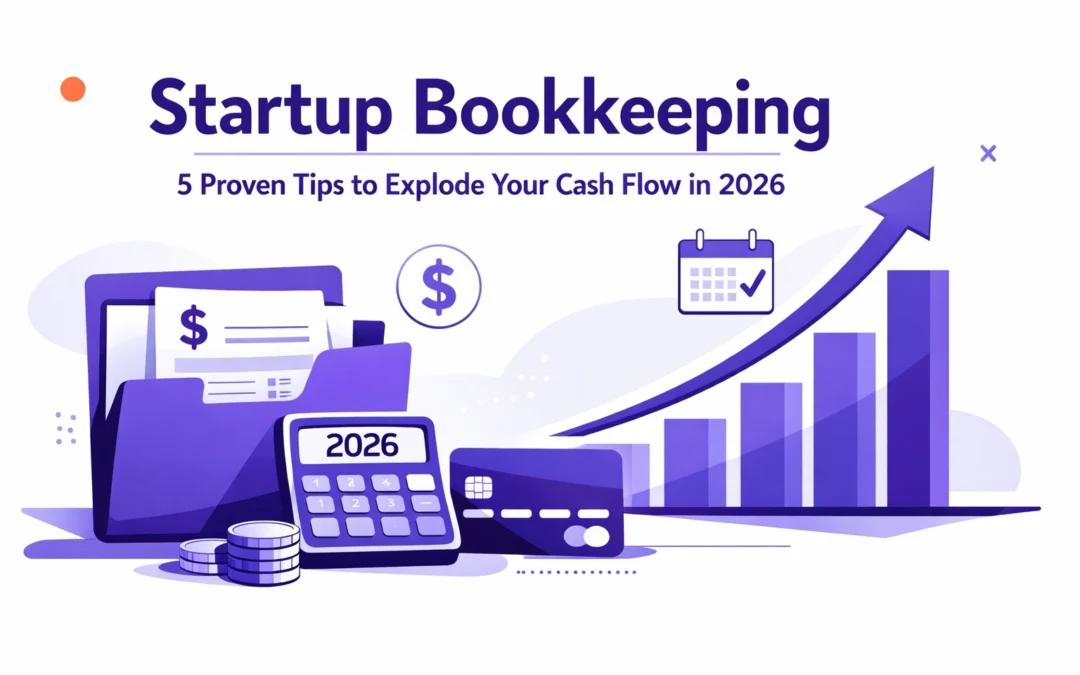

Startup Bookkeeping: 5 Proven Tips to Explode Your Cash Flow in 2026

Startup Bookkeeping: 5 Proven Tips to Explode Your Cash Flow in 2026

Last updated: March 6, 2026

Startup bookkeeping drives cash flow by automating the gap between spending and earning, ensuring you never run out of runway unexpectedly. This guide is for founders who want to stop guessing about their bank balance and start scaling with data-backed confidence in 2026.

Running a startup in 2026 feels a lot like flying a plane while building the engines. You have a million things on your mind, from product-market fit to hiring your first ten employees. However, the one thing that can grounded your flight faster than a bad pitch is a lack of cash. Most founders think bookkeeping is just for tax season. In reality, proper startup bookkeeping is your most powerful tool for maintaining a healthy cash flow and staying alive long enough to win.

What is the most common mistake in startup bookkeeping?

The biggest mistake we see at Books LA is the "shoebox method" or, more accurately for 2026, the "digital junk drawer" approach. This happens when you mix your personal life with your business expenses. It might seem easier to use your personal card for a quick software subscription, but this creates a nightmare for your future self.

When you mix funds, you lose the ability to see exactly where your money is going. Consequently, you cannot accurately calculate your burn rate. If you cannot calculate your burn rate, you cannot tell an investor when you will need more capital. Therefore, the very first step to exploding your cash flow is creating a total separation of church and state.

You need a dedicated business bank account and a business credit card from day one. This simple move creates a clean audit trail and ensures every dollar spent is categorized correctly from the start. If you are already in a mess, you might need a bookkeeping cleanup service to untangle the web before you can move forward.

Minimalist spheres representing the separation of personal and business finances for startup bookkeeping.

Which software should you use for startup bookkeeping in 2026?

Choosing the right platform is critical for automation and accuracy. While there are many options, QuickBooks Online and Xero remain the industry leaders for a reason. Specifically, QuickBooks Online currently holds a massive share of the market because its integration ecosystem is unmatched.

In 2026, you want software that talks to everything else in your tech stack. You should look for a platform that connects directly to your bank feeds, your payment processor like Stripe or Shopify, and your payroll provider. This connectivity allows for real-time data syncing. As a result, you spend less time manually entering data and more time analyzing your margins.

Using cloud accounting software also means you have access to your numbers anywhere. Whether you are at your desk in Los Angeles or traveling for a conference, you can check your profit and loss statement with a few clicks. This level of visibility is the foundation of a healthy cash flow. You can learn more about why this matters in our post on why every small business needs cloud accounting.

How does a consistent financial cadence improve cash flow?

Bookkeeping is not a once-a-year event. To truly explode your cash flow, you need to establish a rhythm. Think of it as a workout routine for your business finances. Without a regular schedule, small errors snowball into massive problems that are expensive to fix.

We recommend a three-tiered approach:

  1. Weekly: Categorize every single transaction. If you wait longer than a week, you will forget what that $47.50 charge on Amazon was for. Additionally, send out your invoices and follow up on anyone who hasn't paid.
  2. Monthly: Reconcile your accounts. This means making sure your software matches your bank statement to the penny. During this time, you should also review your Profit & Loss and Cash Flow statements. Look for surprises. Did your SaaS subscriptions jump by 20%? Now is the time to find out why.
  3. Quarterly: This is your deep dive. Compare your actual spending against your budget. Clean up any misclassifications and prepare for your quarterly estimated taxes.

By maintaining this cadence, you catch cash leaks before they turn into floods. For example, you might notice a "free trial" that started charging you three months ago. Meanwhile, someone who hasn't paid their invoice might need a gentle nudge before they disappear entirely.

A glowing cloud icon illustrating integrated cloud accounting software for real-time startup cash flow tracking.

Why is accounts receivable management the secret to cash flow?

You can have millions of dollars in "revenue," but if that money isn't in your bank account, you are still broke. This is where many startups fail. They are so focused on closing the deal that they forget to actually collect the money.

In 2026, manual invoicing is a relic of the past. You should automate your invoice reminders. If a client is three days late, the system should send a polite nudge. If they are ten days late, it should send a firmer one. Furthermore, you should make it as easy as possible for people to pay you. If you don't accept credit cards or ACH payments directly through your invoice, you are adding friction to your own cash flow.

Effective accounts receivable management means you get paid faster. When you get paid faster, your runway extends. It is a simple equation that many founders ignore until they are staring at a zero balance.

How do payroll and tech integrations protect your runway?

For most startups, payroll is the single largest expense. If your payroll data isn't syncing correctly with your bookkeeping software, your financial reports are essentially fiction. Modern providers like Gusto or Rippling are essential because they break down costs by department.

Knowing exactly how much you are spending on R&D versus Sales is crucial for strategic decisions. For instance, if you see that your Sales costs are rising while revenue stays flat, you know you have a productivity problem. Additionally, if you use a cap table management tool like Carta, ensuring it aligns with your books is vital for investor reporting.

When your tech stack is fully integrated, the data flows seamlessly. This creates an environment where you can make hiring or firing decisions based on facts rather than "vibes." You can explore how we help with these integrations on our add-ons and apps page.

Minimalist calendar marking a financial cadence for consistent monthly startup bookkeeping reviews in 2026.

Important: A Note on Taxes and Compliance

While we love helping you keep your books in order, it is important to remember that bookkeeping and tax filing are two different specialties. At Books LA, we focus on the day-to-day financial health of your business. We do not provide income tax advice or file corporate tax returns.

Instead, we work closely with your CPA. We provide them with clean, reconciled, and accurate books so they can do their jobs efficiently. This partnership ensures you stay compliant while maximizing your deductions. Always consult with a qualified CPA for your specific tax strategy and filing requirements.

About the Author: Jelena Arkula

Jelena Arkula is the owner of Books LA, a boutique accounting firm based in Los Angeles. With years of experience helping startups and small businesses navigate the complexities of cloud accounting, Jelena and her team specialize in QuickBooks Online and Xero. We believe that clear financials are the key to business freedom. When we aren't untangling messy ledgers, you can find us supporting the vibrant small business community here in LA.

Interlocking rings symbolizing the seamless integration of payroll and bookkeeping software for small businesses.

FAQ: Startup Bookkeeping in 2026

How much does startup bookkeeping cost?
Pricing usually depends on your monthly expenses and the complexity of your transactions. Most startups can expect to pay anywhere from $500 to $2,500 per month for professional services. You can view our packages here.

Can’t I just do my own bookkeeping to save money?
You can, but it often costs more in the long run. Founders usually spend 10+ hours a month on bookkeeping. If your time is worth $100 an hour, you are "spending" $1,000 of your time on a task that a pro could do better and faster.

What documents do I need to give my bookkeeper?
Initially, we need access to your bank feeds, credit card statements, and any third-party payment processors like Stripe. We also need to see your payroll reports and any outstanding invoices.

How long does it take to get my books caught up?
If you are behind, a cleanup typically takes between two to four weeks depending on how many months (or years) of data we need to process.

Do I need a bookkeeper if I have an accountant?
Yes. Think of a bookkeeper as the person who keeps the kitchen clean and the ingredients prepped every day. The accountant is the chef who comes in at the end of the year to cook the tax return. You need both for a functional kitchen.

What is the difference between cash and accrual accounting?
Cash accounting records transactions when money actually moves. Accrual accounting records them when the "event" happens (like when you send an invoice). Most scaling startups eventually move to accrual to get a clearer picture of their actual business health.

When should I hire a professional bookkeeper?
The best time is before you think you need one. Typically, once you hit $10k in monthly revenue or hire your first employee, the complexity grows beyond what most founders should handle themselves.

Ready to get your finances on track? Contact us today for a consultation and let's see how we can help you scale.

Bookkeeping Cleanup: How Small Businesses Get Back on Track in 30 Days (2026)

Bookkeeping Cleanup: How Small Businesses Get Back on Track in 30 Days (2026)

Last updated: February 23, 2026

Small businesses can complete a full bookkeeping cleanup in 30 days by organizing records, correcting errors, reconciling accounts, and establishing ongoing systems. This guide walks you through the exact four-week process that brings messy books back to life.

You're dealing with piles of receipts, bank statements you haven't checked in months, and that nagging feeling that something's off. Consequently, you avoid looking at your financials because the mess feels too big to fix.

Here's the good news: bookkeeping cleanup follows a clear roadmap. Moreover, the process is more manageable than you think when broken into weekly chunks.

What Does a Bookkeeping Cleanup Actually Include?

A proper bookkeeping cleanup isn't just data entry. Instead, it's a systematic review that corrects past mistakes and prevents future ones.

The cleanup process covers five core areas:

  • Gathering and organizing all financial documents in one place
  • Identifying and fixing errors like duplicate entries or wrong categorization
  • Reconciling every bank and credit card account to match your records
  • Cleaning up your chart of accounts to ensure proper transaction flow
  • Building sustainable processes so you never fall behind again

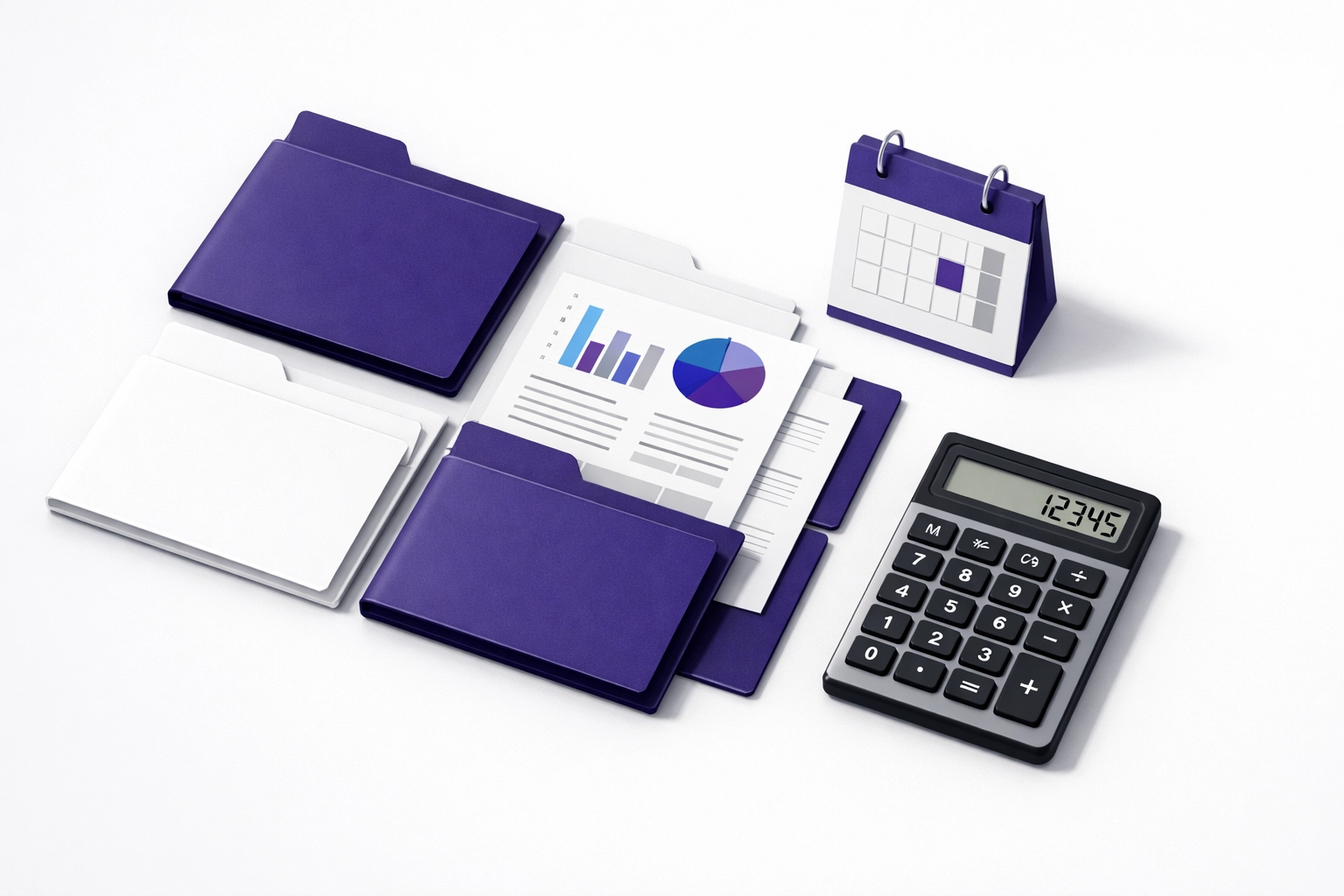
Organized financial documents and folders for small business bookkeeping cleanup process

Furthermore, this work ensures your financial reports are accurate for tax season and business decisions. At Books LA, we've helped dozens of Los Angeles businesses tackle backlogs ranging from six months to three years.

Why Do Small Business Books Get Messy in the First Place?

Life happens. Business gets busy. Bookkeeping slides.

Most small business bookkeeping problems start with inconsistent recording. For example, you enter transactions when you remember, not on a regular schedule. Additionally, many business owners mix personal and business expenses, creating confusion.

Other common causes include:

  • Switching accounting software mid-year without migrating data properly
  • Losing receipts or invoices and guessing at amounts later
  • Not reconciling bank accounts monthly (or ever)
  • Recording sales but forgetting to track expenses

In the construction bookkeeping world, we also see issues with job costing. Specifically, expenses get lumped together instead of tracked by project, making profitability analysis impossible.

Week 1: Gather Everything and Get Organized

Start by creating a single collection point for all financial documents. This includes bank statements, credit card statements, invoices, receipts, and payroll reports.

Your Week 1 checklist:

  • Download or collect all bank statements for the cleanup period
  • Gather credit card statements from every business card
  • Locate invoices (both sent to customers and received from vendors)
  • Find receipts, whether paper or digital
  • Pull payroll reports if you have employees

Organize these materials by date and type. Additionally, separate paper records from digital ones. If you're missing information, reach out to vendors or clients now rather than waiting until year-end when memories fade.

During this phase, you're not entering anything yet. Instead, you're simply getting everything in front of you so you can see the full picture.

Week 2: Identify and Correct the Errors

Now comes the detective work. Consequently, you'll compare your income reports with actual invoices and bank deposits to spot mismatches.

Common errors to look for:

  • Duplicate entries that inflate income or expenses
  • Incorrect amounts due to typos or misprints
  • Cash sales not yet recorded in your system
  • Transactions posted to wrong accounts or categories
  • Missing transactions entirely

Remove duplicates immediately. Then, correct wrong figures by comparing them to original source documents like bank statements or invoices.

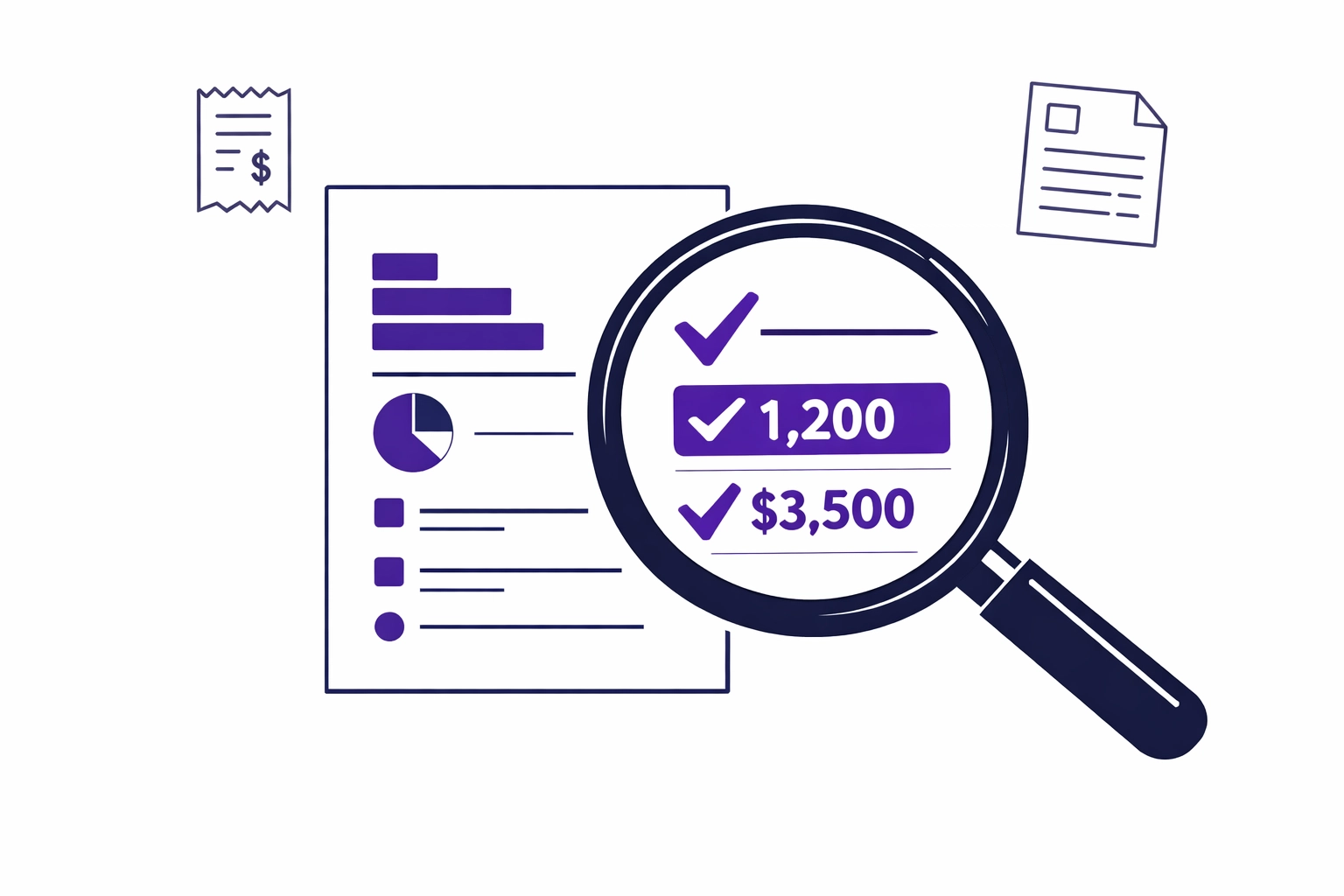
Reviewing financial documents to identify and correct bookkeeping errors with magnifying glass

Moreover, this step prevents small errors from snowballing into big problems. At Books LA, we use QuickBooks Online and Xero to cross-reference data systematically, catching issues that manual reviews often miss.

Week 3: Reconcile Everything to Your Bank

Reconciliation is where bookkeeping cleanup gets real. Specifically, you're matching every transaction in your accounting software to your actual bank and credit card activity.

The reconciliation process:

  1. Start with your primary business checking account
  2. Match each withdrawal and deposit to a record in your books
  3. Identify unrecorded transactions and add them
  4. Mark everything as reconciled once it matches

Next, tackle credit cards the same way. Furthermore, review your accounts payable and accounts receivable. Flag unpaid bills and open invoices that may no longer need collection.

Verify vendor and customer records too. Update names, addresses, and tax IDs. Combine duplicate accounts. Ensure W-9 forms are on file for vendors you'll issue 1099s to.

Working with a CPA: We don't provide income tax advice at Books LA. However, we work closely with CPAs throughout the cleanup process to ensure everything's ready for tax preparation. Always confirm tax-related decisions with your CPA.

Week 4: Clean Your Chart of Accounts and Build Systems

Your chart of accounts is the backbone of accurate bookkeeping. Consequently, cleaning it up ensures future transactions flow to the right categories.

Review each account in your chart. Combine similar accounts that serve the same purpose. Additionally, delete unused accounts that clutter your reports. Make sure account names clearly describe what they're for.

Adjust account balances to match real totals. Then, run preliminary financial reports to verify everything matches your bank statements.

The key to staying clean: sustainable processes

Bookkeeping cleanup only works if you don't fall behind again. Therefore, create a monthly bookkeeping checklist that includes:

  • Recording transactions weekly (not monthly)
  • Reconciling bank accounts by the 10th of each month
  • Reviewing accounts receivable and following up on unpaid invoices
  • Storing all receipts digitally using your phone or scanner

Moreover, consider automation. Cloud accounting systems like QuickBooks and Xero offer bank feeds, recurring invoices, and payment reminders that reduce manual work.

Should You DIY Your Bookkeeping Cleanup or Hire Help?

This depends on three factors: your comfort with accounting software, the size of your backlog, and how much time you have.

Consider DIY if:

  • Your backlog is less than three months
  • You're comfortable with QuickBooks or Xero
  • You can dedicate 10-15 hours per week for a month

Consider outsourced bookkeeping if:

  • Your backlog exceeds six months
  • You're not sure what accounts to use for certain transactions
  • You need the cleanup done quickly for a loan application or tax deadline
  • You want assurance that IRS rules and GAAP standards are met

Comparison of DIY bookkeeping chaos versus organized outsourced bookkeeping services

Professional bookkeeping services identify issues you might miss. Furthermore, we complete the work faster because we've done hundreds of cleanups. At Books LA, our team knows construction bookkeeping nuances, e-commerce reconciliation quirks, and consultant-specific categorization rules.

Ready to get your books cleaned up? Book a short call with us to discuss your situation and what a cleanup would involve.

What Happens After Your Bookkeeping Cleanup?

Clean books open doors. Specifically, you can finally see accurate profit margins, make informed decisions, and prepare for tax season without panic.

Additionally, you'll have reliable financial reports to show banks, investors, or partners. Your CPA will thank you for organized records that make tax preparation straightforward.

The real benefit, though, is peace of mind. Consequently, you'll stop avoiding your finances and start using them to drive growth.

Common Bookkeeping Cleanup Mistakes to Avoid

Even with good intentions, business owners make predictable mistakes during cleanup.

Don't do this:

  • Deleting transactions instead of voiding them (this creates gaps in your audit trail)
  • Guessing at transaction dates or amounts
  • Skipping reconciliation because "the numbers look close enough"
  • Forgetting to update opening balances after making corrections
  • Cleaning up once but not establishing ongoing processes

Moreover, avoid mixing cleanup work with current-month bookkeeping. Finish the backlog first, then shift to maintaining real-time records.

If you're unsure about a transaction, flag it and ask for help. Our team at Books LA works alongside your CPA to clarify unclear items and ensure everything meets standards.

Industry-Specific Cleanup Considerations

Different business models require focus on different areas during bookkeeping cleanup.

E-commerce stores need to match platform fees and shipping costs with sales. Additionally, inventory tracking becomes critical if you're holding products.

Construction companies must separate costs by job. Furthermore, work-in-progress (WIP) accounts need adjustment to reflect accurate job profitability. Learn more about construction bookkeeping specifics.

Consultants and service businesses should separate retainers from earned revenue. Moreover, mileage and home office expenses need proper categorization.

Regardless of industry, the four-week framework applies. However, the specific accounts you review and the reports you prioritize will vary.


Frequently Asked Questions About Bookkeeping Cleanup

How much does bookkeeping cleanup cost?
Pricing depends on backlog size and complexity. Typically, cleanup for 3-6 months of records ranges from $800-$2,500. Moreover, businesses with multiple revenue streams or significant transaction volume pay more. Contact Books LA for a specific quote based on your situation.
Will cleanup delete my data or past records?
No. Proper bookkeeping cleanup improves accuracy without deleting important records. Instead, we correct errors, void duplicates, and adjust categorization. Consequently, your complete transaction history remains intact.

How long does professional bookkeeping cleanup actually take?
Most cleanups finish in 2-4 weeks depending on backlog length and data quality. Furthermore, we can prioritize sections if you need specific reports sooner for loans or taxes.

What do you need from me to start a cleanup?
We need access to your accounting software, bank statements, and credit card statements for the cleanup period. Additionally, provide invoices and receipts if they're not already in your system. Most clients gather these items in 1-2 days.

Can you clean up books if I haven't reconciled in over a year?
Yes. Longer backlogs take more time, but the process remains the same. Moreover, we've successfully cleaned up books with backlogs of 2-3 years.

Do I need to be on QuickBooks or Xero for cleanup services?
We work primarily with QuickBooks Online and Xero because they're industry standards. However, if you use different software, we can often still help or recommend migration as part of the cleanup process.

What happens if you find errors my old bookkeeper made?
We document the errors, make corrections, and explain what we changed. Additionally, we notify you if the errors affect past tax returns so you can discuss amendments with your CPA. Remember, we don't provide income tax advice, so tax-related decisions require CPA consultation.

How do I prevent falling behind after cleanup?
Establish a weekly transaction recording habit and monthly reconciliation schedule. Furthermore, consider ongoing bookkeeping services to maintain clean books permanently. Many clients start with cleanup, then transition to monthly bookkeeping support.

QBO vs Xero 2026 Review: The Ultimate Guide to Bookkeeping Services (2026)

QBO vs Xero 2026 Review: The Ultimate Guide to Bookkeeping Services (2026)

Last updated: February 11, 2026

After diving deep into expenses, invoicing, billable expenses, projects, bank feeds, and reporting across both platforms, here's the bottom line: Xero wins for teams needing unlimited users and simple workflows, while QuickBooks Online excels when you need advanced reporting and complex customization. The right choice for your bookkeeping services depends on team size, feature priorities, and how your bookkeeper actually works.

This post wraps up our 7-part series. You'll get our honest take on which software fits different business models, what professional bookkeeping services cost on each platform, and how long a migration actually takes.

What Our Bookkeeping Services Include

We're an LA-based bookkeeping firm certified in both QuickBooks Online and Xero. Whether you choose QBO or Xero, our bookkeeping services cover the same essentials.

Monthly close and reconciliation. We reconcile every bank account, credit card, and loan. We categorize transactions, match invoices to payments, and make sure your balance sheet is clean.

Accounts payable and receivable. We track who owes you and who you owe. We send invoices, record bills, and keep your cash flow visible.

Financial reporting. You get a P&L, balance sheet, and cash flow statement every month. We customize reports based on what you actually need to see.

Sales tax tracking. We handle nexus monitoring, accrual tracking, and filing prep. We coordinate with your CPA for income tax but manage sales tax in-house.

Payroll reconciliation. We make sure payroll expenses match your payroll provider and that tax liabilities are recorded properly.

Software setup and cleanup. If you're migrating from one platform to another or starting fresh, we build your chart of accounts, import historical data, and clean up any mess left behind.

Both platforms handle these tasks well. The difference is in how fast you can train your team, how much you'll spend on additional users, and whether you need advanced features like job costing or multi-currency support.

QuickBooks Online vs Xero bookkeeping software dashboard comparison

How Much Professional Bookkeeping Services Cost

Software cost and bookkeeping service cost are two separate line items.

Software pricing (2026):

QuickBooks Online ranges from $35/month (Simple Start) to $275/month (Advanced). Most small businesses use Plus at $115/month, which includes 5 users and inventory tracking.

Xero ranges from $25/month (Early) to $90/month (Established). All plans include unlimited users. The catch: Early limits you to 20 invoices and 5 bills per month, which doesn't work for most active businesses.

If you need more than 5 users, Xero saves you hundreds per month. QuickBooks charges per user after the plan limit, and those fees add up fast.

Bookkeeping service pricing:

Our small business bookkeeping services start at $400/month for simple businesses with under 50 transactions. Mid-sized businesses with multiple revenue streams, inventory, or project tracking typically pay $800 to $1,500/month.

Software complexity affects our pricing slightly. QuickBooks Online takes longer to customize but offers more control. Xero is faster to set up but less flexible for complex workflows.

Cleanup projects are separate. Expect $1,500 to $5,000 depending on how far behind you are and which platform you're using.

If you're switching platforms, migration is usually part of the cleanup cost. We don't charge separately for software migration unless your data is a disaster.

How Long the Software Migration Takes

Migrating between QuickBooks Online and Xero (or vice versa) usually takes 2 to 4 weeks.

Week 1: We export your data, review your chart of accounts, and build the new structure in the target platform. We also identify any customizations or integrations that won't transfer cleanly.

Week 2: We import historical transactions, map accounts, and reconcile opening balances. This is where most of the grunt work happens.

Week 3: We run parallel books for one month. You keep using the old system while we update the new one. This catches errors and gives your team time to adjust.

Week 4: We finalize, train your team, and switch over completely.

The timeline stretches if your books are messy, if you have complex inventory, or if you're migrating years of data instead of just the current year.

Xero to QuickBooks migrations take slightly longer because QuickBooks requires more setup for custom fields, classes, and locations. QuickBooks to Xero is faster because Xero's structure is simpler.

Most businesses should plan to migrate at the start of a new quarter. Don't migrate in December or during busy season.

Bookkeeping software migration timeline showing four-week transition process

Which Software We Recommend for Your Bookkeeping Services

There's no universal winner. It depends on your team, your growth plan, and your bookkeeper's preferences.

Choose Xero if:

You have more than 5 people who need access. Xero's unlimited user pricing is unbeatable. If you're adding project managers, sales reps, or department heads to your accounting system, Xero wins.

You operate internationally. Xero handles multi-currency better and supports 160+ currencies without requiring the most expensive plan.

You want basic inventory management without paying extra. Xero includes inventory tracking in all plans. QuickBooks locks inventory behind the $115/month tier.

You value ease of use over customization. Xero's interface is cleaner and faster to learn. New hires get up to speed in days, not weeks.

You work with a lot of third-party apps. Xero connects to over 1,000 integrations compared to QuickBooks' 750+.

Choose QuickBooks Online if:

You need advanced reporting and customization. QuickBooks lets you drill into transaction details, customize every report field, and build complex workflows.

You run a construction business or track jobs. QuickBooks' class and location tracking is more robust, and job costing features are built in.

Your CPA insists on QuickBooks. Most US accountants prefer QuickBooks because they've used it for decades. Switching to Xero might create friction at tax time.

You already have years of QuickBooks data. Migration is possible but expensive. If your current system works, don't fix what isn't broken.

You need fewer than 5 users and want deeper control. For solo owners or small teams, QuickBooks' feature depth justifies the learning curve.

Our honest take:

We use both. For service-based businesses with small teams, we lean toward QuickBooks. For product-based businesses with growing teams, we recommend Xero. For construction and project-based work, QuickBooks wins.

If you're hiring outsourced bookkeeping services, ask which platform your bookkeeper prefers. A great bookkeeper on the "wrong" software beats a mediocre bookkeeper on the "right" one.

FAQ

Which software is easier to migrate away from if I change my mind later?

Xero exports cleaner data and has fewer proprietary features, so migrating away from Xero is slightly easier. QuickBooks locks in some customizations (like classes and locations) that don't map perfectly to other platforms. That said, both systems export to Excel and CSV, so neither traps you permanently.

Does Xero or QuickBooks cost more when you factor in apps and add-ons?

Xero's base price is lower, but you'll pay for apps like Hubdoc (document management), Xero Payroll, and advanced inventory. QuickBooks bundles more features but charges higher base prices. For most small businesses, total cost ends up similar. Xero saves money if you need lots of users. QuickBooks saves money if you need fewer users but want built-in features.

Which software has better customer support?

QuickBooks offers live chat and phone support. Xero offers 24/7 online support and callbacks but no inbound phone line. In practice, most bookkeepers rarely call support because both platforms have strong user communities and help documentation. Your bookkeeper's experience matters more than the support hotline.

Do both platforms integrate with payroll and sales tax filing?

Yes. QuickBooks integrates natively with QuickBooks Payroll and QuickBooks Sales Tax. Xero integrates with Gusto, ADP, and TaxJar. Both work fine. If you already use a specific payroll provider, check compatibility before choosing.

Which platform handles sales tax better?

QuickBooks has stronger built-in sales tax automation, especially for multi-state nexus. Xero requires third-party apps like Avalara or TaxJar for complex sales tax. If sales tax is a big part of your business, QuickBooks wins. If sales tax is simple (one state, straightforward rules), Xero is fine.

Is the user interface really that different between Xero and QuickBooks?

Yes. Xero feels like a mobile app with a clean dashboard and simple menus. QuickBooks feels like traditional accounting software with more buttons, shortcuts, and data on every screen. Non-accountants prefer Xero. Accountants and bookkeepers prefer QuickBooks. Train your team on whichever you choose and the difference fades after a month.

Will my CPA care which software I use?

Most CPAs prefer QuickBooks because it's the industry standard in the US. That said, good CPAs work with both. If your CPA refuses to work with Xero, find a new CPA. Modern accounting firms handle both platforms without issue. Just give your CPA accountant-level access and export reports at tax time.

Should a startup use different software than an established business?

Startups benefit from Xero's lower cost and unlimited users. Established businesses benefit from QuickBooks' advanced features and customization. But plenty of successful businesses run on either platform long-term. Choose based on your team and workflow, not your business stage. You can always migrate later if your needs change.


Disclaimer: This post covers bookkeeping software and bookkeeping services. We do not provide income tax advice. Always coordinate with your CPA for income tax strategy, filing, and compliance. We handle sales tax, payroll tax, and business license tracking, but final tax decisions should be reviewed with your tax advisor.

QBO vs Xero Reporting: Why Your CPA Will Love These Insights (2026)

QBO vs Xero Reporting: Why Your CPA Will Love These Insights (2026)

Last updated: February 11, 2026

QuickBooks Online wins for deep customization and tax-ready reports, while Xero delivers clean, real-time financial reporting that updates automatically. Both platforms work beautifully with professional bookkeeping services that know how to set them up for your CPA.

This post is for LA business owners who want their accountant to actually enjoy working with their books. We'll cover what reports your CPA needs, how each platform delivers them, and why proper setup matters more than the software choice.

The reporting reality check

Your CPA doesn't want fancy dashboards. They want accurate, detailed reports that let them drill into transactions without asking you twenty follow-up questions.

QuickBooks Online gives you more than 65 pre-built reports with granular filtering. You can customize columns, add comparison periods, and save templates for recurring use. Xero keeps it simpler with around 30 core reports that look cleaner but offer less flexibility.

Here's what matters: both platforms can produce everything your tax preparer needs. The difference is how much setup and customization you want to manage yourself.

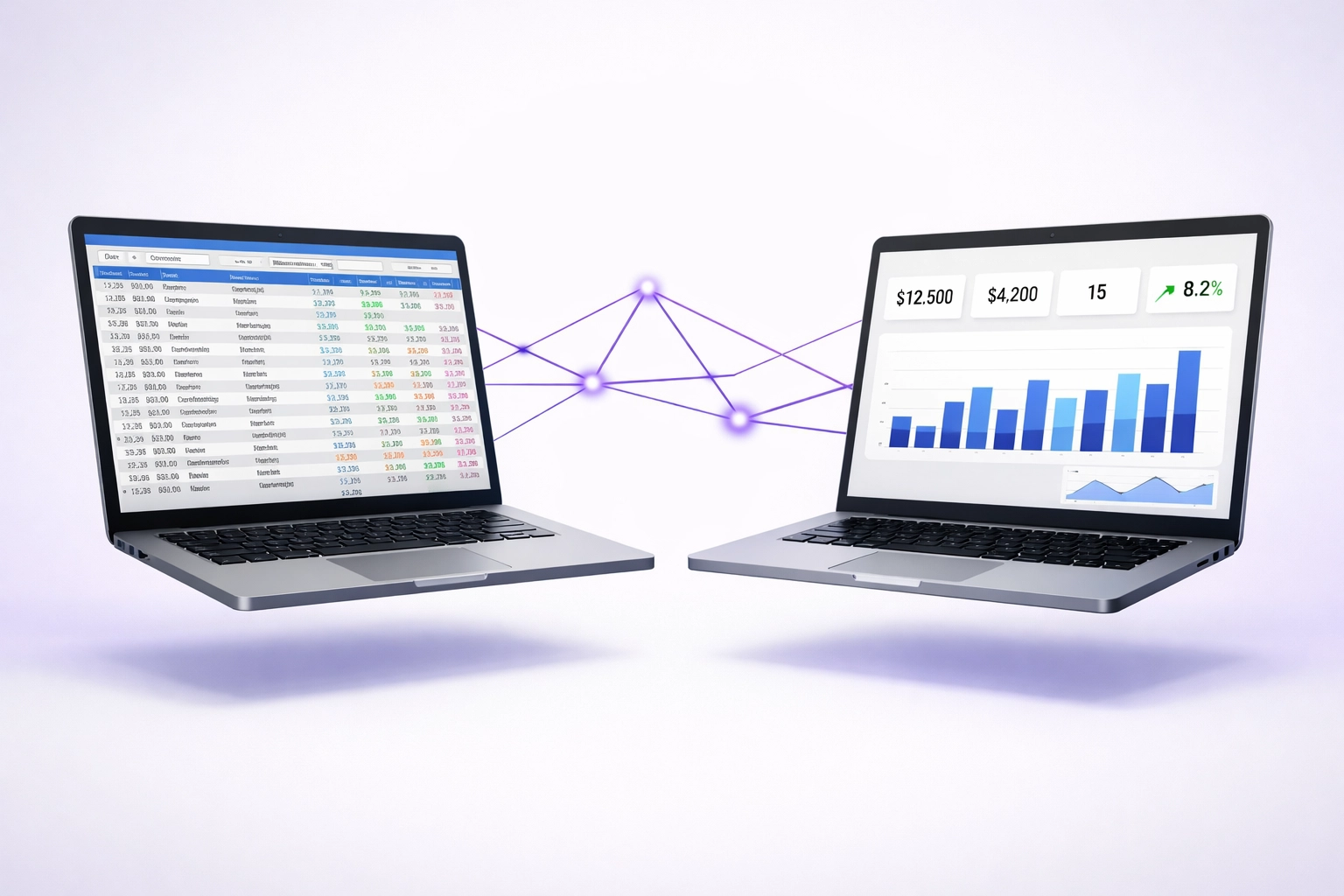
QuickBooks vs Xero reporting comparison showing detailed spreadsheet and clean dashboard interface

What our bookkeeping services include

Our Los Angeles team is certified in both QuickBooks Online and Xero. We handle the reporting setup so your CPA gets exactly what they need.

Standard report package:

  • Profit and Loss statement (monthly, quarterly, year-to-date)
  • Balance Sheet with prior period comparison
  • Cash Flow Statement
  • Accounts Receivable and Payable Aging
  • General Ledger detail
  • Transaction detail by account

We set up custom reporting templates based on your CPA's preferences. If they want specific sub-account breakdowns or departmental tracking, we build those into your system from day one.

Our bookkeeping services also include monthly reconciliation before reports go out. Your CPA shouldn't be the first person to spot a $5,000 miscategorization.

QuickBooks reporting advantages:

QuickBooks lets us create custom report groups. We can bundle the exact reports your CPA wants and generate them all with one click. The platform also connects directly to TaxCalc and Avalara for sales tax reporting.

We use the Accountant View feature to add notes and adjustments without cluttering your main company file. Your CPA can log in through their own portal and pull reports anytime.

Xero reporting advantages:

Xero's reports update in real time as transactions hit your bank feed. We set up tracking categories for job costing or department splits, and those flow automatically into every report.

The multi-currency handling is cleaner in Xero. If you have international clients or vendors, your P&L shows both transaction currency and base currency without extra reconciliation steps.

Both platforms export to Excel, but Xero's CSV exports maintain better formatting for pivot tables.

How much professional bookkeeping services cost

Full-service monthly bookkeeping with reporting setup runs $400 to $1,200 per month depending on transaction volume.

What affects the price:

  • Number of monthly transactions (under 100 vs 500+)
  • Multiple entities or locations
  • Inventory tracking requirements
  • Payroll integration
  • Custom reporting templates

One-time reporting setup without ongoing bookkeeping services costs $500 to $1,500. We configure your chart of accounts, set up report templates, and train your CPA's office on where to find everything.

Most LA businesses fall in the $600 to $800 monthly range once everything is dialed in. That includes bank reconciliation, categorization, monthly close, and a full report package ready for your accountant.

Outsourced bookkeeping costs less than hiring internally when you factor in software licenses, training time, and coverage for vacations or sick days.

How long the reporting setup takes

Initial reporting configuration takes two to three weeks if your books are current.

Week one: We audit your chart of accounts and map everything to standard reporting categories. We also verify that prior months are reconciled and categorized correctly.

Week two: We build custom report templates and test them against your prior year numbers. We send samples to your CPA for approval and adjust based on their feedback.

Week three: Final setup in the system, plus documentation so your CPA knows where to access reports and what each template shows.

If your books need cleanup first, add four to six weeks. We can't build reliable financial reporting on top of messy transaction data.

Once setup is complete, monthly report generation takes 30 minutes after the books are closed. We usually deliver reports by the 10th of the following month.

Three-week timeline for bookkeeping setup and financial reporting configuration

How our bookkeeping services prepare your reports for tax season

Tax season goes faster when your reports match how your CPA organizes their workpapers.

Pre-tax season checklist:

  • Reconcile all accounts through year-end
  • Verify loan balances match bank statements
  • Confirm fixed asset detail is complete
  • Review large or unusual transactions
  • Document any journal entries
  • Export transaction detail by GL account

We work with your CPA starting in January to gather their standard report list. Most want comparative P&L (current year vs prior year), detailed balance sheet, and depreciation schedules.

QuickBooks makes this easier with its Direct Accountant Access feature. Your CPA can pull their own reports without bugging you for logins. They can also make adjusting entries in their own view without changing your actual books.

Xero requires an advisor user license for your CPA. We help set that up as part of our bookkeeping services package.

Sales tax and payroll tax reports:

Both platforms generate sales tax liability reports. We reconcile these monthly so there are no surprises in December.

For payroll tax reporting, QuickBooks Online Payroll integrates directly with your books. Xero requires a third-party app like Gusto. Either way, we make sure quarterly 941 data matches your P&L.

We do not prepare income tax returns. We coordinate with your CPA to provide clean books and supporting documentation they need for your business return.

Common reporting mistakes we fix:

Many business owners run reports without reconciling first. Your P&L might show $10,000 in expenses that haven't actually cleared your bank yet.

Another issue: mixing personal and business transactions. We set up separate tracking so your CPA can easily identify what belongs on your Schedule C or corporate return.

We also catch duplicate transactions from bank feeds. QuickBooks is notorious for importing the same expense twice if you use both credit card feeds and bank feeds.

Why your CPA will thank you for proper reporting setup

CPAs charge by the hour. If they spend three hours hunting for missing receipts or decoding weird account names, that's on your bill.

Clean reports with proper categorization cut their prep time in half. That saves you money and keeps your accountant happy.

Your CPA also needs reports that match prior years. If you switch from QuickBooks to Xero mid-year without migrating history, they lose the ability to run year-over-year comparisons.

We handle that migration as part of our outsourced bookkeeping setup. Your historical data comes over so reports show trending across multiple years.

Good financial reporting also helps you make decisions between tax appointments. You shouldn't wait until April to know if you're profitable.

Ready to set up reporting your CPA will love?

We're based in Los Angeles and work with CPAs across California. Our team is certified in both QuickBooks Online and Xero.

Request a free bookkeeping review and we'll audit your current reporting setup. You'll get specific recommendations on what needs fixing before tax season.

Professional financial reports with charts and data visualizations for CPA review

Frequently Asked Questions

What's the difference between a P&L and a Balance Sheet for tax purposes?

Your P&L shows income and expenses for a specific time period. Your CPA uses this to calculate taxable profit. The Balance Sheet shows what you own and owe as of a specific date. Both are required for most business tax returns, and your CPA needs them to match.

Can I create custom reports in both QuickBooks and Xero?

Yes, but QuickBooks gives you more control. You can customize columns, filters, and sub-totals extensively. Xero lets you customize basic layouts and tracking categories, but complex custom reports usually require Excel export and pivot tables.

How do tracking categories in Xero compare to class tracking in QuickBooks?

They work similarly. Both let you split transactions by department, location, or project. Xero allows two tracking categories per transaction; QuickBooks allows one class plus one location. For construction businesses or multi-location shops, this matters for job costing reports.

What payroll tax reports do CPAs need from bookkeeping software?

Your CPA needs quarterly 941 summaries, annual W-2 and 1099 totals, and state unemployment reports. QuickBooks Online Payroll generates these automatically. With Xero, you'll use Gusto or another payroll app that syncs to your books.

How do I handle sales tax liability reports in each platform?

Both platforms have built-in sales tax tracking. QuickBooks connects to Avalara for automatic filing. Xero requires manual filing or a third-party integration. We reconcile sales tax liability monthly as part of our bookkeeping services to avoid year-end scrambling.

Which platform do CPAs prefer to work with?

Most CPAs are more familiar with QuickBooks because it has larger market share. However, CPAs who work with modern service businesses or international clients often prefer Xero's cleaner interface and real-time reporting. Ask your CPA before choosing.

What reports should I send my CPA every month?

Send your P&L, Balance Sheet, and bank reconciliation summaries. If you have loans, include loan amortization schedules. For seasonal businesses, include a rolling 12-month P&L so your CPA can see trends. We generate this standard package as part of monthly close services.

Do I need different reports for monthly close versus tax season?

Monthly close reports focus on operational metrics like cash position and accounts receivable aging. Tax season reports need more detail: transaction listings by account, fixed asset registers, and documentation for any adjustments. We prepare both report sets with our outsourced bookkeeping packages.


Important: We provide bookkeeping and financial reporting services. We do not prepare income tax returns or provide income tax advice. All tax-related decisions should be made in coordination with your CPA or tax professional. The reporting recommendations in this post are for bookkeeping accuracy and should be confirmed with your tax advisor for your specific situation.

QBO vs Xero Bank Feeds: Tips and Tricks for Bookkeeping Accuracy (2026)

QBO vs Xero Bank Feeds: Tips and Tricks for Bookkeeping Accuracy (2026)

Last updated: February 11, 2026

Xero has more reliable bank feed syncing with fewer disconnects and double-counting issues than QuickBooks Online, though both platforms offer solid direct bank connections that import transactions automatically. In this post, you'll learn practical tips and tricks for bookkeeping accuracy using bank feeds in both systems, including setup time, reconciliation shortcuts, and how to avoid the most common sync problems.

This is part 5 of our 7-part QBO vs Xero deep dive series. If you're deciding between platforms or running both for different clients, this guide will save you hours.

What Makes Bank Feeds Critical for Accuracy

Your bank feed is the foundation of clean books. When it works right, transactions flow in automatically, you categorize them once, and reconciliation takes minutes instead of hours.

When it breaks, you get duplicates, missing transactions, or phantom entries that waste your time and wreck your cash flow reporting.

Here's what matters most: connection stability, transaction matching intelligence, and how quickly you can spot errors before they multiply.

Both QBO and Xero connect directly to your bank. Both pull in transactions daily. But Xero has proven more consistent in real-world testing over the past 10 months, with zero disconnect or double-count issues for most LA-based businesses we work with.

QuickBooks Online and Xero bank feed comparison showing transaction sync between platforms

What Our Bookkeeping Services Include

At Books LA, we're QuickBooks Online and Xero certified bookkeepers based in Los Angeles. We set up bank feeds for new clients, clean up syncing disasters, and handle monthly reconciliation for businesses that need consistent accuracy.

Our bookkeeping services include:

  • Bank feed setup and connection: We link all your business accounts (checking, savings, credit cards, PayPal, Stripe) using direct connections, not CSV imports.
  • Transaction categorization: We build rules so recurring transactions auto-categorize correctly in both QBO and Xero.
  • Monthly bank reconciliation: We reconcile every account every month and flag discrepancies before they become problems.
  • Receipt matching: We pair receipts with transactions so your records are audit-ready.
  • Multi-account dashboards: You get a single view of all accounts, whether you're using QBO, Xero, or both.

We don't provide income tax advice. We work closely with your CPA to make sure your books support tax prep, year-end planning, and any sales tax or payroll tax filings.

How Much Professional Bookkeeping Cleanup Costs

If your bank feeds are a mess (duplicates, missing months, unreconciled accounts), cleanup costs depend on how far back the problem goes and how many accounts you have.

Typical pricing for bank feed cleanup:

  • 1 to 3 months of backlog: $500 to $1,200
  • 4 to 12 months of backlog: $1,500 to $3,500
  • More than 12 months: $4,000+

This includes reconnecting broken feeds, deleting duplicate transactions, categorizing everything, and fully reconciling each account. If you've been importing bank statements manually instead of using live feeds, the cleanup takes longer because we have to verify every transaction against your actual statements.

Most LA startups and small businesses come to us after trying to DIY their bank feeds for 6 to 9 months. The longer you wait, the more expensive the fix.

Want us to handle this? Request a bookkeeping review and we'll give you an exact quote based on your account history.

How Long the Bank Feed Setup Takes

Setting up bank feeds from scratch is fast if your accounts are standard U.S. business banks.

QBO setup time: 15 to 30 minutes per account. QuickBooks Online connects to most major banks instantly. You log in, authenticate, and transactions start flowing within 24 hours. Occasionally, credit unions or smaller regional banks require extra verification steps.

Xero setup time: 20 to 40 minutes per account. Xero's direct connection setup is similar, but you may need to choose between "Yodlee" and "Plaid" as your connection provider depending on your bank. Xero's sync has been rock-solid once connected.

If you're switching from manual entry or CSV imports to live feeds, expect one extra reconciliation cycle to make sure nothing got duplicated or skipped.

We set up feeds for new clients as part of onboarding. It's faster than trying to figure out why your feed keeps disconnecting on your own.

Multi-account bookkeeping dashboard displaying bank feeds and transaction data

Our Favorite Tips and Tricks for Bookkeeping with QBO and Xero Bank Feeds

Here's what actually works when you're managing bank feeds day to day.

Prioritize Direct Bank Connections Over Third-Party Apps

Both platforms let you connect through Plaid, Yodlee, or your bank's direct API. Always choose the direct connection if your bank offers it. Third-party connections disconnect more often and sometimes pull in incomplete transaction details.

This is one of the most important tips and tricks for bookkeeping accuracy: a stable feed beats a feature-rich feed every time.

Reconcile Weekly, Not Monthly

Waiting 30 days to reconcile means you might miss a duplicate transaction or a missing deposit until it's too late to fix it easily.

Reconcile every Friday. It takes 10 minutes per account when you do it weekly. It takes 2 hours per account when you do it monthly and find 6 errors.

QBO tip: Use the "Reconcile" page and filter by "Added in the last 7 days" to speed this up.

Xero tip: Use the "Reconcile" tab and sort by "Date Imported" to catch new transactions fast.

Build Bank Rules for Recurring Transactions

If you pay the same vendors every month (software subscriptions, rent, utilities), set up a bank rule so those transactions auto-categorize.

In QBO: Go to Banking > Rules. Create a rule based on transaction description, amount, or both. QBO applies rules to new transactions as they come in.

In Xero: Go to Bank Accounts > Create Rule. Xero's rules are smarter about partial matches, so you can write one rule for "Adobe" that catches "ADOBE CREATIVE CLOUD" and "Adobe Inc."

This is a time-saving tip for bookkeeping efficiency that cuts your weekly categorization work in half.

Use Smart Match Instead of Manual Entry

Both platforms suggest matches when an imported bank transaction looks like an existing bill, invoice, or expense you already entered.

Always review the match before accepting it. QBO sometimes suggests matches based on amount alone, which can pair the wrong transactions if you have two $500 bills in the same week.

Xero's match suggestions are slightly better at reading vendor names, but you still need to double-check.

Turn On Automatic Receipt Capture

QBO and Xero both let you email receipts to a special inbox or snap photos with your phone. The receipt gets attached to the matching transaction automatically.

Do this immediately after a purchase. Don't batch receipts at month-end. You'll forget what the $47.82 charge at Home Depot was for, and your books will be less useful.

This habit is a simple but powerful trick for bookkeeping that saves time during audits or tax prep.

Automated receipt matching and categorization for bookkeeping accuracy

Monitor Multiple Accounts in One Dashboard

QBO's "Banking" page shows all connected accounts in one view. Xero's "Bank Accounts" dashboard does the same.

Check this view every Monday. If one account shows zero new transactions but you know there should be activity, your feed probably disconnected. Reconnect it before you lose a week of data.

Flag Unusual Transactions Immediately

If a transaction imports with a weird amount, duplicate vendor name, or unclear description, flag it or add a note right away.

QBO: Click the transaction, choose "Find match," then click "Record as transfer" or "Exclude" if it's a duplicate.

Xero: Click "Options" next to the transaction, then "Discuss" to add a note or "Remove" if it's clearly a duplicate.

Flagging problems as they appear is one of the best tips and tricks for bookkeeping accuracy. Fixing 1 bad transaction today is easier than finding 30 bad transactions at year-end.

Sync Payroll and Sales Tax Feeds Separately

If you use Gusto, ADP, or another payroll service, connect it directly to QBO or Xero so payroll transactions import automatically and categorize correctly.

Same with sales tax: if you're using Avalara or TaxJar, sync it with your accounting software so sales tax collected and remitted flows into the right accounts.

This keeps your bank reconciliation clean and prevents payroll or tax entries from cluttering your main transaction feed.

When to Call a Bookkeeper Instead of DIYing It

Bank feeds are easy to set up but tricky to maintain accurately over time. Here's when to bring in help:

  • Your feed has disconnected 3+ times in the past 3 months
  • You have duplicate transactions and you're not sure which ones to delete
  • You haven't reconciled in more than 60 days
  • You're switching from QBO to Xero (or vice versa) and need to migrate historical data
  • You need clean books for a loan application, investor meeting, or tax filing in less than 2 weeks

We handle all of this as part of our monthly bookkeeping services. If you're spending more than 2 hours a week on bank feeds, it's cheaper to outsource it.

FAQ: QBO vs Xero Bank Feeds

Why does my bank feed keep disconnecting?

Bank feeds disconnect when your bank changes its login process, requires re-authentication, or updates its API. Reconnect by going to the Banking page, clicking "Reconnect," and logging in again. If it keeps happening, switch to a direct connection instead of Plaid or Yodlee.

Can I set up bank rules to auto-categorize transactions?

Yes. Both QBO and Xero let you create rules based on transaction description, amount, or payee. Rules apply automatically to future transactions. Build rules for recurring expenses first (rent, subscriptions, utilities) to save the most time.

What's the difference between "Match" and "Categorize" during bank reconciliation?

"Match" pairs an imported bank transaction with an existing entry you already recorded (like a bill or invoice). "Categorize" assigns the transaction to an account for the first time. Always try to match first. Only categorize if the transaction is brand new.

Do payroll transactions import through the bank feed automatically?

Yes, if you connect your payroll provider (Gusto, ADP, Paychex) directly to QBO or Xero. Otherwise, payroll shows up as a lump-sum bank transaction and you'll need to categorize it manually. Direct payroll sync is more accurate.

How do I sync sales tax collected with my bank feed?

If you use Avalara, TaxJar, or your accounting software's built-in sales tax feature, sales tax collected and remitted will sync automatically. If you collect sales tax manually, you'll need to categorize those transactions separately. Work with your CPA to confirm your sales tax setup is correct.

Does Xero work with older versions of QuickBooks if I'm switching?

No. Xero and QuickBooks are separate platforms. If you're switching, you'll need to export data from QBO and import it into Xero, or run both in parallel during a transition period. We help clients migrate historical data so nothing gets lost.

Can my CPA access my bank feed data in QBO or Xero?

Yes. Both platforms let you invite your CPA as a user with view-only or full access. Your CPA can review transactions, run reports, and help with tax planning. Make sure your CPA has access before tax season starts.

What if my bank doesn't support automatic feeds?

You can upload bank statements manually using CSV or QBO/OFX files. This is slower and more error-prone, but it works. Some credit unions and international banks don't support live feeds yet. We help clients set up manual imports when necessary.


Disclaimer: We do not provide income tax advice. This post covers bookkeeping best practices for bank feeds, transaction categorization, and reconciliation. For income tax questions, sales tax filings, or payroll tax compliance, coordinate with your CPA. At Books LA, we work alongside your tax professional to keep your books accurate and audit-ready.

Ready to stop fighting with your bank feeds? Book a short call and we'll review your setup for free.

QBO vs Xero Projects: Essential Construction Bookkeeping Tips (2026)

QBO vs Xero Projects: Essential Construction Bookkeeping Tips (2026)

Last updated: February 11, 2026

QuickBooks Online Projects gives you deeper job costing and customizable reports for tracking every dollar per job, while Xero Projects offers real-time profitability dashboards and unlimited users at every pricing tier. If you run a construction or contracting business in LA, the right project tracking setup can save you 5 to 10 hours a week and show you exactly which jobs are making money.

This post walks you through how each platform handles construction bookkeeping, what our setup and monthly services include, and which scenarios favor one system over the other.

What Our Construction Bookkeeping Services Include

We set up and maintain job-based accounting for contractors, subcontractors, and builders using both QuickBooks Online and Xero.

Here's what that looks like in practice.

Project setup: We create a project or job for each contract, estimate, or work order. This keeps all income, expenses, time, and materials tied to one place so you can see profit per job.

Job costing structure: We configure cost codes (labor, materials, subcontractors, equipment, permits) that match your bid structure. QBO lets you assign classes and customers together. Xero uses tracking categories and projects together.

Expense allocation: Every receipt, bill, and credit card charge gets assigned to the correct job and cost code. No guessing. This is the foundation of accurate construction bookkeeping services.

Time tracking integration: If you use QuickBooks Time, Homebase, or TSheets, we sync labor hours to the right job. Xero integrates with WorkflowMax and Tradify for time and job management.

Progress invoicing: We set up milestone billing or AIA-style invoicing so you can bill clients based on percent complete or approved progress.

WIP (work in progress) reports: These show you how much cost you've incurred versus how much you've billed. Critical for cash flow and knowing when to invoice.

Construction bookkeeping tools including hard hat, calculator, and project documents

Monthly close for contractors: We reconcile all accounts, review unbilled costs, flag over-budget jobs, and send you a profitability report by project. This is part of our monthly construction bookkeeping process.

CPA coordination: We prepare clean books and job cost reports so your CPA can handle income tax filings, depreciation, and entity planning. We do not provide income tax advice. Always confirm tax strategy with your CPA.

We're based in Los Angeles, certified in both QuickBooks Online and Xero, and we work with general contractors, electricians, plumbers, HVAC companies, and residential remodelers.

How Much Construction Bookkeeping Costs

Our construction bookkeeping pricing depends on transaction volume, number of active jobs, and whether you need cleanup first.

Monthly service: $400 to $900 per month for ongoing project accounting. This includes categorizing expenses, reconciling accounts, tracking job costs, running WIP reports, and coordinating with your CPA.

Cleanup before we start: If your books are behind or messy, cleanup typically runs $800 to $2,500 depending on how many months we're catching up and how many jobs need to be re-coded.

Project setup (one-time): $300 to $600 to configure job costing, cost codes, and project templates in QBO or Xero. This includes training you or your team on how to assign expenses to jobs.

Software cost (not included): QuickBooks Online Plus is $60/month (supports projects). Xero pricing starts at $42/month (Growing plan) and includes unlimited users.

Why Xero can cost less overall: If you have a field crew or multiple people who need access, Xero's unlimited user model can save you $20 to $50/month compared to QBO's per-user pricing.

Why QBO can be worth it: If you need advanced job costing reports, class tracking, and integration with QuickBooks Time for payroll, QBO Plus or Advanced is often the better long-term fit.

We'll walk you through both options during a free 20-minute call. Contact us here to talk through your setup.

How Long the Project Setup Takes

Most construction businesses are up and running with full job tracking in 2 to 3 weeks.

Week 1: Discovery and cleanup (if needed). We review your current chart of accounts, past jobs, and how you currently track costs. If your books are behind, we catch them up first.

Week 2: Build the structure. We create your cost codes, set up projects or jobs, configure invoice templates, and connect your bank feeds and credit cards. If you use a time-tracking app, we integrate it during this phase.

Week 3: Test and train. We run a test job through the system (from estimate to final invoice) and train you or your office manager on how to assign expenses, run reports, and track job profitability.

Three-step construction bookkeeping setup process timeline for project tracking

After that, we take over the monthly close and job cost reporting. You focus on bidding and building.

If you're switching from another bookkeeper or cleaning up years of backlog, add 1 to 2 weeks for historical project re-coding.

QBO vs Xero setup time: Both take about the same amount of time to configure. Xero's interface is a bit cleaner for first-time users. QBO has more report customization, but it takes longer to learn.

We handle the heavy lifting either way.

How Construction Bookkeeping Projects Track Your Profitability

This is where the magic happens. Once your jobs are set up correctly, you can see exactly which projects are making money and which ones are eating into your margin.

Job costing by category: Every expense gets tagged to a job and a cost code. You can see at a glance how much you've spent on labor, materials, subs, and permits per project.

Budget vs actual tracking: Both QBO and Xero let you set a budget per job (based on your estimate or contract amount). The system shows you how much you've spent versus how much you planned to spend.

Real-time dashboards: Xero Projects gives you a clean, real-time profitability view for each job. You see estimated hours, actual hours, costs, and invoiced amounts on one screen.

QBO Projects shows similar data, but you often need to create custom reports or use the Project Profitability report to get the full picture.

Work in progress (WIP) reports: This report shows unbilled costs and revenue. If you've spent $15,000 on a job but only invoiced $10,000, your WIP report flags it. This helps you bill on time and avoid cash crunches.

Alerts and thresholds: QBO can notify you when a job's cost ratio is off. For example, if labor costs hit 40% of the contract value but the job is only 25% complete, you get flagged.

Xero doesn't have built-in alerts, but we set up monthly profitability reviews to catch the same issues.

Why this matters: You can't fix what you can't see. Tracking job costs weekly (or at least monthly) lets you catch overruns early, adjust bids for future jobs, and know your true profit before the year ends.

We run these reports for you every month and flag anything that looks off. You get a simple PDF dashboard showing profit by job, overbudget alerts, and unbilled costs.

Frequently Asked Questions

Does QuickBooks or Xero handle job costing better?

QuickBooks Online offers more detailed job costing reports and lets you use classes and customers together for advanced tracking. Xero Projects is cleaner and easier to read, but has fewer customization options. If you need deep reporting and run 10+ active jobs, QBO is usually stronger. If you want simplicity and unlimited users, Xero wins.

Can I track labor hours by job in both systems?

Yes. QuickBooks integrates with QuickBooks Time (formerly TSheets) to track hours by employee and job. Xero integrates with WorkflowMax, Tradify, and other third-party apps. Both sync time to your job costs and can feed payroll. We help set up whichever integration fits your workflow.

How does progress invoicing work for construction projects?

Progress invoicing lets you bill based on milestones or percent complete instead of billing the full amount upfront. Both QBO and Xero support this. You create an estimate, then invoice a percentage (like 25% on contract signing, 50% at framing, 25% at completion). We configure templates that match AIA billing formats if your clients require it.

What is a WIP report and do I need one?

A WIP (work in progress) report shows costs you've incurred but haven't billed yet. It's critical for construction bookkeeping because it tells you when to invoice and helps forecast cash flow. Both QBO and Xero can generate WIP reports. We include this in your monthly close.

Can I assign payroll to specific jobs?

Yes, but it requires integration. QuickBooks Time tracks hours by job, then feeds those hours into QuickBooks Payroll so each paycheck is allocated to the correct project. Xero requires a third-party payroll app like Gusto or ADP that supports job costing. We help connect the right tools based on your setup.

How do I handle sales tax on construction projects?

Sales tax rules vary by project type and location. In California, labor is usually not taxable, but materials often are. Some jobs are exempt (like new construction), others aren't (like repairs). We track taxable vs non-taxable expenses per job and coordinate with your CPA to make sure you're filing correctly. We do not provide income tax advice, but we make sure your books are ready for tax time.

What are the biggest limitations of QBO and Xero for contractors?

QBO Projects doesn't let you track profitability across multiple entities or consolidate job costs if you run more than one company file. Xero Projects can feel too simple if you need complex cost allocation or detailed variance reporting. Both systems struggle with retainage tracking unless you use a third-party app. We work around these limits with custom reports and integrations.

Do I need a CPA if I use your construction bookkeeping services?

Yes. We handle your books, categorize transactions, track job costs, and prepare financial reports. Your CPA handles income tax filings, depreciation schedules, entity structure, and tax planning. We work directly with your CPA to make sure everything is clean and ready for year-end. Always confirm tax and entity decisions with your CPA.


Disclaimer: We provide bookkeeping and project accounting services. We do not offer income tax advice, tax preparation, or CPA services. All tax-related decisions should be confirmed with your CPA or tax advisor. We coordinate with your CPA to ensure your books are accurate and ready for filing.

QBO vs Xero Billable Expenses: A Deep Dive for LA Startups (2026)

QBO vs Xero Billable Expenses: A Deep Dive for LA Startups (2026)

Last updated: February 11, 2026

Both QuickBooks Online and Xero let you track billable expenses and pass costs to clients, but QBO includes this feature at the entry level while Xero requires a higher-tier plan. For LA startups managing client projects or reimbursable costs, this difference can shape your startup bookkeeping workflow and monthly software spend.

This post is for founders and finance leads who need to bill clients for expenses like software subscriptions, contractor fees, or travel costs. You'll learn how each platform handles billable expenses, what our bookkeeping services include for setup, and which system fits your workflow.

What Are Billable Expenses and Why LA Startups Need Them

Billable expenses are costs you pay upfront and later invoice to a client. Marketing agencies bill ad spend. Consultants bill travel. Software companies bill third-party API fees.

Without a clean billable expense system, you lose money. You forget to invoice. You guess at markups. You mix personal and client costs.

Your startup bookkeeping workflow should automatically flag which expenses belong to which client, apply markups if needed, and create invoices without double entry.

Calculator, receipt, and invoice showing billable expense tracking for startups

QuickBooks Online: How Billable Expenses Work

QBO tracks billable expenses starting at the Simple Start plan ($38/month). When you enter a bill or expense, you check a box to mark it billable and assign it to a customer.

The expense sits in a queue. When you create an invoice for that customer, QBO shows you unbilled expenses. You select which ones to add. The invoice auto-populates with the expense amount plus any markup you set.

QBO also lets you attach receipts to expenses using the mobile app. You snap a photo, and it matches to the transaction. This is useful when your team travels or buys client materials on a company card.

Pros for startup bookkeeping:

  • Available on all plans
  • Mobile receipt capture
  • Easy markup setup
  • Direct link from expense to invoice

Cons:

  • Can't split one expense across multiple clients
  • Markup rules are manual per transaction
  • No automatic project-level expense grouping

Xero: How Billable Expenses Work

Xero calls them "billable expenses" too, but the feature set varies by plan. Early and Growing plans ($25 and $55/month) do not include expense claims. You need the Established plan ($90/month) for full billable expense tracking through Hubdoc.

Once you're on the right plan, the workflow is similar. Enter a bill, mark it billable, assign it to a contact. When you create an invoice, Xero shows unbilled items for that contact.

Xero's strength is project tracking. You can assign expenses to a project code, then bill the entire project at once. This is cleaner for agencies or consultancies running multiple jobs per client.

Pros for startup bookkeeping:

  • Strong project-level tracking
  • Clean UI for expense approval
  • Multi-currency support

Cons:

  • Not available on cheaper plans
  • Requires Hubdoc integration for receipt capture
  • Learning curve for project setup

Side-by-side workflow comparison of QuickBooks and Xero for expense management

What Our Bookkeeping Services Include for Billable Expense Setup

We help LA startups set up billable expense workflows in both QBO and Xero. Here's what we do:

Initial setup:

  • Create customer records
  • Set up default markup rules (10%, 15%, cost-plus, etc.)
  • Configure chart of accounts for reimbursable vs. non-reimbursable expenses
  • Set up mobile app access for your team
  • Build a project structure if you use Xero

Monthly close:

  • Review unbilled expenses each month
  • Flag anything missing a customer assignment
  • Reconcile billable expenses to invoices
  • Generate a report showing which expenses were billed and which weren't

Training:

  • Show your team how to snap receipts
  • Teach them how to mark expenses billable at entry
  • Set up approval workflows if needed

We're QBO and Xero certified, based in Los Angeles, and we've set up billable expense systems for creative agencies, consultancies, and software startups. Our goal is to make sure you never lose track of a reimbursable cost again.

How Much Startup Bookkeeping Services Cost for Billable Expense Management

Our startup bookkeeping packages start at $350/month for basic monthly close, which includes billable expense review and reconciliation.

If you need full setup with project tracking, custom markup rules, and team training, that's usually a one-time setup fee of $500 to $1,000 depending on complexity.

Here's what affects cost:

  • Number of clients or projects
  • Volume of monthly expenses
  • Whether you need approval workflows
  • Multi-currency requirements
  • Integration with time tracking tools

We don't charge per transaction. You pay a flat monthly fee based on your transaction volume and complexity. Most LA startups with 50 to 200 monthly transactions fit our mid-tier package at $650/month.

Software cost is separate. Budget $38 to $90/month for QBO or Xero depending on which plan you choose.

How Long the Billable Expense Setup Takes

Initial setup takes 1 to 2 weeks. We need time to review your current expense process, set up customer records, and train your team.

Here's the timeline:

  • Week 1: Discovery call, software selection, chart of accounts setup
  • Week 2: Customer and project setup, markup rule configuration, team training

If you're migrating from another system or cleaning up backlogged expenses, add another week.

Once setup is complete, ongoing management is part of your monthly close. We review billable expenses during the first week of each month and flag anything that needs attention.

Why Startup Bookkeeping Requires Accurate Billable Expense Tracking

Inaccurate billable expense tracking costs you cash. You under-bill clients. You miss markups. You create messy invoices that clients question.

Good startup bookkeeping separates billable from non-billable costs at the transaction level. This keeps your P&L accurate and your client invoices clean.

Here's what happens when billable expenses aren't tracked properly:

  • You bill clients late or not at all
  • Your profit margins look worse than they are
  • You can't see which clients or projects are profitable
  • Tax season gets messy because reimbursable expenses inflate your revenue

We've seen LA startups lose $10,000 to $30,000 per year in unbilled expenses simply because their bookkeeping system didn't flag billable costs.

Organized expense receipts and folders for accurate startup bookkeeping

QBO vs. Xero for Billable Expenses: Which One Wins?

Here's the honest answer: it depends on your workflow.

Choose QBO if:

  • You're on a tight budget (Simple Start works)
  • You need mobile receipt capture immediately
  • You bill expenses individually, not by project
  • You want faster onboarding

Choose Xero if:

  • You run multiple projects per client
  • You need strong project-level reporting
  • You're already using Xero or considering it for other reasons
  • You're willing to pay $90/month for the Established plan

Both platforms handle the basics well. The real difference is project tracking. Xero's project module is cleaner for agencies and consultancies. QBO's simplicity is better for startups that just need basic billable expense management.

We help LA startups choose the right platform during our discovery call. We look at your client structure, monthly transaction volume, and team size, then recommend the best fit.

Next Steps: Get Your Billable Expenses Under Control

If you're losing track of billable expenses or manually copying costs into invoices, it's time to fix your startup bookkeeping workflow.

We offer a free 30-minute bookkeeping review where we look at your current setup and show you what a clean billable expense system looks like. No pressure. Just a clear plan.

Book a call with us at Books LA and we'll walk through your options.


FAQ: Billable Expenses in QBO and Xero

Can I add a markup to billable expenses in both QBO and Xero?

Yes. Both platforms let you set a markup percentage or flat fee. In QBO, you set the markup when you add the expense to an invoice. In Xero, you can set default markup rules per expense category. Most LA startups use 10% to 20% markups to cover admin time.

How do I track billable expenses by customer in QBO?

When you enter a bill or expense, check the "Billable" box and select the customer from the dropdown. QBO tracks unbilled expenses per customer. When you create an invoice, click "Add billable time and expenses" to see the list.

What's the difference between billable expenses and reimbursable expenses?

Billable expenses are costs you invoice to a client (like ad spend). Reimbursable expenses are costs a client already agreed to pay back (like travel). The tracking method is the same, but reimbursable expenses usually have no markup.

Do billable expenses affect payroll tax in California?

No. Billable expenses are not payroll. They're business expenses you pass through to clients. If you reimburse employees for expenses, that's also not payroll as long as it's done through an accountable plan. Talk to your CPA if you're mixing employee reimbursements with client billing.

How do I handle sales tax on billable expenses?

If you buy something with sales tax and bill it to a client, you need to decide whether to pass the tax through. In California, this depends on whether you're reselling the item or providing a service. Most startups include the tax in the billable amount and let the client's CPA sort it out. Coordinate with your CPA on this.

Which software is better for tracking billable expenses: QBO or Xero?

QBO is better for simple workflows where you bill individual expenses. Xero is better for project-based billing where you need to group multiple expenses under one job. Both work well once configured. We help LA startups set up either one based on their workflow.

Do I need to give my CPA a billable expense report?

Yes. Your CPA needs to see which expenses were billed to clients and which weren't. This affects your taxable income. We generate a monthly billable expense report as part of our bookkeeping services los angeles package so your CPA has clean data.

How do I create an audit trail for billable expenses?

Attach receipts to every expense transaction. In QBO, use the mobile app to snap photos. In Xero, upload receipts through Hubdoc. Your audit trail should show the original receipt, the expense transaction, and the invoice where it was billed. We set this up during onboarding.


Disclaimer: This post covers bookkeeping processes for billable expenses, not income tax strategy. We work with CPAs for income tax planning and recommend coordinating with your CPA on tax treatment of reimbursable and billable expenses. Books LA provides bookkeeping services, not tax advice.

QBO vs Xero Invoicing: Master Your Outsourced Bookkeeping Workflow (2026)

QBO vs Xero Invoicing: Master Your Outsourced Bookkeeping Workflow (2026)

Last updated: February 11, 2026

QuickBooks Online gives you unlimited invoices with deeper customization, while Xero offers a faster, cleaner interface with better multi-currency support but limits you to 20 invoices per month on the entry plan. If you're working with an outsourced bookkeeping team or choosing invoicing software for your LA-based business, the right platform depends on your invoice volume, branding needs, and whether you work internationally.

This post breaks down the invoicing features in both platforms so you can make a smart choice. We'll cover what's included in our bookkeeping services, real costs, setup timelines, and how better invoicing actually improves your cash flow.

What Our Bookkeeping Services Include

When you work with Books LA for outsourced bookkeeping, invoicing setup and management is part of the package. Here's what we handle:

Invoice template design. We build custom invoice templates in either QBO or Xero that match your branding. Logo, colors, custom footer text, payment terms. It looks professional without you touching the design.

Recurring invoice automation. If you bill clients monthly or quarterly, we set up recurring invoices. The system sends them automatically. You approve or adjust as needed.

Payment gateway integration. We connect Stripe, PayPal, Square, or other processors so clients can pay directly from the invoice. Fewer late payments, faster cash flow.

Invoice tracking and follow-up. We monitor which invoices are paid, which are overdue, and send automated reminders. You don't chase payments manually.

Sales tax configuration. For Xero and QBO, we configure sales tax settings based on your LA county requirements and any other jurisdictions where you operate. This keeps you compliant without the guesswork.

Client-by-client customization. Some clients need NET 30 terms. Others pay upfront. We set invoice defaults per client so the right terms show up every time.

Professional invoice template with payment button for outsourced bookkeeping services

This is standard in our monthly bookkeeping services. If you're switching from manual invoicing or upgrading from a basic system, we migrate your data and rebuild your invoice workflow from scratch.

How Much Outsourced Bookkeeping Costs

Outsourced bookkeeping that includes invoicing setup and management typically runs $300 to $800 per month for most small businesses in LA. Here's the breakdown:

Basic monthly bookkeeping: $300 to $500/month. This includes transaction categorization, bank reconciliation, and basic invoicing support. Good for businesses with 20 to 50 invoices per month and straightforward billing.

Mid-tier service: $500 to $800/month. Includes everything above plus recurring invoice automation, payment gateway setup, client-specific billing rules, and sales tax tracking. Best for businesses with 50 to 150 invoices monthly or those needing tighter cash flow management.

High-volume or complex billing: $800+/month. For construction firms, agencies, or consultancies with project-based billing, retainer invoicing, or international clients. We handle job costing, multi-currency invoicing, and detailed reporting.

Most clients in the $500 to $800 range see ROI within the first quarter. You stop spending 10+ hours monthly on invoicing, catch unpaid invoices faster, and reduce billing errors that delay payment.

Software costs are separate. QuickBooks Online runs $35 to $100/month depending on plan. Xero costs $15 to $78/month. We help you pick the right tier based on your invoice volume and features needed.

How Long the Invoicing Setup Takes

If you're starting fresh or switching platforms, here's the realistic timeline for getting invoicing running smoothly with outsourced bookkeeping support:

Week 1: Discovery and design. We review your current invoicing process, client list, payment terms, and branding. Then we build your invoice template and configure payment gateways. This takes 2 to 4 hours of our time, 30 minutes of yours for approvals.

Week 2: Client import and rules setup. We import your client list, set up recurring invoices, and configure any custom billing rules (retainers, milestone billing, etc.). If you have historical unpaid invoices, we bring those in and mark their status.

Week 3: Testing and training. We send test invoices, confirm payment processing works, and walk you through how to approve or edit invoices before they go out. You'll also see how to check invoice status and pull payment reports.

Week 4: Go live. Your first real invoices go out. We monitor delivery, track opens, and handle any hiccups. Most clients are fully comfortable by the end of month one.

If you're switching from QBO to Xero or vice versa, add one extra week for data migration. We don't just export and import. We clean up duplicate clients, fix incorrect tax settings, and make sure your chart of accounts maps correctly.

For businesses already using QBO or Xero but just need invoicing cleanup, we can turn things around in 1 to 2 weeks.

Four-step timeline showing invoicing setup process from discovery to go-live

How Outsourced Bookkeeping Improves Your Cash Flow with Better Invoicing

Good invoicing isn't just about sending pretty PDFs. It's about getting paid faster and reducing the time you spend chasing money. Here's what changes when you get it right:

Automatic payment reminders cut late payments by 30% to 50%. Both QBO and Xero let you set up automatic reminders at 3 days before due, on due date, and 7 days overdue. Clients forget. Reminders work. You don't have to write awkward emails.

Faster invoice delivery means faster payment. When invoicing is part of your monthly close process, invoices go out on the same day every month. Clients expect them. They budget for them. You get paid on a predictable schedule instead of scrambling at month-end.

Integrated payment gateways reduce payment friction. When clients can click "Pay Now" and enter a card directly in the invoice, you get paid 40% faster on average compared to mailed checks or bank transfers. Xero supports 160+ currencies, which is a huge win if you have international clients. QBO is better for domestic businesses that need deep Stripe or PayPal integration.

Better invoice tracking shows you exactly where your cash is. You can see at a glance which clients owe what, who's overdue, and what's projected to hit your account this week. This is critical for planning expenses, payroll, and growth investments.

Fewer billing errors mean fewer disputes. When your outsourced bookkeeping team manages invoicing, they catch duplicate invoices, incorrect tax rates, and wrong payment terms before they go out. Disputes delay payment by weeks. Prevention is faster than fixing.

We've seen clients reduce their average days to payment from 45 days to under 30 just by tightening up invoicing workflows and using automated reminders.

QuickBooks Online vs. Xero: Which Invoicing Software Wins?

Here's the honest comparison based on what we see working with LA businesses daily:

Choose QuickBooks Online if:

  • You send more than 20 invoices per month and don't want plan limits
  • You need deep invoice customization (branded templates, custom fields, detailed line items)
  • You prefer phone support when something breaks
  • Your payment processor is Stripe or PayPal and you want native integration
  • You plan to scale invoicing volume without upgrading software tiers

Choose Xero if:

  • You have international clients and bill in multiple currencies
  • You want unlimited users without paying per seat (great for growing teams)
  • You prefer a faster, cleaner interface for high-volume invoicing
  • You use batch invoicing and want to process 10+ invoices at once
  • Budget is tight and you need lower monthly software costs

Both platforms handle recurring invoices, automatic reminders, and payment tracking. The real difference is volume limits and interface speed.

Upward arrow showing improved cash flow from better invoicing workflow

For most LA-based service businesses and consultancies, QBO's unlimited invoicing and customization win. For agencies with remote teams or international clients, Xero's unlimited users and multi-currency support make more sense.

We're certified in both. We'll set up whichever fits your business model.

The LA-Based Bookkeeping Advantage

Books LA is based in Los Angeles and certified in both QuickBooks Online and Xero. We've been managing invoicing workflows for startups, consultancies, and small businesses since 2018.

We don't just set up software. We build invoicing systems that match how you actually work. That means custom billing rules for retainer clients, milestone invoicing for project work, and multi-client dashboards for agencies managing dozens of customers.

We also coordinate with your CPA on sales tax compliance and year-end reporting. We don't provide income tax advice, but we make sure your invoicing data is clean, categorized correctly, and ready for tax season without last-minute scrambling.

If you're tired of DIY invoicing or your current bookkeeper doesn't handle this part of the workflow, let's talk. Book a short call and we'll walk you through what's possible.

FAQ: QBO vs Xero Invoicing for Outsourced Bookkeeping

Which platform has better payment gateway options?

Both integrate with major processors like Stripe, PayPal, and Square. Xero has native GoCardless integration for ACH and international payments, which is useful for subscription billing. QBO has tighter Intuit-owned integrations. If you already use a specific processor, check compatibility before choosing.

Can I set up automatic payment reminders in both systems?

Yes. Both QBO and Xero let you configure reminders before due date, on due date, and after overdue. Xero's reminders are slightly more customizable with tone and timing options. QBO's are simpler but effective. Most clients see a 30% to 40% reduction in late payments just by turning reminders on.

Does Xero's 20-invoice limit on the Early plan apply per month or per client?

Per month total across all clients. If you send more than 20 invoices monthly, you need the Growing plan at $42/month. For outsourced bookkeeping clients with variable invoice volume, we usually recommend starting on Growing to avoid hitting limits mid-month.

Can I convert quotes to invoices in both platforms?

Yes. Both QBO and Xero let you create estimates or quotes and convert them to invoices with one click. This is useful for service businesses that quote project work before billing. Xero's quote-to-invoice flow is slightly faster. QBO gives you more customization on the quote template itself.

How do payroll tax and invoicing connect?

They don't directly, but when you use QBO Payroll or Xero Payroll, your payroll tax liabilities show up in the same dashboard as your invoicing and cash flow. This helps with planning. If you're invoicing clients and also paying employees, seeing both in one place avoids cash crunches. We help you set this up so nothing falls through the cracks.

What about sales tax settings? Which platform handles it better?

Xero is cleaner for businesses that operate in multiple tax jurisdictions. You can set tax rates per client and per line item easily. QBO has strong sales tax automation if you enable QuickBooks Sales Tax, but it's US-focused. For LA-based businesses with California sales tax only, both work fine. For multi-state or international, Xero wins.

Should I let my bookkeeper choose the software or do I decide?

It's a joint decision. We recommend based on your invoice volume, team size, payment processor, and whether you have international clients. You decide based on interface preference and budget. Most clients trust our recommendation because we're managing the system daily. If you already own a QBO or Xero subscription, we work with what you have unless it's truly holding you back.

How does invoicing workflow integrate with my CPA at tax time?

Your CPA needs clean revenue reports broken down by client, service, and tax status (taxable vs. non-taxable). Both QBO and Xero generate these reports. We make sure your invoice categories and tax settings are correct from day one so your CPA doesn't have to fix anything in March. We also coordinate directly with your CPA if they need custom reporting. We do not provide income tax advice, but we make sure your books are CPA-ready.


Tax Disclaimer: Books LA provides bookkeeping services and does not offer income tax advice. For income tax questions, consult your CPA. We work closely with CPAs to ensure your books are accurate and ready for tax filing.

Construction Bookkeeping 101: Mastering Job Costing and WIP (2026)

Construction Bookkeeping 101: Mastering Job Costing and WIP (2026)

Last updated: February 13, 2026

Construction bookkeeping is different from regular small business accounting because you track profit by project, not just by month. Job costing and Work-in-Progress (WIP) reporting are the two practices that show whether each job makes money, and they’re what separate busy contractors from profitable ones.

This guide covers what job costing and WIP are, how to set them up, and the monthly routines that keep your numbers accurate. If you’re a contractor, builder, or subcontractor in LA, this is how you track project profitability and stop wondering where your money went.

What Is Job Costing and Why It Matters

Job costing means assigning every expense to a specific project. You track labor, materials, equipment, subcontractors, and overhead separately for each job. This gives you a real-time view of whether Job 2401 is profitable or bleeding cash.

Without job costing, you’ll feel busy but broke. You might have six active projects, but if you’re not tracking costs by job, you won’t know which ones pay and which ones don’t.

Here’s what you track per job:

  • Direct labor (your crew’s time)
  • Subcontractor invoices
  • Materials and supplies
  • Equipment rentals or usage
  • Permits and inspections
  • Job-specific overhead (site trailers, porta-potties, safety gear)

Construction job costing elements including hardhat, blueprints, calculator, and receipts for expense tracking

Most construction bookkeeping systems let you tag every transaction with a job number or project name. Once that’s set up, your reports automatically show cost vs. budget for every active job.

Books LA handles job costing setup for contractors across Los Angeles. We customize your QuickBooks or Xero chart of accounts so every expense flows into the right project bucket. No guessing. No cleanup later.

What Is WIP Reporting?

WIP stands for Work-in-Progress. It’s a report that tracks incomplete projects that span multiple accounting periods. If a project starts in January and finishes in June, WIP reporting shows you the financial position of that job every month in between.

WIP reports compare three numbers for each project:

  1. Total costs to date
  2. Total billings to date
  3. Estimated profit or loss at completion

This tells you if you’re overbilling, underbilling, or on track. It also reveals cash flow problems before they happen.

If your costs are running ahead of your billings, you’re funding the job out of pocket. That’s a red flag. WIP catches it early.

How to Set Up Job Costing in Your Bookkeeping System

You can’t track job costs if your chart of accounts treats every expense the same. You need a structure built for projects.

Step 1: Customize Your Chart of Accounts

Create job-specific categories:

  • Cost of Goods Sold by Job (materials, labor, subs)
  • Equipment Costs by Job
  • Overhead Allocated to Jobs
  • Indirect Costs (shop, office, insurance)

Tag each category with a job or class field. This lets you filter reports by project.

Step 2: Use Job Numbers or Project Codes

Assign a unique identifier to every project. Use it on every purchase order, timesheet, receipt, and invoice. Consistency here is everything. If your crew uses “Smith Remodel” and your bookkeeper uses “Smith Job,” your reports will be wrong.

Step 3: Track Change Orders Separately

Change orders add scope and cost. If you don’t track them as separate line items, you’ll lose that revenue or blame the original budget for overruns.

Create a process: when a change order is approved, log it in your system the same day. Update the job budget. Bill it.

Construction project timeline showing milestone markers for job costing and progress tracking

Step 4: Don’t Forget Retainage

Retainage is the portion of payment held back until job completion. It’s still your money. Track it as a receivable, not as unbilled revenue. If you ignore retainage, your cash flow reports will be off, and you’ll think you’re more liquid than you are.

Monthly Construction Bookkeeping Tasks

Construction bookkeeping doesn’t work if you only look at it once a quarter. You need a rhythm.

Weekly:

  • Enter all receipts, timesheets, and vendor bills
  • Code every transaction to the correct job
  • Reconcile credit cards

Monthly:

  • Run WIP reports for every active project
  • Compare actual costs to budgeted costs
  • Review profit margin per job
  • Reconcile bank accounts
  • Categorize any miscellaneous expenses
  • Update job budgets if the scope changed

Quarterly:

  • Review overhead allocation (are you spreading indirect costs fairly?)
  • Reconcile payroll and loan accounts
  • Adjust forecasts based on the current job pipeline

Annually:

  • Close the books
  • Verify all job costs are assigned
  • Prepare year-end financials
  • Coordinate with your CPA for tax planning

If your bookkeeping services don’t include monthly WIP reports, you’re not getting construction-grade support. General bookkeepers often miss job costing entirely.

Common Mistakes That Kill Profitability

Mistake 1: Mixing personal and business expenses. If you’re buying materials on a personal card and forgetting to log them, your job costs are wrong. Set up a dedicated business account and use it exclusively.

Mistake 2: Not tracking labor by job. If your crew works on three jobs in one week and you don’t track hours by project, you’re guessing at labor costs. Use timesheets. Every day.

Mistake 3: Ignoring small purchases. A $40 hardware store run adds up. If you’re not capturing those receipts, your margins shrink without explanation.

Mistake 4: Waiting until year-end to reconcile. By then, it’s too late to fix overbilling or cost overruns. Monthly reconciliation catches problems while you can still adjust.

Organized construction bookkeeping files versus disorganized receipts showing proper expense management

Mistake 5: Using a generic bookkeeper. Construction bookkeeping has unique needs: progress billing, retainage, AIA billing forms, certified payroll (for prevailing wage jobs), lien waivers. A bookkeeper who doesn’t know construction will miss these.

Progress Billing and Revenue Recognition

Most construction contracts bill based on milestones or percentage of completion, not time and materials. This creates timing issues.

If you bill $50,000 for framing completion but you’ve only spent $30,000 in costs so far, your P&L looks great. But if you’ve actually spent $55,000 and only billed $50,000, you’re in trouble.

WIP reports reconcile this. They show the relationship between costs incurred, revenue billed, and expected profit. If you’re consistently overbilling, you’ll have a liability when the job finishes. If you’re underbilling, you’re losing cash flow.

Track billing separately from cost. Update your WIP report every month. This is how you avoid surprises at job closeout.

When to Bring in Professional Help

You need professional construction bookkeeping when:

  • You have more than two active jobs at once
  • You’re juggling subs, material orders, and change orders
  • Your cash flow feels unpredictable
  • You don’t know which jobs are actually profitable
  • Tax season is stressful because your books are a mess

Books LA works with contractors throughout Los Angeles. We set up job costing in QuickBooks Online or Xero, run monthly WIP reports, track retainage, and keep your books ready for your CPA. You focus on the work. We track the numbers.

Learn more about our bookkeeping services here.

Why Location Matters for Construction Accounting

If you’re working in LA, you’re dealing with California-specific compliance: DIR reporting for public works, sales tax on materials, city business licenses, contractors’ license bonds, and workers’ comp audits.

Construction bookkeeping in California means tracking certified payroll, prevailing wage rates, and lien waiver timelines. Miss a deadline, and you’re stuck in a legal mess.

We stay current on California and LA requirements. That’s part of the value of working with a local bookkeeping team.


Disclaimer: This post covers bookkeeping and financial tracking practices. We do not provide income tax advice. For tax strategy, deductions, and filing guidance, coordinate with your CPA. Books LA works alongside your tax professional to ensure your books are accurate and ready for tax preparation.


FAQ: Construction Bookkeeping and Job Costing

What’s the difference between job costing and regular bookkeeping?

Regular bookkeeping tracks income and expenses by category. Job costing tracks them by project. You know not just what you spent, but which job you spent it on. This reveals per-project profitability.

How much does construction bookkeeping cost?

Most bookkeepers charge $300 to $800 per month depending on transaction volume and the number of active jobs. Expect higher fees if you need weekly updates, WIP reports, or certified payroll tracking. Books LA offers packages tailored to contractors. Contact us for a quote.

Can I use QuickBooks Online for construction job costing?

Yes. QuickBooks Online Plus and Advanced include class and location tracking, which you can use for job costing. You’ll need to customize your chart of accounts and set up projects properly. We help contractors configure QBO for construction from day one.

What is retainage and how do I track it?

Retainage is a percentage of each payment held back until the project is complete (typically 5% to 10%). Track it as Accounts Receivable – Retainage. When the job closes and you collect it, move it to income. Don’t ignore it or your cash flow projections will be wrong.

How often should I run WIP reports?

Monthly, at minimum. Weekly is better if you’re running high-volume projects or dealing with tight margins. WIP reports show cost vs. billing in real time so you can catch problems early.

Do I need a special bookkeeper for construction?

Yes. Construction has unique requirements: job costing, progress billing, retainage, change orders, AIA billing, lien waivers, and certified payroll. A general bookkeeper will miss these. Look for someone with construction experience or a firm like Books LA that specializes in contractor accounting.

What happens if I don’t track costs by job?

You’ll feel busy but broke. You won’t know which jobs are profitable, which clients to avoid, or where to adjust your pricing. Job costing is how you turn activity into profit.

Can you help me clean up messy construction books?

Yes. Books LA offers cleanup services for contractors. We reconcile accounts, assign historical expenses to the correct jobs, rebuild WIP reports, and get your books ready for tax season. Most cleanups take 2 to 4 weeks depending on volume.