New 2026 Crypto Reporting: Is Your Small Business Ready for Form 1099-DA?

New 2026 Crypto Reporting: Is Your Small Business Ready for Form 1099-DA?

Last updated: April 4, 2026

Small businesses using digital assets must now prepare for Form 1099-DA, the new IRS requirement for reporting cryptocurrency sales and exchanges. This post is for business owners who accept crypto or invest business funds in digital assets, covering exactly how to organize your books before the 2026 filing season.

Disclaimer: Books LA provides bookkeeping and compliance support. We are not CPAs and do not provide income tax advice. We work closely with your CPA to ensure your financial data is tax-ready. Please consult a tax professional for specific filing strategies.

What exactly is the new Form 1099-DA for small businesses?

Fast Answer: Form 1099-DA is a new tax document that "brokers" (like Coinbase or Kraken) use to report your business's crypto sale proceeds to the IRS. Starting with the 2026 tax year, these forms will also include your "cost basis," meaning the IRS will know exactly how much profit or loss you made on every transaction.

For years, the world of digital assets felt a bit like the Wild West. You could buy, sell, or trade Bitcoin and Ethereum without much oversight from the tax man unless you were incredibly diligent with your own reporting. Those days are officially over. The IRS has introduced Form 1099-DA to create a transparent paper trail for every digital asset transaction. Consequently, if your business buys a piece of equipment with Bitcoin or sells an NFT, a copy of that transaction record is going straight to the IRS.

Stylized digital tax document and Bitcoin symbol representing IRS Form 1099-DA compliance.

When does the new crypto reporting requirement start?

You might be wondering if you can put this off for another year. Actually, the transition is already happening. For transactions that occurred in 2025, brokers are required to report "gross proceeds" only. This means they tell the IRS how much money you received from a sale, but not what you originally paid for the asset.

However, the real heavy lifting begins with the 2026 tax year. Starting in 2026, brokers must report the cost basis and the date of acquisition for most digital assets. Therefore, any bookkeeping mistakes you make today could result in a massive headache when 2026 forms start arriving in your inbox. Because the IRS receives an identical copy of these forms, your business books must match the broker's data perfectly to avoid a red flag on your return.

Who counts as a crypto broker under the new rules?

The definition of a "broker" in the crypto space is surprisingly broad. It doesn't just refer to the big trading platforms you see on Super Bowl commercials. Under the new regulations, brokers include custodial exchanges, certain digital asset payment processors, and even some hosted wallet providers. Even kiosk operators, those Bitcoin ATMs you see in convenience stores, are now considered brokers.

If your business uses a payment processor to accept crypto from customers, that processor will likely issue you a Form 1099-DA. Similarly, if you use a business account on a major exchange to trade assets, you should expect a form. Understanding who is reporting your data is the first step in ensuring your bookkeeping cleanup covers all the right bases.

How should you track your crypto cost basis for 2026?

Tracking cost basis is the most significant challenge for small business owners. In the world of traditional stocks, your brokerage does most of the work for you. With crypto, you might move assets from an exchange to a private "cold" wallet and then back to a different exchange. When you do this, the second exchange has no idea what you originally paid for that asset.

To stay compliant, you need to implement a "wallet-specific" tracking system. This means documenting the exact price of the asset (in USD) at the moment of every acquisition. If you are moving assets between your own wallets, these are not taxable events, but they must be documented as "transfers" so they don't look like sales. We often recommend using specialized software that syncs with your QuickBooks Online or Xero account to automate this process. You can explore some of these options on our add-ons and apps page.

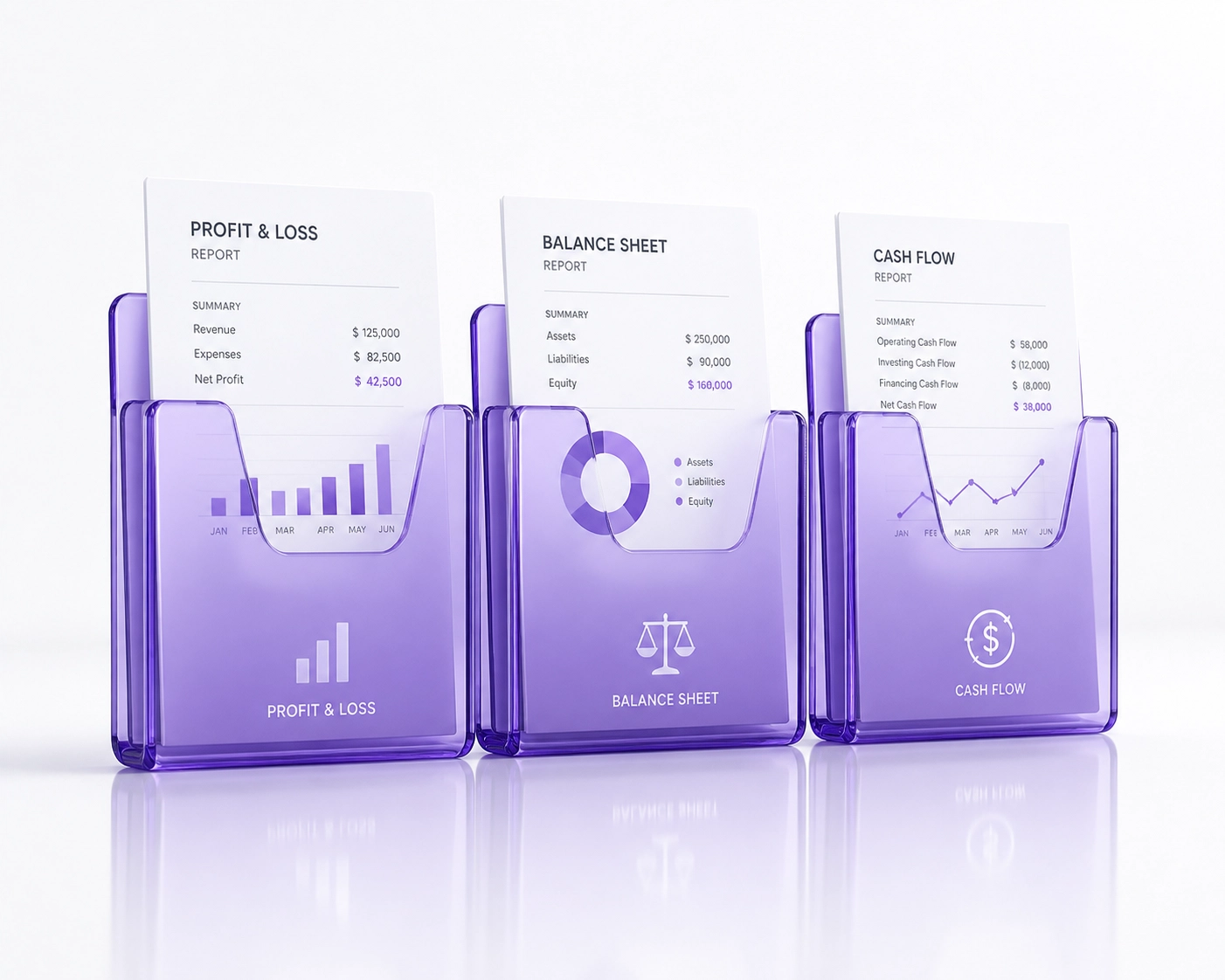
Minimalist graphic of digital wallets and a bar chart showing crypto cost basis tracking for business.

What happens if your records don’t match the 1099-DA?

Accuracy is no longer optional. If a broker reports that you sold $50,000 worth of Solana, but your books show $45,000, the IRS automated systems will likely trigger a notice. This is why reconciliation is the "secret sauce" of good bookkeeping. Every month, you or your bookkeeper should be matching your internal ledger against your exchange statements.

If you find a discrepancy, you need to resolve it immediately. Sometimes brokers make mistakes, or they might have different "valuation" methods for tokens. By staying on top of this monthly, you avoid the "tax season panic" where you're trying to find a receipt for a transaction that happened fourteen months ago. Many of our clients find that our monthly packages are the best way to keep this reconciliation on autopilot.

Why is separating business and personal crypto accounts critical?

One of the biggest mistakes we see is "commingling" funds. This happens when a business owner uses their personal Coinbase account to pay a business vendor or vice-versa. While this might seem convenient in the moment, it creates a nightmare for Form 1099-DA reporting.

The IRS expects business assets to be held in business accounts. If your personal name is on the 1099-DA but the income belongs to your S-Corp, you’re going to have a hard time explaining that during an audit. Furthermore, it makes it nearly impossible to calculate your true business profit. If you’ve already mixed your accounts, don't worry, we specialize in bookkeeping cleanup to get those threads untangled before the IRS comes knocking.

Abstract visual of book reconciliation matching small business crypto records with IRS Form 1099-DA.

How can a bookkeeper help with the 2026 crypto transition?

You didn't start your business to become a crypto forensic accountant. A professional bookkeeper acting as your essential partner takes the technical burden off your shoulders. We ensure that every crypto transaction is categorized correctly, whether it’s revenue, an expense, or a capital gain.

Specifically, we help you:

  • Categorize crypto payments as business income or expenses.
  • Reconcile exchange statements with your bank accounts.
  • Monitor for the arrival of Form 1099-DA and ensure it matches your ledger.
  • Provide clean, organized reports to your CPA for tax filing.

This partnership allows you to focus on growing your business while we handle the data entry and compliance checks. If you're ready to get your crypto books in order, we'd love to chat. You can book a call with us here.


About the Author

Jelena Arkula is the owner of Books LA, an accounting firm based in Los Angeles, California. With years of experience helping local businesses navigate the complexities of cloud accounting, Jelena and her team are experts in QuickBooks Online and Xero. We specialize in providing "real-world" bookkeeping solutions that move businesses forward.


FAQ: Small Business Crypto Reporting

1. What is the deadline for receiving Form 1099-DA?
Generally, brokers must provide you with the form by January 31st of the year following the transactions. For 2026 reporting, you should receive your forms by early 2027.

2. Does Form 1099-DA apply to NFTs?
Yes, the IRS definition of "digital assets" includes NFTs (Non-Fungible Tokens). If your business sells or exchanges an NFT through a broker, expect a 1099-DA.

3. What if I use a decentralized exchange (DEX) like Uniswap?
Currently, the IRS has temporarily excluded some decentralized protocols from the immediate reporting requirements while they study the technology further. However, you are still legally required to report those gains on your taxes even if you don't receive a form.

4. How much does it cost to have a bookkeeper manage crypto?
Crypto bookkeeping is often an "add-on" service because it requires specialized software and more frequent reconciliation. Pricing usually depends on your transaction volume. You can see our base rates on our packages page.

5. I only buy and hold crypto; do I get a form?
No. You only receive a Form 1099-DA when you sell, exchange, or use digital assets to pay for goods or services. Simply holding (HODLing) is not a reportable event.

6. Can't I just use my exchange's year-end report?
You can use it as a starting point, but exchange reports are notoriously "siloed." They don't know what happened to the asset before it arrived on their platform or after it left. A bookkeeper provides the "full picture" across all your wallets.

7. What are the penalties for not reporting crypto?
The IRS is treating crypto non-compliance very seriously. Penalties can include substantial fines for underpayment of tax, and in extreme cases, it could be viewed as tax evasion. Matching your books to the 1099-DA is the best way to stay safe.

8. Do I need to report crypto if I lost money?
Yes! Reporting losses is actually beneficial because it can often offset your other business gains, reducing your overall tax bill. Your bookkeeper will help you track these "capital losses."

Ready to get your crypto books organized?
Click here to request a bookkeeping review or contact us to learn how we can help your LA business stay compliant in 2026.

Why Everyone is Talking About Real-Time Bookkeeping (And How AI Makes it Possible)

Why Everyone is Talking About Real-Time Bookkeeping (And How AI Makes it Possible)

Fast Answer: Real-time bookkeeping uses artificial intelligence to record and categorize financial transactions the moment they occur. This approach is for small business owners who need instant financial clarity to manage cash flow and make quick decisions without waiting for a monthly report.

Last updated: March 19, 2026

Waiting until the 15th of the month to see how you performed last month is a risky way to run a business. You might notice a cash shortage or a massive overspend on supplies far too late to fix it. Traditionally, small business bookkeeping involved a "lag" because humans had to manually enter data from receipts and bank statements. Today, that delay is disappearing. Artificial intelligence now acts as a digital assistant that never sleeps, reconciling accounts and flagging errors in seconds.

What exactly is real-time small business bookkeeping?

Real-time bookkeeping is the practice of updating your financial records continuously rather than in batches. Instead of a "month-end close" being the only time you see your numbers, your dashboard is accurate every morning. This shift happens because AI software connects directly to your bank feeds and credit cards.

Because the data flows in constantly, the software can suggest categories for every expense immediately. If you buy coffee for a client, the AI sees the transaction and matches it to "Meals and Entertainment" before you even leave the cafe. You get a living, breathing view of your profit and loss statement. This level of visibility helps you stay ahead of bills and understand your true bank balance at any given moment.

Purple pulse line transitioning into a bar chart showing real-time small business financial visibility.

How does AI for bookkeeping actually work?

Most people think of AI as a futuristic robot, but in accounting, it is mostly about pattern recognition and machine learning. When you use bookkeeping services that leverage AI, the software looks at thousands of past transactions to predict how a new one should be handled. It learns your habits. For example, if you always pay your Los Angeles office rent to the same landlord, the AI recognizes the vendor name and maps it to your "Rent" account automatically.

Specifically, AI excels at "Optical Character Recognition" or OCR. This means it can read a blurry photo of a receipt and pull out the date, the vendor, the tax amount, and the total. It then compares this receipt to your bank statement to ensure everything matches. This process, known as automated reconciliation, reduces the human error that typically happens during manual data entry. You can learn more about why these tools are vital in our post on why small businesses need cloud bookkeeping to stay competitive.

Why should you connect AI to QuickBooks or Xero?

Software like QuickBooks Online (QBO) and Xero are the engines of your financial house, but AI is the fuel. Connecting a dedicated AI expense tool directly to your accounting software creates a seamless bridge. When these systems talk to each other, data flows without you having to export CSV files or click "upload" every Friday.

Actually, the real power lies in the integration. When you link an AI tool like Dext or Hubdoc to QBO, the receipt data lands exactly where it belongs in your general ledger. This prevents "orphan transactions" where you have a bank charge but no supporting document. Keeping your documents organized is a major part of enhancing operational efficiency. By connecting these tools, you ensure that your books are always audit-ready without spending your Sunday nights scanning paper.

Abstract purple cubes connected by data lines representing AI integration for small business bookkeeping.

What are the common pitfalls of automated bookkeeping?

While AI is incredibly powerful, it is not perfect. One major pitfall is the "set it and forget it" mentality. Business owners often assume that because the software is automated, they never have to look at it. This leads to "garbage in, garbage out." If the AI miscategorizes a large equipment purchase as a simple repair, your tax liability and your asset list will be wrong.

Another mistake is ignoring duplicate entries. Sometimes a receipt is scanned twice, or both a bank feed and a manual entry exist for the same bill. If you don't have a human expert reviewing the AI's work, your expenses might look much higher than they actually are. We often see these issues when performing a bookkeeping cleanup. To avoid these traps, you must treat AI as a tool that assists a bookkeeper, not a total replacement for professional oversight.

How do you handle expense management with AI?

Effective expense management is about more than just saving receipts. It is about understanding where your money is going in real-time. AI tools allow you to set spending limits and receive alerts when a specific category, like "Marketing," is nearing its monthly budget. This proactive approach is a massive upgrade over the old way of looking at a spreadsheet once a year.

To get started, you should choose one AI tool that integrates with your current accounting software. Train your team to snap photos of every receipt immediately. Consequently, your "Accounts Payable" will always be current, showing you exactly who you owe and when the money needs to leave your account. Mastering this flow is essential for business success. When your expenses are managed by AI, you spend less time hunting for paper and more time growing your company.

Digitizing a paper receipt with a laser to illustrate AI-driven expense management and bookkeeping services.

Is real-time bookkeeping right for your Los Angeles business?

If you are a solo freelancer with five transactions a month, you might not need high-level AI automation. However, for growing businesses in Los Angeles with employees, multiple vendors, and complex sales, real-time data is a necessity. The faster your business moves, the faster your data needs to move.

Professional bookkeeping services provide the human intelligence needed to verify what the AI is doing. We act as the final check to ensure your reports are accurate and your strategy is sound. Transitioning to this model might feel like a big step, but it is actually a move toward peace of mind. You can find a helpful checklist for transitioning to cloud bookkeeping to make the move easier.


About the Author

Jelena Arkula is the owner of Books LA, a boutique accounting firm based in Los Angeles. With years of experience in QuickBooks Online and Xero, Jelena helps small business owners move away from messy spreadsheets and into clear, real-time financial systems. She believes that better data leads to better lives for entrepreneurs.


FAQ: Common Questions About AI and Real-Time Bookkeeping

Does AI mean I don't need a bookkeeper anymore?
No. AI handles the repetitive data entry, but a bookkeeper is still needed to audit the data, handle complex entries, and provide financial insights.

How much do AI bookkeeping tools cost?
Most integrations like Dext or Hubdoc cost between $20 and $50 per month, depending on the volume of documents you process.

Is my financial data safe when using AI?
Yes. Reputable AI tools use bank-level encryption. Using cloud-based systems is generally safer than keeping paper files or Excel sheets on a single laptop.

Can AI handle my sales tax calculations?
AI can help categorize taxable sales, but you still need a professional to ensure you are filing correctly with the state.

What if the AI makes a mistake?
Mistakes happen, which is why monthly reconciliations are vital. A human expert should review the AI's categorizations to catch and fix errors before they impact your reports.

How long does it take to set up an AI workflow?
Usually, a basic connection between your bank and QBO takes minutes. Fine-tuning the "rules" and training the AI on your specific vendors can take a few weeks.

Does this help with my income taxes?
While we do not provide income tax advice, real-time bookkeeping makes your CPA's job much easier. They will have clean, organized data ready for tax season.


Disclaimer: Books LA provides bookkeeping and consulting services. We do not provide income tax advice. We work closely with CPAs for income tax matters, and we recommend you confirm all tax-related strategies with your CPA.

Ready to see your numbers in real-time? Visit Books LA to learn how we can help you modernize your finances.

Startup Bookkeeping: The 2026 Guide to Real-Time Weekly Close (2026)

Startup Bookkeeping: The 2026 Guide to Real-Time Weekly Close (2026)

Last updated: February 13, 2026

Real-time weekly close means you know your cash position, burn rate, and profitability every single week instead of waiting 30 days to see what happened last month. For startups burning through runway, that lag can be deadly.

This guide walks you through the exact startup bookkeeping process we use with growth-stage businesses in LA. You'll get the weekly checklist, the key reports to watch, and what to automate so you're not drowning in spreadsheets.

Why Startups Need Weekly Close (Not Just Monthly)

Monthly books worked fine in 1995. They don't work when you're testing pricing, scaling ads, hiring fast, or talking to investors.

Here's what weekly close gives you:

Cash runway visibility. You know exactly how many weeks you have left at your current burn rate.

Faster course correction. If a marketing channel tanks or a client churns, you see it in 7 days, not 35.

Investor-ready numbers. Your board deck is always current. No scrambling before a fundraise.

Confident decision-making. You can approve a hire, cut a vendor, or adjust pricing based on real data from last week.

Monthly close is a rearview mirror. Weekly close is a dashboard.

Comparison of monthly bookkeeping close versus real-time weekly close for startups

What a Real-Time Weekly Close Includes

This isn't about logging in daily to check your bank balance. It's a structured process that takes 60 to 90 minutes once a week.

Here's what you're doing:

1. Categorize all new transactions

Every bank transaction and credit card charge from the past 7 days gets coded. Software, contractor payments, office supplies, meals, ads.

Use your cloud accounting software (QuickBooks Online or Xero). Bank feeds pull everything in automatically. You just review and confirm the category.

2. Send invoices and follow up on overdue receivables

If you bill clients, this happens weekly. Send new invoices. Chase anything past 15 days.

For SaaS or subscription businesses, this is automated. You're just spot-checking failed payments.

3. Reconcile your main accounts

Match your accounting software balance to your actual bank balance. Do the same for your business credit card.

Catches duplicate charges, missed transactions, or bank errors before they pile up.

4. Check your key metrics

Pull three reports every week:

  • Profit and Loss (P&L) for the week. What did you spend? What came in?
  • Cash flow summary. Ending cash balance and weekly burn rate.
  • Accounts Receivable aging. Who owes you money and for how long?

You're not doing deep analysis here. You're scanning for red flags.

5. Update your 13-week cash forecast

This is the single most important tool for startup bookkeeping. It's a rolling forecast that shows projected cash in and cash out for the next 13 weeks.

Update it with actuals from last week. Adjust for any new hires, contracts, or payments coming in.

This is what keeps you from running out of runway by surprise.

The Weekly Close Checklist (Copy This)

Here's the exact sequence. Do it the same day every week. Friday morning works for most startups.

  • Log into QuickBooks Online or Xero
  • Review and categorize last 7 days of bank transactions
  • Categorize last 7 days of credit card charges
  • Reconcile main checking account
  • Reconcile business credit card
  • Send any outstanding invoices
  • Follow up on invoices older than 15 days
  • Run P&L for the past week
  • Run cash flow summary
  • Check A/R aging report
  • Update 13-week cash forecast with actuals
  • Flag anything unusual (big unexpected expense, delayed payment, etc.)

Takes 60 to 90 minutes once you've done it twice.

Startup bookkeeping weekly close checklist workspace with financial dashboard and reports

What to Automate (And What Not To)

Weekly close is fast because most of the data entry is automated. Here's what you set up once and forget:

Automate:

  • Bank and credit card feeds
  • Recurring invoices (subscriptions, retainers)
  • Recurring expenses (software, rent, insurance)
  • Payroll sync from Gusto or Rippling

Don't automate:

  • Transaction categorization review (software guesses wrong 20% of the time)
  • Reconciliation (you need human eyes on this)
  • Cash forecast updates (requires judgment about timing)

The goal is to automate data flow, not decision-making.

Common Mistakes Startups Make With Weekly Close

Mistake 1: Mixing personal and business expenses

Your bookkeeper can't categorize a transaction if they don't know whether it's a business meal or your lunch. Use separate cards. Always.

Mistake 2: Waiting until expenses pile up

If you skip two weeks, you're stuck trying to remember what a $47 charge from three weeks ago was for. Weekly rhythm prevents this.

Mistake 3: Not tracking contractor payments properly

1099 reporting is mandatory. If you're paying contractors through Venmo or Zelle, you're creating a mess. Use a business account and code every payment.

Mistake 4: Ignoring the cash forecast

P&L tells you if you're profitable. Cash forecast tells you if you'll survive. Startups die from running out of cash, not from being unprofitable in month six.

When to Bring in Help

You can handle weekly close yourself if:

  • You have fewer than 50 transactions per week
  • You're comfortable in QuickBooks or Xero
  • You have 90 minutes every Friday
  • You understand debits, credits, and accrual accounting

You should bring in bookkeeping services when:

  • Transaction volume hits 200+ per month
  • You're raising a round and need investor-grade books
  • You're spending more time on bookkeeping than product or sales
  • You've made categorization mistakes that messed up your tax filing

We work with a lot of growth-stage startups in Los Angeles. The most common tipping point is Series A. Pre-seed and seed stage founders usually handle it themselves. Post-Series A, the complexity and stakes are too high.

Automated bank transaction flow connecting to startup bookkeeping software

How This Works With Your CPA

Weekly startup bookkeeping handles the transaction-level work. Your CPA handles tax strategy and compliance.

Here's the division:

We handle (or you handle):

  • Weekly transaction categorization
  • Monthly reconciliation
  • Financial reports
  • Cash forecasting
  • 1099 prep

Your CPA handles:

  • Income tax filing
  • Tax strategy and planning
  • Quarterly estimated tax calculations
  • Nexus and sales tax registration (we can help track sales tax, but they advise on filing)

Important: We don't provide income tax advice. We coordinate with your CPA to make sure they have clean books for tax prep. Always confirm tax decisions with your CPA.

The Reports That Matter Most

Not all financial reports are equally useful for startups. Here are the three you actually need every week:

1. Profit & Loss (P&L)

Shows revenue and expenses for a specific period. Run it for the past 7 days and compare it to the prior week.

You're looking for: unexpected spikes in spending, revenue dips, or patterns you didn't expect.

2. Cash Flow Summary

Shows how much cash came in, how much went out, and your ending balance. This is survival data.

Track your weekly burn rate here. If you spent $25k last week and brought in $10k, you burned $15k.

3. Accounts Receivable Aging

Lists everyone who owes you money and how long the invoice has been outstanding.

Anything past 30 days needs a follow-up call. Anything past 60 days might not get paid.

These three reports take 5 minutes to generate in QuickBooks or Xero. They tell you everything you need to know about your financial health right now.

What Happens If You Skip Weekly Close

You don't explode immediately. But here's what creeps in:

Week 2: Transactions pile up. You forget what that $89 charge was for.

Week 4: Your cash forecast is stale. You approve a hire based on outdated numbers.

Week 8: Tax time arrives and your books are a mess. Your CPA charges you extra for cleanup. You miss deductions.

Week 12: An investor asks for financials. You scramble for three days to produce something accurate. It delays your round.

Weekly startup bookkeeping isn't about perfection. It's about avoiding surprises.

Startup growth trajectory showing scaling bookkeeping complexity over time

Setting Up Your First Weekly Close

If you're starting from scratch, here's the sequence:

Step 1: Connect your bank and credit card to QuickBooks Online or Xero. Let it pull in the last 90 days of transactions.

Step 2: Spend 2 to 3 hours categorizing everything from the past 90 days. This is the one-time pain. (Or hire someone to do this as a bookkeeping cleanup).

Step 3: Reconcile all accounts so your starting balances are accurate.

Step 4: Set up your 13-week cash forecast in Google Sheets or Excel. List every expected cash inflow and outflow by week.

Step 5: Pick a day (Friday morning works well) and block 90 minutes every week.

Step 6: Follow the checklist above every single week.

After four weeks, the process becomes automatic. You'll finish in 60 minutes.

Ready to Get Your Books on a Weekly Rhythm?

If you're a growth-stage startup in LA and you want someone to handle the weekly close for you, we can help. We work with founders who need investor-ready books without spending their Fridays in QuickBooks.

Book a short call and we'll walk you through what we'd handle, what you'd still own, and what it costs.


FAQ: Weekly Close for Startups

How long does weekly close take?

60 to 90 minutes once you've done it twice. The first time takes longer because you're learning the workflow. Most of that time is reviewing and categorizing transactions. Reconciliation and reporting take 10 minutes combined.

Can I do weekly close myself or do I need a bookkeeper?

You can do it yourself if you have fewer than 50 transactions per week and you're comfortable with accounting software. Most pre-seed and seed startups handle it in-house. Post-Series A, the volume and complexity usually require outside help.

What software do I need?

QuickBooks Online or Xero. Both support bank feeds, invoicing, and the reports you need. QBO is more common in the U.S. Xero has a cleaner interface. Either works.

What's a 13-week cash forecast and why do I need it?

It's a rolling projection of your cash balance for the next 13 weeks. You list expected cash in (customer payments, investment) and cash out (payroll, software, contractors) by week. It shows you when you'll run out of money if nothing changes. This is how you avoid a cash crisis.

Do I need weekly close if I'm pre-revenue?

Yes. Even if you have no revenue, you're spending money. Weekly close tracks your burn rate and keeps your cash forecast accurate. Investors will ask for this data when you raise.

What happens if I miss a week?

Nothing breaks immediately. But transactions pile up and you lose visibility. If you miss two weeks, you're playing catch-up. Miss a month and you're doing cleanup work instead of weekly close.

How is this different from monthly close?

Monthly close gives you accurate numbers 30 days after the month ends. Weekly close gives you directional numbers 7 days after the week ends. For startups, speed matters more than perfection. You'd rather be 95% accurate in 7 days than 100% accurate in 35 days.

Do you provide tax advice?

No. We handle the bookkeeping and coordinate with your CPA for income tax matters. Your CPA handles tax strategy, filing, and compliance. Always confirm tax decisions with your CPA.

What does weekly close cost if I outsource it?

For startups with 100 to 300 transactions per month, expect $400 to $800/month for weekly bookkeeping services. Price depends on transaction volume, complexity (multiple entities, international payments), and how clean your books are when we start. Reach out for a specific quote.

Can I switch from monthly to weekly mid-year?

Yes. You just start following the weekly checklist. If your books are messy, do a one-time cleanup first so your starting point is accurate. Then begin the weekly rhythm.


Books LA provides bookkeeping services for growth-stage startups in Los Angeles. We use QuickBooks Online and Xero and work closely with your CPA to keep your books investor-ready. Based in LA, we specialize in helping founders who need accurate financials without spending their time on accounting software.

1099 Reporting Changes: How Professional Bookkeeping Services Keep You Compliant (2026)

1099 Reporting Changes: How Professional Bookkeeping Services Keep You Compliant (2026)

Last updated: February 13, 2026

Tracking contractor payments just got easier, but only if your books are set up correctly. The biggest change for 2026 is the 1099-NEC and 1099-MISC threshold increasing from $600 to $2,000, and professional bookkeeping services ensure you track these new limits accurately while managing the mandatory e-filing for businesses with 10 or more forms.

If you've been issuing 1099s for every contractor who crossed the $600 mark, you're about to file a lot fewer forms. That's good news for small business owners drowning in paperwork. But the flip side? You still need to track every payment, even the ones that fall below the new threshold, because your contractors still owe taxes on that income.

This is where professional bookkeeping services make the difference. Let's break down exactly what changed, what it costs to stay compliant, and how long it takes to get your systems ready.

What Our Bookkeeping Services Include

Here at Books LA, our 1099 compliance package covers the full cycle, not just the January scramble.

Year-round contractor tracking. We categorize every payment to contractors in your QuickBooks Online or Xero account, flagging which vendors are approaching the $2,000 threshold. This means you know exactly where you stand in November, not February.

W-9 collection and storage. We request and organize W-9 forms from every contractor before you cut the first check. Missing or incorrect W-9s are the number one reason 1099s get rejected or delayed.

Software setup and testing. We connect your accounting system to approved 1099 e-filing software and run test submissions before the deadline. The IRS rolled out a new IRIS (Information Returns Intake System) platform in 2025, and it has different formatting requirements than the old system.

Organized W-9 and 1099 forms connected in workflow for bookkeeping services tracking

Payment verification. Before filing, we cross-check your recorded payments against bank statements to catch duplicate entries or missed transactions. Small business bookkeeping mistakes here trigger IRS notices, and those are a pain to resolve.

Recipient copy distribution. We generate and send contractor copies by the January 31 deadline. That keeps you on good terms with your contractors and avoids the "I never got my 1099" phone calls.

IRS e-filing. For businesses with 10 or more forms, e-filing is mandatory in 2026. We handle the submission, confirm acceptance, and store the confirmation receipts in your file.

How Much Bookkeeping Services for 1099s Cost

The cost depends on how many contractors you pay and how messy your records are going into the filing season.

Clean books, under 25 contractors: $300 to $600 for the full 1099 package. This assumes your books are reconciled monthly and we've been tracking contractors all year.

Messy books or mid-year handoff: $800 to $1,500. If we need to reconstruct payment records, hunt down missing W-9s, or fix vendor categorizations, it takes more time.

High-volume businesses (25+ contractors): Custom pricing, usually $1,200 to $2,500. Construction companies, event planners, and creative agencies often fall into this range.

Outsourced bookkeeping with monthly service typically includes 1099 prep as part of the package. If you're paying for monthly reconciliation and categorization, there's minimal extra work at year-end because the heavy lifting is already done.

One-time 1099 cleanup is always more expensive than ongoing service. That's the math of bookkeeping. Fixing a year of data takes longer than maintaining it month by month.

How Long the 1099 Software Setup Takes

If you're switching to e-filing for the first time or moving to the new IRIS system, plan for at least two weeks of setup time.

Week 1: Data prep. We export your contractor payment data, verify W-9 forms, and clean up any mismatched names or TINs (taxpayer identification numbers). The IRS matches these exactly, so "John Smith DBA Acme Consulting" and "Acme Consulting" will trigger a rejection.

Week 2: Software connection and testing. We link your accounting system to the e-filing platform, map your data fields, and submit a test file. The IRIS system usually returns test results within 48 hours. If there are errors, we fix them and resubmit.

January calendar highlighting 1099-NEC filing deadline for tax year compliance

After the first year, setup is faster. Most bookkeeping services can turn around 1099s in three to five business days if your books are current and W-9s are on file.

The January 31 deadline doesn't move, so starting in December is smart. Contractors are less responsive in January, and if you need a corrected W-9, you don't want to wait until January 28 to find out.

New 1099 Thresholds: What Your Bookkeeping Services Need to Track

The $2,000 threshold applies to payments made during the 2026 tax year. That means any contractor who received $2,000 or more in total payments from you between January 1, 2026 and December 31, 2026 gets a 1099-NEC.

Payments under $2,000 still matter. Your contractor must report that income on their tax return, even if you don't issue a form. This is why good small business bookkeeping systems track every contractor payment, not just the ones that cross the threshold. If the IRS audits your contractor and you paid them $1,800, they might ask you for proof of payment.

Backup withholding still applies at $2,000. If a contractor doesn't provide a valid W-9, you're required to withhold 24% of payments once they hit $2,000 in a calendar year. We flag these situations in your monthly reports so you can follow up before it becomes a problem.

1099-K threshold changed too. Third-party payment platforms like PayPal and Venmo now issue 1099-K forms only when a contractor receives more than $20,000 and 200 transactions. This is a huge shift from the $600 threshold that was briefly in effect. If you pay contractors through these platforms, we track both channels to make sure you're not double-reporting.

State rules vary. California, for example, still requires reporting at the $600 threshold for state tax purposes. Professional bookkeeping services familiar with multi-state compliance handle these split reporting requirements automatically.

The IRS also introduced inflation adjustments starting in 2027, meaning the $2,000 threshold will increase periodically. We track these updates and adjust your systems accordingly.

Why E-Filing Matters More in 2026

If you issue 10 or more 1099 forms, you must e-file. No exceptions.

The old paper filing process is officially dead for most businesses. The IRS wants digital submissions through the IRIS platform because it reduces processing errors and speeds up their matching process.

What the IRIS system checks:

  • Exact name and TIN matches with IRS records
  • Correct formatting for dates, amounts, and addresses
  • Valid payer information (your business name, EIN, and address)

If any field is wrong, the IRS rejects the entire batch. You have to fix it and resubmit. This is why professional 1099 compliance workflows include pre-filing validation. We catch errors before the IRS sees them.

IRIS e-filing system interface for submitting 1099 forms to the IRS electronically

Paper filers (under 10 forms) can still mail forms to the IRS, but e-filing is faster and gives you instant confirmation. Most businesses choose to e-file even when it's not required.

How Books LA Handles 1099 Compliance

We're a Los Angeles-based bookkeeping firm specializing in small business owners who need accurate, timely 1099 reporting without the stress.

Our team is QuickBooks Online and Xero certified, and we've processed over 1,000 1099 forms for clients in construction, consulting, creative services, and property management. We know the software, we know the deadlines, and we know the IRS quirks that trip up DIY filers.

We don't just file forms in January. We build your bookkeeping services around compliance from day one. That means every contractor is set up correctly in your system, every payment is categorized properly, and every W-9 is stored where we can find it.

When January rolls around, we're not scrambling. We're reviewing, confirming, and filing.

What Happens If You Miss the Deadline

The 1099-NEC filing deadline is January 31, 2027 for the 2026 tax year. Miss it, and penalties start immediately.

IRS penalties for late filing:

  • $60 per form if filed within 30 days
  • $120 per form if filed after 30 days but before August 1
  • $310 per form if filed after August 1 or not at all

For a business with 20 contractors, that's $6,200 in penalties if you miss the deadline entirely. Small mistakes (wrong TIN, misspelled name) carry lower penalties, but they still add up.

We've never missed a 1099 deadline for a client. Our process includes multiple check-ins, automated deadline reminders, and early filing whenever possible.

The CPA Coordination Piece

Books LA provides bookkeeping services, not tax advice. We coordinate with your CPA for final income tax filings and make sure your 1099 data matches your year-end books.

Most CPAs prefer to receive clean, reconciled books and completed 1099 files by mid-January. This gives them time to review before filing your business tax return. If your CPA finds discrepancies, we work with them to resolve it quickly.

We handle sales tax, payroll tax, and business license compliance as part of our standard service. For income tax strategy and deductions, we defer to your CPA. It's a partnership, and it works because everyone stays in their lane.

If you don't have a CPA, we can introduce you to several in the Los Angeles area who specialize in small business returns. Having both a bookkeeper and a CPA is the standard setup for most businesses once they start paying contractors.

Frequently Asked Questions

What is the 1099-NEC threshold for 2026?

The threshold is $2,000. Any contractor who receives $2,000 or more in payments during the 2026 calendar year must receive a 1099-NEC form by January 31, 2027.

Is the 1099-K threshold changing?

Yes. Third-party payment processors now issue 1099-K forms only when a payee receives more than $20,000 and 200 transactions. This is a significant increase from the temporary $600 threshold.

What is the new IRIS system for 1099s?

IRIS (Information Returns Intake System) is the IRS's new e-filing platform launched in 2025. It replaces the old FIRE system and has stricter formatting requirements. Most bookkeeping services now use third-party software that integrates with IRIS for easier submissions.

Who needs to e-file 1099s in 2026?

Any business filing 10 or more information returns (including 1099-NEC, 1099-MISC, and 1099-K) must e-file. Businesses filing fewer than 10 forms can still mail paper copies, but e-filing is faster and provides instant confirmation.

Do I need to report payments under $2,000?

You don't need to issue a 1099 form, but the payment is still taxable income for the recipient. They must report it on their tax return. You should still track these payments in your books in case of an audit.

Does my state have different 1099 rules?

Yes. California, for example, requires businesses to report contractor payments over $600 for state tax purposes, even though the federal threshold is $2,000. Check with your CPA or a local bookkeeping service to confirm your state's requirements.

Can bookkeeping services handle contractor W-9s?

Yes. Most professional bookkeeping services collect, verify, and store W-9 forms as part of contractor onboarding. We request W-9s before processing the first payment to avoid delays at year-end.

When is the 1099-NEC filing deadline for 2026?

The deadline to file 1099-NEC forms with the IRS and provide copies to contractors is January 31, 2027. This applies to payments made during the 2026 tax year. Both the IRS copy and the contractor copy are due on the same date.


Ready to stop stressing about 1099s? Books LA handles the full process, from W-9 collection to IRS e-filing. Book a call to see how we keep your 1099 compliance simple and on time.

AI for Bookkeeping: How to Integrate AI with QBO and Xero for Seamless Accounting (2026)

AI for Bookkeeping: How to Integrate AI with QBO and Xero for Seamless Accounting (2026)

Last updated: March 19, 2026

Fast Answer: AI for bookkeeping automates up to 80% of manual data entry by syncing directly with QuickBooks Online or Xero to categorize transactions and reconcile accounts in real time. This guide is for small business owners who want to reduce administrative overhead and improve financial accuracy through modern AI integration.

Do you find yourself staring at a mountain of digital receipts every Sunday night while your bank balance remains a mystery? Most small business owners spend over 10 hours a month on basic data entry, which is time taken away from growing your actual business. By 2026, the question is no longer if you should use AI for bookkeeping, but how you can connect it to your existing software without creating a technical mess.

How does AI for bookkeeping actually work with QBO and Xero?

Modern AI tools do not just "read" numbers; they understand context. When you connect an AI agent to QuickBooks Online (QBO) or Xero, it acts as a digital assistant that works 24/7 inside your ledger. Native tools like Intuit Assist for QBO or Xero’s built-in predictive coding use machine learning to look at your historical data.

Specifically, these tools identify patterns in how you spend money. If you frequently buy supplies from a specific vendor, the AI recognizes the vendor name and suggests the correct Chart of Accounts category before you even open the software. Furthermore, third-party apps like Booke.ai or Integra Balance take this a step further by logging into your portal daily to match invoices to bank feed transactions automatically.

Digital tablet showing AI for bookkeeping automatically syncing data into a cloud accounting ledger.

What are the most common AI bookkeeping pitfalls for small businesses?

While AI is powerful, it is not a "set it and forget it" solution. One of the biggest mistakes we see at Books LA is business owners giving the AI too much autonomy without a review process. This often leads to "auto-post" errors where the AI guesses a category incorrectly and applies that mistake to hundreds of transactions.

Consider a recent case where a construction client used an automated tool to handle fuel expenses. The AI saw "Chevron" and automatically categorized every charge as "Fuel." However, many of those charges were actually for vehicle repairs performed at the same location. Because no one was reviewing the work, their repair budget looked tiny while their fuel costs were massively inflated. Consequently, their tax strategy for the year was based on flawed data.

Another pitfall is the "Data Ghost" effect. This happens when an AI tool creates a duplicate transaction because it cannot tell the difference between a manual entry you made and the automated bank feed. To avoid this, you must set up clear rules within your bookkeeping services workflow that define which source of data is the "source of truth."

Can AI really handle your expense management without manual help?

Expense management used to mean stuffing paper into a shoebox. Now, AI-driven OCR (Optical Character Recognition) has made the physical shoebox obsolete. When you use tools like Dext or Hubdoc connected to Xero, the AI extracts the date, vendor, total, and tax amount with incredible precision.

However, the "manual" part has changed from data entry to data verification. You still need to ensure the AI correctly identifies the business purpose of the expense. For example, a dinner at a restaurant could be "Meals and Entertainment" or it could be a "Staff Meeting." AI cannot know who you were with unless you tell it. Most successful businesses use add-ons and apps to bridge this gap, allowing employees to snap a photo and add a quick note that the AI then processes.

Automated receipt scanning process for efficient small business bookkeeping and expense management.

Which AI tools are best for connecting to your accounting software?

Choosing the right stack depends on your volume and complexity. If you are a solo entrepreneur, the native AI features within QuickBooks Online are often enough to handle basic categorization. For growing companies with higher transaction volumes, third-party integrations provide more robust features.

  1. Booke.ai: This is a favorite for those using QBO or Xero because it offers a "non-human bookkeeper" experience. It reconciles accounts before your morning coffee is ready.
  2. Dext (formerly Receipt Bank): This is the gold standard for expense management. It pulls data from your email, your phone, and even direct supplier fetches.
  3. Fathom: If you want AI to help with high-level reporting and forecasting, this tool connects to your books to provide visual insights that are much easier to read than a standard P&L.

Integrating these tools is usually as simple as authorizing an API connection. Once connected, the data flows back and forth, keeping your small business bookkeeping updated in real time. You can read more about why this connectivity matters in our post on why every small business needs cloud accounting.

How do you ensure your AI bookkeeping remains accurate?

The secret to seamless accounting in 2026 is the "Human-in-the-Loop" model. AI handles the heavy lifting of data extraction and initial categorization, while a professional bookkeeper performs a weekly or monthly review. This ensures that weird edge cases, like a refund that looks like income, don't skew your numbers.

You should establish a "Review Queue" in your software. This is a holding area where the AI places any transaction it is less than 95% sure about. By spending 15 minutes a week reviewing this queue, you maintain the integrity of your financial records without doing the 10 hours of grunt work. This balance of technology and expertise is exactly what we provide at Books LA.

Magnifying glass over a data node illustrating professional human oversight in AI bookkeeping services.

What does AI bookkeeping service cost compared to DIY?

Many owners try to DIY their AI setup to save money, but they often end up paying more in "cleanup costs" later. A basic QBO subscription might cost $30 to $90 per month, and additional AI apps can add another $20 to $50. If you spend 5 hours a month fixing AI mistakes, your "internal cost" is essentially your hourly rate multiplied by five.

In contrast, professional bookkeeping services that utilize AI can often provide a more fixed-cost solution. You get the benefit of the expensive AI tools and the expert oversight for a flat monthly fee. This usually results in cleaner books, better tax readiness, and zero Sunday night stress.


Ready to Upgrade Your Workflow?

If you are tired of fighting with your software and want your books to "just work," we can help. Our team specializes in connecting the best AI tools with your QBO or Xero account to give you back your time.

Book a short discovery call with Books LA today


Disclaimer: Books LA provides bookkeeping and business advisory services. We do not provide income tax advice, legal advice, or formal tax filings. We work closely with our clients' CPAs to ensure all financial data is tax-ready. Please consult with your CPA regarding specific income tax matters.


About the Author

Jelena Arkula is the owner of Books LA, a boutique accounting firm based in Los Angeles, California. As a certified QuickBooks ProAdvisor and Xero partner, Jelena has helped hundreds of small businesses transition from messy spreadsheets to high-efficiency, AI-integrated accounting systems. Her goal is to make financial clarity accessible for every entrepreneur.


Frequently Asked Questions

Is AI bookkeeping safe for my financial data?

Yes, most reputable AI tools use bank-level 256-bit encryption. They connect to your accounting software via secure APIs, meaning they never see your actual bank login credentials.

Will AI replace my bookkeeper?

AI replaces the "data entry" portion of bookkeeping, but it cannot replace the strategic oversight, tax-readiness checks, or personalized advice that a human professional provides.

How much does it cost to add AI to QuickBooks?

Native AI features are often included in your standard QBO subscription. Third-party AI apps generally range from $15 to $60 per month depending on transaction volume.

Can AI handle my 1099 filings?

AI can help track which vendors need 1099s by categorizing payments correctly, but a human should still perform the final review and filing to ensure compliance with IRS rules.

What happens if the AI categorizes something wrong?

You can easily "undo" or re-categorize any transaction in QBO or Xero. The AI learns from your corrections, so it is less likely to make the same mistake twice.

Do I need to be tech-savvy to use AI bookkeeping?

Not necessarily. Most tools are designed with a user-friendly interface. However, having a pro set up the initial "rules" and integrations ensures everything flows correctly from day one.

Does AI work with desktop versions of QuickBooks?

AI integration is significantly more limited and difficult with desktop software. To get the full benefit of AI automation, we strongly recommend moving to a cloud-based platform like QuickBooks Online or Xero.

7 Mistakes You’re Making with AI for Bookkeeping (and How to Fix Them)

7 Mistakes You’re Making with AI for Bookkeeping (and How to Fix Them)

Last updated: March 20, 2026

Using AI for bookkeeping saves time by automating data entry, but without human oversight, it often creates messy duplicates and miscategorized transactions that hide your true profit. This guide for small business owners identifies the seven most common AI accounting errors and provides the specific steps needed to keep your financial records accurate and tax-ready.

If you have ever looked at your Profit and Loss statement and wondered why your "Office Supplies" category is suddenly five times higher than usual, you have likely encountered the limitations of artificial intelligence. We are currently in an era where software can read a receipt in seconds. However, that software does not understand your business strategy. At Books LA, we see these "AI hiccups" daily. While we love technology, we know that small business bookkeeping still requires a human pulse to ensure the numbers actually make sense.

Why is your AI bookkeeping tool making mistakes?

Artificial intelligence functions on patterns and probability, not certainty. When you connect a tool to your bank feed, it looks at a transaction from "Amazon" and makes a guess based on what other businesses do. Because most people buy paper and pens there, the AI might categorize your new $2,000 laptop as a "low-value office supply" instead of a "fixed asset" that needs to be depreciated.

Consequently, your expenses look higher than they are, and your balance sheet is missing a significant asset. This type of error is why bookkeeping services have shifted from data entry roles to data validation roles. We are no longer just typing in numbers; we are auditing what the machines think they saw.

AI for bookkeeping tool categorizing a receipt, showing why professional bookkeeping services are needed for validation.

1. Are you letting AI replace human oversight entirely?

The biggest mistake business owners make in 2026 is the "set it and forget it" mentality. It is incredibly tempting to believe that because your software has an "Auto-Post" feature, you no longer need to look at your books. Unfortunately, AI does not have a "gut feeling."

Imagine your business pays a monthly subscription for a software tool. If that tool accidentally double-charges you one month, an AI rule might simply categorize both charges without flagging the error. A human bookkeeper, however, would immediately notice the duplicate and initiate a refund. Without that human eye, you are essentially letting a robot spend your money without supervision. We recommend using AI as a high-speed assistant, but you must remain the manager who signs off on the work.

2. Is "garbage data" ruining your financial forecasts?

AI is only as good as the information it consumes. If you connect a high-tech forecasting tool to a QuickBooks file that hasn't been reconciled in six months, the AI will produce beautiful, professional-looking charts that are completely wrong. This is often called "Garbage In, Garbage Out."

Before you implement advanced cloud bookkeeping automations, your books must be clean and reconciled. If your data contains old, uncashed checks or duplicate entries from 2024, the AI will incorporate those errors into its future predictions. For example, if you forgot to delete a canceled $5,000 invoice from last year, the AI might tell you that you have more cash flow coming in than you actually do, leading you to make a risky hiring decision you can't afford.

3. Are you putting your sensitive data at risk in public AI tools?

Many entrepreneurs are now using public tools like ChatGPT to analyze their financial trends. While these tools are powerful, uploading an export of your full general ledger or payroll report into a public AI is a massive security risk. Unless you are using an enterprise-grade version with strict data privacy toggles, that information could technically be used to train the model, making your private financial data part of a public data set.

Instead of using public bots, stick to the built-in AI features within secure platforms like QuickBooks Online or Xero. These companies spend millions on encryption and data sovereignty. If you must use an external tool, ensure you redact sensitive info like employee names, social security numbers, and specific bank account digits first. Protecting your data is just as important as balancing the ledger.

Secure digital vault and padlock illustrating data protection and privacy for automated small business bookkeeping.

4. Why does your AI keep miscategorizing transactions?

AI lacks context. It sees a $150 charge at a local restaurant and assumes it is "Meals and Entertainment." However, if that lunch was actually a celebration for a friend's birthday and not a business meeting, it shouldn't be on your books at all. Alternatively, if you bought a gift for a client at that same restaurant, it might fall under a different tax deduction limit.

Specific context is the "secret sauce" of navigating financial clarity. To fix this, you should avoid "Auto-Add" rules for vendors where the purchase intent changes frequently. For example, a trip to Costco could be for office snacks (supplies), a new printer (equipment), or cleaning products (janitorial). If you let the AI decide, it will pick one and stick to it, regardless of what was actually in the cart.

5. Is your AI running on outdated tax regulations?

Tax laws change, especially in a fast-moving economy. While software companies do their best to update their algorithms, there is often a lag between a new legislative change and the AI’s ability to apply it to your specific industry. If you rely solely on a machine to calculate your payroll complexity, you might find yourself underpaying taxes because the AI didn't catch a localized rate change in Los Angeles.

Regularly auditing your settings is essential. Every quarter, sit down with your bookkeeper or CPA to ensure the "rules" your AI is following still align with current IRS and state guidelines. Machines are great at following rules, but they are terrible at knowing when the rules have changed unless a human tells them.

6. How do you catch duplicate entries in automated feeds?

One of the most frustrating AI errors is the "Double Entry" glitch. This usually happens when you have an automated app (like an expense tracker) sending data to your accounting software, while your bank feed is also pulling in the same transaction. The AI sees two separate events and records them both.

Specifically, if you use a tool to scan a $50 receipt for gas and that tool pushes it to QuickBooks, and then your credit card feed also pulls in that $50 charge, the AI might not realize they are the same event. Suddenly, your "Fuel" expense is doubled. To fix this, you must consistently perform monthly bank reconciliations. This process acts as a safety net, catching any duplicates that the AI's "matching" logic missed.

Matching credit card icons and a checkmark representing the detection of duplicate entries in AI bookkeeping systems.

7. Why do your automations "drift" over time?

Automations are not permanent. A "Zap" or a bank rule that worked perfectly in January might start failing in June because a vendor changed their billing description or you opened a new merchant account. This is known as "automation drift."

If you don't audit your workflows, these small errors pile up quietly. We suggest a "Quarterly Automation Audit." Look at your top ten most active bank rules and ensure they are still sending data to the right accounts. If you've changed your business model, perhaps shifting from selling products to offering services, your old rules might be categorizing income incorrectly. Keeping your workflow management sharp ensures that technology works for you, rather than creating more work for you later.

A Practical Example: The "Marketing" Trap

Let's look at a real-world scenario. A client of ours, a small creative agency in LA, used an AI tool to categorize all Facebook charges as "Marketing Expense." For six months, the AI hummed along. However, during a review, we noticed their "Marketing" spend was $2,000 higher than their ad dashboard showed.

It turns out the owner had used the business card for a personal Facebook Marketplace purchase (a vintage desk) and a separate subscription for a software tool that Facebook also billed. The AI saw "Facebook" and blindly followed the rule. By the time we caught it, the books were a mess. A human review would have flagged the "Marketplace" description immediately, saving them from an incorrect tax filing.

About the Author: Jelena Arkula

I am Jelena Arkula, the owner of Books LA. Based right here in Los Angeles, our team specializes in helping growing businesses transition to the cloud using tools like QuickBooks Online and Xero. We don't just "do the books", we act as your financial partners to ensure your data is clean, your automations are smart, and your business is ready for growth. We believe that while AI is the future, a friendly, human expert is still the best shield against costly financial errors.


FAQ: Common Questions About AI Bookkeeping

1. Is AI bookkeeping cheaper than hiring a professional?
Initially, software subscriptions are cheaper than service fees. However, the cost of fixing "AI-made" errors during tax season often exceeds the monthly cost of a professional bookkeeper who prevents those errors from happening in the first place.

2. Can I trust QuickBooks’ "Auto-Add" feature?
We generally advise against "Auto-Add" for any vendor that isn't a fixed, unchanging cost (like rent). For most vendors, it is safer to have the AI "suggest" a category and then have a human click "Confirm."

3. Does AI handle sales tax correctly?
AI can help calculate rates, but it often struggles with nexus (where you are required to pay tax) and exempt items. You should always have a human verify your sales tax filings to avoid heavy penalties.

4. How often should I check my AI-automated books?
At a minimum, you should review your transactions weekly and perform a full reconciliation monthly. The longer you wait, the harder it is to remember what a specific transaction was for.

5. What is the best way to start using AI in my bookkeeping?
Start small. Use AI for receipt scanning (like Dext or Hubdoc) first. Once you are comfortable with how the data flows into your accounting software, you can slowly layer on more automation.

6. Will AI eventually replace bookkeepers?
It will replace the "data entry" part of the job, but it won't replace the advisory part. Business owners need someone to explain why the numbers look the way they do and how to use that data to grow.

7. Can AI detect fraud in my business?
AI is excellent at spotting unusual patterns, like a sudden jump in spending with a new vendor. However, it takes a human to investigate whether that pattern is legitimate or a sign of internal fraud.

8. What should I do if my AI-generated reports look wrong?
Stop all automations immediately and perform a manual bank reconciliation. You need to find the "point of failure" where the data diverged from reality before you can trust the machine again.


Disclaimer: Books LA provides bookkeeping and management accounting services. We are not CPAs and do not provide income tax advice. We work closely with our clients' CPAs to ensure financial data is accurate for tax preparation. Please consult with a qualified CPA for specific income tax matters.

Ready to clean up your books? Book a short call with Books LA today and let's make sure your AI tools are working for you, not against you.

The 5 Biggest Pitfalls of AI Bookkeeping and How to Avoid Them: Real Case Studies

The 5 Biggest Pitfalls of AI Bookkeeping and How to Avoid Them: Real Case Studies

Last updated: March 19, 2026

Fast Answer: AI for bookkeeping works best when used as a high-speed assistant rather than a replacement for human oversight, as automated tools can often miscategorize transactions or create expensive duplicates. This guide is for Los Angeles business owners who want to use AI to scale but need to avoid the common errors that lead to a massive bookkeeping cleanup later.

If you have spent any time in QuickBooks Online (QBO) or Xero lately, you know that AI is everywhere. From auto-suggested categories to receipt scanning apps that "read" your mind, the promise of a hands-off back office is tempting. However, the reality is often a bit messier than the marketing suggests.

While AI for bookkeeping is a powerful tool, it is not a magic wand. Without a solid strategy, those automated shortcuts can quickly turn into a financial nightmare that requires professional catch up bookkeeping to fix.

What are the most common AI bookkeeping mistakes?

The most frequent mistake business owners make is assuming that "automated" means "accurate." AI tools operate based on patterns, but they do not understand the context of your specific business operations.

Imagine you own a construction company and buy a specialized piece of equipment from a vendor that usually sells small tools. The AI might see the vendor name and automatically categorize a $5,000 capital asset as a "Supplies" expense. Consequently, your profit and loss statement looks worse than it should, and you lose out on proper depreciation at tax time.

Another major pitfall is the "hallucination" effect. Just like ChatGPT might confidently tell you a fact that isn't true, bookkeeping AI can confidently assign a transaction to the wrong account because it "felt" right based on a similar entry from three years ago. If you aren't reviewing these entries, your books become a house of cards.

Purple folder symbolizing a miscategorized transaction, a common pitfall in AI for bookkeeping.

Case Study: The $20,000 Duplicate Expense Disaster

Let's look at a fictionalized but very real scenario involving a creative agency in Santa Monica. The owner, Sarah, decided to lean heavily into expense management AI to save time. She connected her favorite receipt-fetching tool directly to Xero and also kept her bank feed active.

Because the AI was set to "auto-publish" receipts to the ledger, it created a bill every time Sarah bought software or office supplies. Meanwhile, the bank feed brought in the actual payment for those same items. Sarah didn't realize that the AI wasn't always matching the receipt to the bank transaction.

By the end of the year, her expenses were overstated by $20,000 because almost every purchase was recorded twice: once as a manual receipt entry and once as a bank feed transaction. This resulted in a frantic call to us for a bookkeeping cleanup just weeks before her tax deadline.

To avoid this, you must set up strict matching rules. Always ensure your AI tools are "staging" transactions for review rather than pushing them directly into your permanent records without a human click.

Why does AI struggle with expense management?

AI struggles with context and "split" transactions. For instance, if you go to a big-box retailer and buy both office furniture (an asset) and cleaning supplies (an expense), the AI will likely dump the entire total into one category.

Furthermore, AI cannot always distinguish between a personal draw and a business expense if you accidentally use the wrong card. It sees a transaction and tries to find a home for it within your chart of accounts. If you don't have a human eye looking at the "why" behind the spend, your "AI for bookkeeping" strategy will lead to skewed data.

To make expense management work, we recommend connecting tools like Dext or Fyle directly to QBO or Xero. These tools are excellent at extracting data, but they should be used to create a "digital paper trail" that a bookkeeper verifies. This hybrid approach ensures you have the receipt attached to the transaction for audit protection without the risk of automated errors.

A split receipt illustrating the complexity of expense management and the need for bookkeeping cleanup.

How can you avoid the "Black Box" reporting problem?

A "black box" happens when your AI generates a report, but you have no idea how it reached those numbers. This is particularly dangerous for Los Angeles businesses that need to track specific project costs or department spends.

If your AI is automatically allocating overhead costs, it might be using a logic that doesn't align with your actual business model. This can lead to a situation where you think a certain service line is profitable, but in reality, the AI has been "hiding" costs in a general category.

Actually, the best way to avoid this is to keep your chart of accounts simple and your automation rules transparent. Never use a "suggested" rule in QuickBooks without checking the "conditions" first. If a rule is too broad, it will grab transactions it shouldn't, leading to hours of catch up bookkeeping down the road.

Is your AI-integrated bookkeeping actually secure?

Security is often the forgotten pitfall. Every time you connect a new "smart" app to your bank or your accounting software, you are opening a new door to your financial data.

While most major players like QBO and Xero have bank-level security, smaller third-party AI apps might not be as rigorous. In fact, data leaks can happen if these tools use your sensitive financial info to "train" their models without proper anonymization.

Always check the permissions you are granting. Does that receipt-scanning app really need full "edit" access to your entire bank history, or does it just need to upload images? Minimizing these permissions is a key step in protecting your business.

Stylized purple padlock representing secure data management for professional catch up bookkeeping.

What does a professional bookkeeping cleanup include?

When AI goes wrong, a cleanup isn't just about deleting duplicates. It involves a deep dive into your history to ensure everything balances.

  1. Bank Reconciliation: We go back to the last "clean" month and ensure every cent in the bank matches your software.
  2. Categorization Review: We look for those "AI hallucinations" where equipment was labeled as an expense or personal meals were labeled as travel.
  3. Duplicate Removal: We scrub the ledger for double-entered receipts and bank feed errors.
  4. Accounts Payable/Receivable Tidying: We make sure your "unpaid" bills aren't actually bills that were paid but never matched.

If you find yourself overwhelmed by a messy ledger, you can check out our client testimonials to see how we've helped others get back on track.

How to use AI the right way for your books

The secret to success is using AI for data entry, not for decision-making. Let the AI pull the date, the vendor, and the amount from the receipt. However, you should be the one (or your bookkeeper should be the one) to confirm the category and the business purpose.

By maintaining this "human-in-the-loop" system, you get the speed of modern technology with the accuracy of a professional. This prevents the need for expensive year-end cleanups and gives you financial reports you can actually trust to run your business.


About the Author:
Jelena Arkula is the owner of Books LA, a premier accounting firm based in Los Angeles. With years of experience in QuickBooks Online and Xero, Jelena and her team specialize in helping small businesses navigate the intersection of technology and finance. We aren't just experts in the software; we are your partners in growth.

Disclaimer: Books LA provides bookkeeping and specialized accounting services. We do not provide income tax advice. We recommend all clients work closely with a qualified CPA for income tax filings and strategic tax planning. We are happy to collaborate with your CPA to ensure they have clean, accurate books for tax season.


Frequently Asked Questions

Does AI bookkeeping replace the need for a bookkeeper?
Not yet. AI is great at repetitive data entry, but it lacks the critical thinking needed for complex transactions, tax compliance, and strategic financial advice.

How much does a typical bookkeeping cleanup cost?
The cost varies depending on the volume of transactions and how many months (or years) need to be fixed. Generally, a cleanup is an investment that saves you much more in tax penalties and lost deductions.

Can I trust the "Auto-Categorize" feature in QuickBooks?
You should use it with caution. It is a great time-saver, but you should always review the suggestions before clicking "add" to ensure the AI hasn't misidentified a vendor or project.

What is the best AI tool for expense management?
We frequently recommend Dext or Hubdoc because they integrate seamlessly with QBO and Xero, providing a clear audit trail and reducing manual data entry errors.

How long does it take to catch up on six months of bookkeeping?
Depending on the complexity, a professional team can usually complete a six-month cleanup in 2 to 4 weeks, provided all bank statements and receipts are available.

What should I do if my AI tool creates thousands of duplicates?
Stop the automation immediately. You will likely need a professional cleanup to batch-delete the duplicates and reconcile the accounts to ensure the remaining data is accurate.

Is it safe to connect my bank account to third-party AI apps?
Only if the app uses high-level encryption and is a recognized partner of your accounting software. Always read the privacy policy to see how your data is being used.


Ready to stop guessing and start growing?
If your "automated" books are feeling more like a burden than a benefit, we can help. Book a short call with us today to discuss a bookkeeping review and get your finances back on track.

AI-Driven Expense Management: Why Your Favorite AI Needs a Human Bookkeeper (2026)

AI-Driven Expense Management: Why Your Favorite AI Needs a Human Bookkeeper (2026)

Last updated: March 19, 2026

You can automate roughly 90% of your manual data entry by connecting AI-driven expense tools directly to QuickBooks Online or Xero, but human oversight remains essential to catch duplicate transactions and nuanced tax errors. This post is for small business owners who want to leverage AI for bookkeeping to save time without sacrificing the accuracy required for a clean tax season.

Why is AI-driven expense management so popular in 2026?

Managing a business used to mean a glovebox full of faded thermal paper and a Sunday afternoon spent squinting at spreadsheets. Fast forward to 2026, and the landscape has completely shifted. Specifically, optical character recognition (OCR) technology has evolved from a "maybe it works" tool to a high-precision engine that extracts dates, vendors, and even line-item details with incredible speed.

Most modern platforms now allow you to snap a photo or forward an email receipt, which the AI then parses in seconds. Because these tools integrate directly with your accounting software, the data flows seamlessly into your general ledger. Consequently, the "data entry clerk" role is effectively dead. Small businesses are now using these tools to maintain real-time visibility into their cash flow rather than waiting for a monthly report that arrives three weeks too late.

Furthermore, AI can now handle bulk operations that used to take hours. For instance, you can tell your system to "categorize all Amazon purchases from yesterday as office supplies," and it happens instantly. This level of small business bookkeeping efficiency was a pipe dream just a few years ago.

Can AI tools really replace a human bookkeeper for small businesses?

While the technology is breathtakingly fast, it lacks something very human: context. AI is excellent at following rules, but it struggles when those rules encounter real-world ambiguity. For example, if you grab a coffee with a client, the AI sees a charge at Starbucks. It might categorize that as "Meals & Entertainment" automatically. However, if you bought a gift card for a team member at that same Starbucks, it should actually be "Employee Benefits" or "Gifts."

Essentially, the AI is a "doer," but it isn't a "thinker." It doesn't know that your trip to Home Depot was for a specific repair that needs to be capitalized rather than expensed. Without a human in the loop, your books slowly fill up with "mostly correct" data that creates a massive headache during a cleanup project.

In fact, many business owners who rely solely on AI find themselves facing a "garbage in, garbage out" scenario. They save time on the front end, only to spend triple that time (and money) hiring an outsourced bookkeeping team to fix the mess before filing taxes. Real-time bookkeeping is only valuable if the data is accurate.

Human oversight magnifying glass checking AI for bookkeeping to support expert outsourced bookkeeping.

How do you connect AI expense tools directly to QuickBooks or Xero?

The "magic" happens when you create a direct bridge between your expense app and your accounting software. Whether you use QuickBooks Online (QBO) or Xero, the setup process is generally straightforward but requires a strategic touch. First, you choose a dedicated expense tool, think Fyle, Dext, or Ramp, and authorize the connection within your accounting settings.

Once the connection is live, you must map your Chart of Accounts. This is a critical step where many DIYers stumble. You need to ensure that the categories in your expense app perfectly mirror the categories in your QBO or Xero account. If they don't match, the AI will try to "guess" where things go, leading to a fragmented ledger.

Specifically, look for tools that offer "two-way sync." This means if you change a category in Xero, it updates in your expense app automatically. This prevents data silos and ensures that your AI for bookkeeping efforts stay synchronized across all platforms. If you aren't sure how to map these accounts, checking out our add-ons and apps page can give you a head start on the best tech stack for your specific industry.

What are the most common pitfalls of automated expense management?

The biggest trap is the "Auto-Publish" feature. It sounds like a dream: the AI reads the receipt and pushes it straight to your books without you touching a button. In reality, this is how duplicates are born. If your bank feed pulls in a transaction and your AI tool pushes the same receipt as a "bill," you might end up recording the expense twice.

Another common mistake involves sales tax. AI is getting better at reading VAT and sales tax, but it often misses the distinction between a tax-exempt purchase and a standard one. If the AI doesn't break out the tax correctly, your tax liability reports will be skewed. Consequently, you might overpay or underpay your taxes, both of which lead to unwanted conversations with the authorities.

Moreover, personal expenses often sneak into the business feed. If you accidentally use the wrong card at a grocery store, a "smart" AI might see the vendor and automatically categorize it as "Office Snacks." A human bookkeeper knows your typical patterns and will flag that $150 grocery bill as a potential personal draw rather than a business deduction.

A purple data bridge connecting receipts to accounting software for accurate small business bookkeeping.

Why should you choose outsourced bookkeeping over a 100% AI approach?

Choosing outsourced bookkeeping means you get the best of both worlds: the lightning speed of AI and the discerning eye of a professional. At Books LA, we treat AI as our most powerful assistant, not our replacement. We use these tools to handle the heavy lifting of data entry, which frees us up to focus on high-level advisory and error detection.

Think of it like a self-driving car. The car can handle the highway miles, but you still want a pilot in the seat for the tricky intersections and unexpected roadwork. We provide that "pilot" service, ensuring that your financial statements are actually useful for making business decisions. When you look at your Profit & Loss statement, you need to know those numbers are real, not just "AI-guessed."

Additionally, a human partner provides accountability. We can look at your expense trends and notice that your software subscriptions have ballooned by 20% over the last quarter. An AI won't tap you on the shoulder and ask if you’re actually using all those seats. We will. Our services are designed to give you that peace of mind.

How do you build a foolproof expense workflow?

A great workflow starts with the right habits. First, commit to capturing receipts the moment they happen. Use the mobile app of your chosen AI tool to scan receipts before they even leave your hand. This prevents the "shoebox effect" and ensures the AI has a crisp image to read.

Second, set a weekly "Review Ritual." Even with the best AI, you should spend 10 minutes a week looking at the "Pending" folder in your expense app. Verify that the AI caught the right vendor and account. If you see something weird, fix it then, rather than six months later.

Finally, connect your workflow to a professional. Whether you are using our packages for monthly maintenance or just need a one-time setup, having an expert eye on your integrations prevents technical glitches from turning into financial disasters.


Author Box: Jelena Arkula
I’m Jelena Arkula, the owner of Books LA, based right here in Los Angeles. I’m a QuickBooks Online ProAdvisor and Xero certified expert who believes that while technology is great, it’s nothing without a solid strategy. We help small businesses move away from manual chaos and into streamlined, AI-assisted clarity. We don't just "do books"; we partner with you to make sure your finances are a tool for growth, not a source of stress.

Disclaimer: Books LA provides bookkeeping and business consulting services. We do not provide income tax advice, legal advice, or formal tax filings. We work closely with our clients' CPAs to ensure financial data is tax-ready. Please consult with a qualified CPA or tax professional for specific income tax matters.

Purple folders and a calculator with a checkmark showing tax-ready records for small business bookkeeping.

FAQ: AI and Small Business Bookkeeping

Does AI bookkeeping replace the need for an accountant?
No. AI replaces data entry, but it does not replace the strategic oversight, tax planning, or complex problem-solving that an accountant or professional bookkeeper provides.

What is the biggest risk of using AI for expenses?
Duplicate entries and incorrect categorization are the primary risks. If AI "auto-posts" a receipt that is also coming through your bank feed, your expenses will be artificially inflated.

How much does AI-driven bookkeeping cost?
Software typically ranges from $15 to $50 per month. However, the real cost is the time you spend reviewing the AI's work. Outsourcing the whole process often saves money by preventing expensive year-end cleanups.

Will AI make mistakes with my sales tax?
Frequently, yes. AI can misread tax totals or fail to separate non-taxable items. A human review is necessary to ensure your sales tax reporting is accurate for your specific jurisdiction.

Can I connect my AI tool to both QBO and Xero?
Most tools support both, but you should only connect to one at a time to avoid massive data synchronization errors and "looping" transactions.

How long does it take to set up an AI expense workflow?
A basic connection takes minutes, but properly mapping your accounts and setting up custom rules usually takes 2 to 4 hours of focused work to ensure it runs smoothly.

What if I lose my physical receipts?
As long as you’ve scanned them into an AI tool that syncs with your books, the digital image is generally accepted by the IRS. Always check with your CPA for specific record-keeping requirements.

Ready to stop fighting with your receipts? Book a call with us today and let’s get your AI working for you, not against you.

The Contractor’s Guide to Construction Bookkeeping: Mastering Job Costing in QuickBooks

The Contractor’s Guide to Construction Bookkeeping: Mastering Job Costing in QuickBooks

Last updated: March 20, 2026

If you are a contractor struggling to see which projects are actually making money, mastering job costing in QuickBooks Online is the single most important move you can make. This guide is for construction business owners who want to move past "bank balance accounting" and see real-time profitability per project through automated workflows and precise cost tracking.

We will cover exactly how to set up your Chart of Accounts, how to track labor and materials by project, and the specific reports you need to stay in the black.

Why is construction bookkeeping different from regular accounting?

Standard businesses usually care about their total income and total expenses for the month. However, for a contractor, a single high-revenue month can hide a disastrous project that is bleeding cash. Construction bookkeeping requires a granular approach because you are essentially running several "mini-businesses" (your projects) simultaneously.

Specifically, you need to track "job costing," which is the process of assigning every single dollar spent to a specific project. If you buy a box of nails, your books should show whether those nails went to the Smith Remodel or the Johnson Deck. Without this level of detail, you might think you are profitable because your bank account has a high balance, but you could actually be losing money on your current active jobs.

Furthermore, the construction industry deals with unique financial elements like retainage, progress billing, and specialized labor burdens. Managing these requires more than just basic bookkeeping services; it requires a system that understands the lifecycle of a build.

Abstract house frames representing individual project cost centers in construction bookkeeping.

How do you set up QuickBooks Online for construction projects?

Setting up QuickBooks correctly from day one prevents a massive cleanup headache six months down the road. Initially, you should ensure you are using QuickBooks Online Plus or Advanced, as these versions offer the "Projects" feature which is non-negotiable for job costing.

First, you need to configure a construction-friendly Chart of Accounts. Instead of just "Materials," you might want sub-accounts for lumber, electrical, and plumbing. This allows you to see exactly where your estimates might be falling short.

Next, you should enable the Projects feature in your settings. This creates a dedicated hub for every job where you can see income, expenses, and profit margins at a glance. You will also want to set up your "Products and Services" list to match your common cost codes. When you categorize an expense to a specific service linked to a project, QuickBooks automatically does the math for you.

Lastly, don't forget to import your vendor and subcontractor information properly. Ensuring that every subcontractor is marked for 1099 tracking is a small step that saves hours of stress during January’s tax season.

What is job costing and why does it matter for your margins?

Job costing is the heartbeat of a successful construction company. By tracking every expense, from the large lumber delivery to the small permit fee, against a specific project, you gain total visibility into your margins. Consequently, you can identify "scope creep" before it ruins your profit.

When you master job costing, you can compare your "Estimated vs. Actual" costs in real-time. If you estimated $5,000 for labor on a kitchen remodel but the report shows you’ve already spent $4,800 and the cabinets aren't even in yet, you know you have a problem. This data allows you to have tough conversations with clients or adjust your future bidding process immediately.

Moreover, accurate job costing helps with Work-in-Progress (WIP) reporting. This is essential for larger contractors who need to show bonding companies or banks how much of their current work is under-billed or over-billed. It transforms your books from a historical record into a management tool.

Visual representation of profit margin tracking for contractors using job costing in QuickBooks.

How do you track labor and materials effectively?

Labor is often the most difficult expense to track because it isn't always documented with a neat invoice from a vendor. To get this right, you should integrate a time-tracking tool like QuickBooks Time (formerly TSheets) directly with your accounting software. Employees can clock into specific jobs on their phones, and those hours flow directly into your project costs.

Materials require a different kind of discipline. Every time you or a foreman uses a company credit card at Home Depot, that receipt needs to be coded to a specific job. Many small business bookkeeping workflows fail here because receipts get lost in the truck. Using an app like Dext or the QuickBooks mobile app to snap photos of receipts ensures they are categorized and attached to the project instantly.

Additionally, you should implement a "Purchase Order" system for large material buys. By creating a PO in QuickBooks and then matching it to the vendor's bill later, you ensure that you are only paying for what was authorized and that the cost is assigned to the correct project estimate.

What are the most common construction bookkeeping mistakes?

One of the most frequent errors we see at Books LA is the "commingling" of project funds. Contractors often use the deposit from Job B to pay the subcontractors for Job A. While this keeps the lights on temporarily, it creates a "rob-Peter-to-pay-Paul" cycle that makes it impossible to know if either job is actually profitable.

Another common mistake is failing to record change orders immediately. If a client asks for a different tile mid-project, that expense and the additional revenue must be added to the project in QuickBooks. Otherwise, your job costing reports will show you went over budget, when in reality, you just didn't update the plan.

Finally, many contractors forget to account for "indirect costs" or overhead. While it’s easy to track the wood used on a house, it’s harder to track the fuel for the trucks or the insurance premiums. Successful contractors often use a "burden rate" to apply a portion of these costs to each job to get a true picture of their net profit.

A smartphone app digitizing receipts for efficient construction small business bookkeeping.

When should you hire professional bookkeeping services for your construction business?

If you are spending your Sunday nights hunched over a laptop trying to figure out why your project reports don't match your bank balance, it’s time for help. Professional construction bookkeeping is an investment that usually pays for itself by catching missed billings and identifying unprofitable workflows.

As your business scales from a crew of two to multiple teams on different sites, the complexity of payroll, lien waivers, and progress billing becomes a full-time job. A specialized bookkeeper ensures that your data is clean, your subcontractors are paid on time, and your CPA has everything they need for year-end without a "cleanup" fee.

At Books LA, we specialize in helping Los Angeles contractors get their systems out of their heads and into a scalable, automated workflow. We handle the day-to-day data entry so you can focus on the job site and growing your revenue.


About the Author
Jelena Arkula is the owner of Books LA, a boutique accounting firm based in Los Angeles. With years of experience helping local businesses master QuickBooks Online and Xero, Jelena and her team specialize in turning "messy books" into clear, actionable financial roadmaps.

Disclaimer: Books LA provides bookkeeping and specialized construction accounting support. We do not provide income tax advice; we work alongside your CPA to ensure they have perfect data for your tax filings. Always confirm specific tax strategies with a qualified tax professional.


Frequently Asked Questions

1. Can I use the basic version of QuickBooks for construction?
Not effectively. You really need QuickBooks Online Plus or Advanced to access the "Projects" and "Job Costing" features that make construction accounting possible.

2. What is "Retainage" and how do I track it?
Retainage is a portion of the contract price (usually 5-10%) withheld by the client until the job is finished. In QuickBooks, you should set up a specific "Retainage Receivable" account to track this money so you don't forget to bill for it at the end.

3. Is job costing worth the extra time?
Absolutely. Without it, you are guessing at your profits. Job costing tells you exactly which types of projects are making you money and which ones you should stop bidding on.

4. How often should I reconcile my construction books?
You should aim for at least once a month, but high-volume contractors benefit from weekly reconciliations. This ensures your project reports are always current when you are making buying decisions.

5. Do I need a separate bank account for every project?
No, that would be a logistical nightmare. Instead, use one business account and use QuickBooks "Projects" to virtually separate the money.

6. What is the difference between a bookkeeper and a CPA for contractors?
Your bookkeeper (like Books LA) handles the daily transactions, project tracking, and payroll. Your CPA uses that clean data to file your annual income tax returns and provide high-level tax strategy.

7. How do I handle 1099s for subcontractors?
QuickBooks makes this easy if you collect W-9s upfront. You simply mark the vendor as "Eligible for 1099" and the software tracks their payments throughout the year for January filing.

California Payroll Matters: 5 Compliance Changes LA Business Owners Need to Know in 2026

California Payroll Matters: 5 Compliance Changes LA Business Owners Need to Know in 2026

Last updated: March 20, 2026

In 2026, California employers must navigate a new $16.90 state minimum wage, significantly higher salary thresholds for exempt employees, and stricter pay transparency requirements. This guide for Los Angeles business owners details the five critical compliance shifts you need to implement now to avoid mandatory penalties and legal disputes.

Running a business in Los Angeles often feels like a full-time job in legal navigation before you even get to your actual product or service. Payroll is the heartbeat of your relationship with your team, yet the rules in California seem to shift with every sunrise. Staying compliant is not just about being a good boss: it is about protecting everything you have built from aggressive state penalties.

If you are feeling the weight of these updates, you are in the right place. We are going to break down the big five changes for 2026 so you can get back to work with total peace of mind.

What is the new California minimum wage for 2026?

Starting January 1, 2026, the California state minimum wage officially climbed to $16.90 per hour for all employers. This increase from the previous $16.50 rate represents the ongoing adjustment for inflation that our state mandates. However, if you are operating specifically within the city or county of Los Angeles, your reality might look slightly different.

Local ordinances in LA frequently set higher bars than the state. Consequently, you must check the specific "Living Wage" or local minimum wage posters for your specific zip code. Forgetting to update your payroll software by even forty cents can lead to massive wage and hour claims later. Small business bookkeeping requires a vigilant eye on these micro-adjustments because the state does not give "oops" passes for being a few cents short.

Beyond the hourly rate, this change affects your "split shift" premiums and other pay-related calculations. Whenever the floor rises, every other calculation built on that floor shifts as well. Therefore, auditing your current pay rates against the $16.90 benchmark is your first priority for 2026 compliance.

Minimalist gold coin icon representing the 2026 California minimum wage increase for small business bookkeeping.

How much must I pay my exempt employees to avoid overtime?

One of the most expensive mistakes a bookkeeper los angeles sees is the misclassification of exempt employees. To keep someone on a salary without paying overtime in 2026, they must earn a minimum of $70,304 annually. This number is exactly twice the state minimum wage for full-time employment.

Software and tech-heavy businesses in Venice or Silicon Beach have an even higher hurdle to clear. Computer professionals now have a minimum salary threshold of $122,573.13 annually, which breaks down to $58.85 per hour if they are paid hourly. If your lead developer or systems analyst is making $115,000, they are technically non-exempt under California law as of this year.

Ignoring these thresholds means you could be liable for years of back-dated overtime pay. Specifically, if an employee works fifty hours a week but earns $65,000, they do not qualify for the "white-collar" exemption. Even if they have a fancy title and manage a team, the salary floor is non-negotiable. We always recommend reviewing your payroll roster with your bookkeeping services los angeles provider to ensure every "salaried" person actually meets the 2026 legal definition.

What are the new rules for employee debt and tuition repayment?

AB 692 has changed the game for how employers handle debts and training costs. Previously, many business owners would include "clawback" clauses in contracts to recover the cost of expensive certifications if an employee quit shortly after. Now, California law strictly prohibits requiring employees to repay debts, penalties, or fees upon termination.

There are very narrow exceptions to this rule. For instance, you can still structure a discretionary bonus with a repayment plan, but the criteria are incredibly rigid. You must provide the employee at least five business days to consult an attorney before they sign. Additionally, any tuition costs for "transferable credentials" must follow similarly strict paths to be enforceable.

Any repayment provision signed after January 1, 2026, that does not meet these criteria is legally treated as an unlawful noncompete agreement. Essentially, the state views these debts as a way to "trap" employees in their jobs. To stay safe, you should have your legal counsel review any "training reimbursement" forms you currently use. Instead of relying on debt as a retention tool, consider focusing on culture and competitive small business bookkeeping that ensures your benefits are clear and consistent.

Balance scale with a purple file and coins illustrating payroll compliance for bookkeeping services in Los Angeles.

Why must I store pay data separately from personnel files?

SB 464 introduced a significant administrative shift that every LA office manager needs to note. Starting this year, demographic pay data must be stored in a completely separate file from an employee’s standard personnel records. The goal here is to prevent bias and ensure that pay data is only used for state reporting requirements rather than individual performance reviews.

Furthermore, the reporting requirements for larger businesses are expanding. If you have 100 or more employees, you will soon need to report pay data across 23 job categories instead of the traditional 10. While that specific reporting deadline hits in 2027, the recordkeeping requirements began on January 1st of this year.

Perhaps the most daunting part of SB 464 is the shift in penalties. Previously, the Civil Rights Department had some discretion in how they issued fines. Now, those penalties are mandatory. You could face $100 per employee for a first-time violation and $200 for subsequent ones. If you have 50 employees and your files are disorganized, a single audit could cost you $5,000 just for a filing error. Organizing your digital "filing cabinet" is no longer optional: it is a financial necessity.

How do the new pay transparency laws affect my hiring process?

SB 642 has pushed pay transparency into a new era for 2026. When you post a job opening, the salary range you provide must be a "good faith estimate." This means you cannot list a range of "$50,000 to $200,000" if you know the actual budget is $75,000. Regulators are looking for honesty in advertising, and candidates are increasingly savvy about reporting "ghost" ranges.

In addition to transparency, the equal pay laws have expanded their vocabulary. The law now explicitly prohibits paying employees of "another sex" less for substantially similar work. This shift from "opposite sex" acknowledges non-binary and gender-diverse employees, ensuring that everyone doing the same job receives the same base pay.

Most importantly, the definition of "pay" has widened. You must now factor in stock options, bonuses, and other benefits when determining if pay is equal across your team. Since the statute of limitations for wage recovery claims has extended to three years (with some relief available for up to six), the tail on these mistakes is very long. Using a clean and organized bookkeeping system is the only way to track these various forms of compensation accurately.

Separate purple and teal folders showing compliant pay data recordkeeping for a professional bookkeeper in Los Angeles.

How can professional bookkeeping services in Los Angeles simplify this?

You didn't start your business to become a payroll compliance officer. However, the reality of doing business in California means that compliance is just as important as sales. When you partner with a professional team, we handle the heavy lifting of tracking these legislative shifts.

We ensure your QuickBooks Online or Xero accounts are configured to handle the new minimum wage and exempt thresholds automatically. Instead of you spending your Sunday nights reading legislative digests, we provide the reports that show you exactly where your labor costs stand. We work alongside your CPA to ensure that while we handle the daily data and payroll runs, your tax strategy remains sound.

Professional Author Box

Jelena Arkula is the founder of Books LA and a dedicated partner to small businesses across Los Angeles. With years of experience navigating California’s complex financial landscape, she specializes in cloud-based accounting using QuickBooks Online and Xero. Jelena’s approach combines tech-forward automation with the human touch necessary for true financial clarity. Based in the heart of LA, she helps entrepreneurs stop stressing over the "books" and start focusing on growth.


FAQ: California Payroll & Compliance in 2026

1. What happens if I accidentally pay the 2025 minimum wage?
You will likely be liable for the wage difference plus liquidated damages and interest. California is very strict about "waiting time penalties," which can equal a full day of pay for every day the employee was underpaid. It is best to run a "catch-up" payment immediately if you spot an error.

2. Does the $70,304 exempt salary apply to part-time workers?
No, the salary basis test for exemptions does not get prorated for part-time work. If an employee is "exempt," they must receive the full minimum salary regardless of how many hours they work. Most part-time employees should be classified as non-exempt (hourly) to stay safe.

3. Do I need to update my job postings that are already live?
Yes, if a posting remains active in 2026, it must comply with SB 642's good faith estimate requirements. We recommend taking down old posts and refreshing them with updated ranges that reflect the new 2026 market and minimum wage standards.

4. Is it illegal to ask an employee to pay for their own uniform?
In California, if a uniform is required, the employer must generally provide and maintain it. Under the new 2026 rules regarding debt repayment, trying to deduct the cost of a lost or damaged uniform from a final paycheck is extremely risky and often prohibited.

5. How much does it cost to fix my payroll if it's currently non-compliant?
The cost of a "payroll cleanup" depends on how many employees you have and how far back the errors go. Usually, a few hours of professional bookkeeper los angeles time can save you thousands in potential state fines.

6. Can I just use an AI to handle my California payroll compliance?
While AI is great for data entry, it often misses the nuance of local LA ordinances versus state laws. A human expert should always review your settings in 2026 to ensure the "logic" the AI is using matches current California labor codes.

7. Do these rules apply if I only have one employee?
Yes, almost all California payroll laws, including the minimum wage and the new SB 642 transparency rules, apply to employers with at least one employee. Small businesses are not "exempt" from being compliant.


Disclaimer: Books LA provides bookkeeping and payroll support but does not offer income tax advice. Please consult your CPA for all income tax matters and legal counsel for specific employment law contracts.

Ready to get your payroll in order?
Book a call with Books LA today and let’s make sure your business is 2026-ready. We’ll take the math off your plate so you can focus on the vision.

Related articles