
Last updated: February 11, 2026
Construction bookkeeping requires job costing and WIP (Work in Progress) tracking because you need to know exactly how much each project costs and whether it's making money before the final invoice goes out. Without these two systems in place, you're flying blind on profit margins, compliance documentation, and bonding capacity.
This post is for contractors, builders, and project managers who need to understand the basics of construction bookkeeping without the accounting jargon. You'll learn what job costing actually means, how WIP tracking works, and how to set up your books to handle multiple projects at once.
Why construction bookkeeping is different from regular bookkeeping
Regular small business bookkeeping tracks income and expenses by category. Construction bookkeeping tracks income and expenses by job.
That distinction matters because every construction project has different costs, timelines, payment schedules, and profit margins. You can't just look at your total revenue and total costs for the month. You need to know which projects are profitable and which ones are eating your cash.
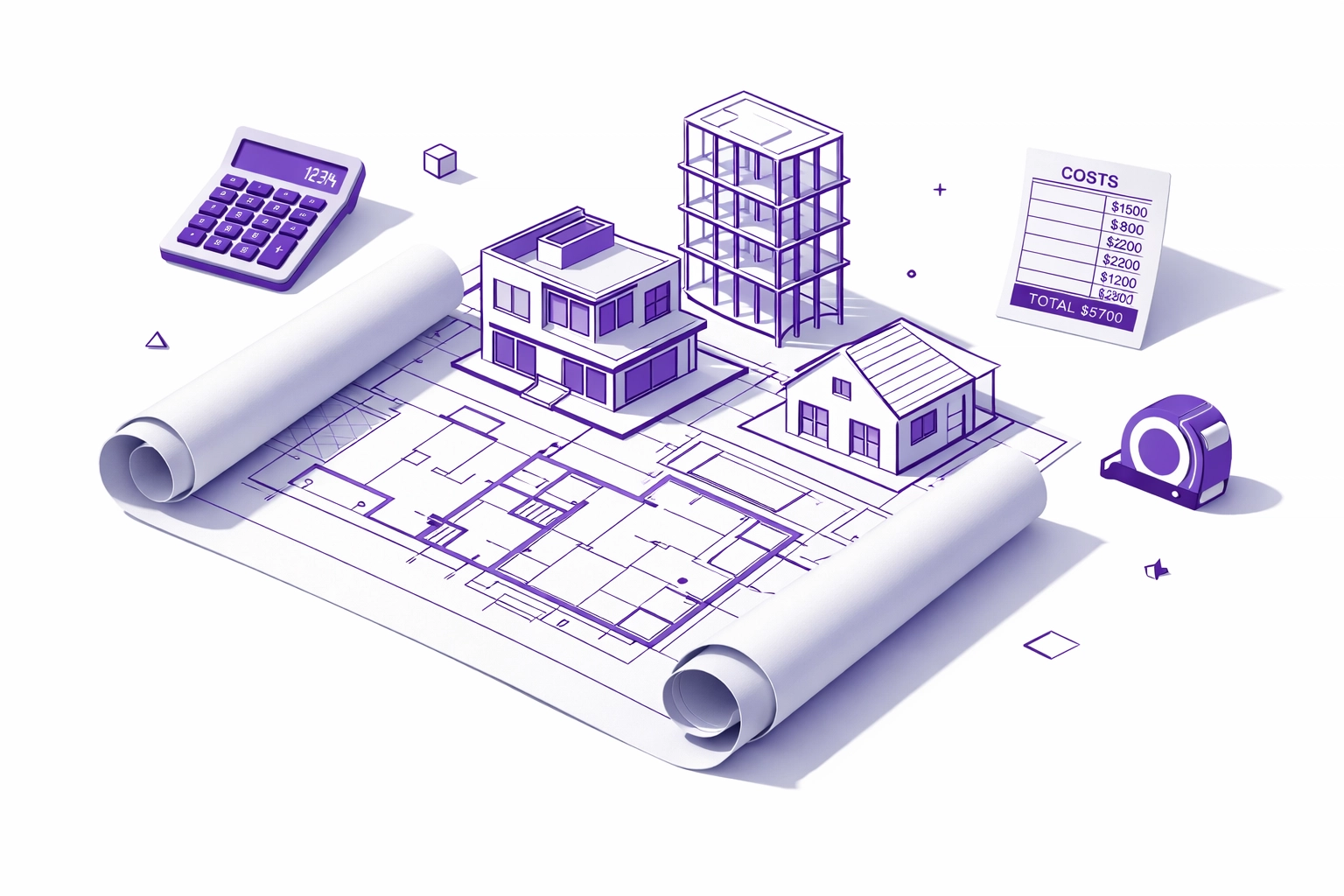
Here's what makes construction bookkeeping unique:
- Job costing: Every expense gets assigned to a specific project (labor, materials, subcontractors, equipment).
- WIP tracking: You track revenue and costs on projects that haven't been completed yet so your financial statements reflect reality.
- Retention tracking: You need to monitor what clients owe you and what you owe subs, including retention holdbacks.
- Change orders: Scope changes need to be documented and billed separately so profit doesn't get buried.
- Multi-state sales tax: Materials purchased in different locations create different sales tax obligations.
If you're still using a basic chart of accounts designed for retail or services, your books won't tell you what you need to know.
What our construction bookkeeping services include
Our construction bookkeeping setup is built around job-level tracking in QuickBooks Online or Xero. Here's what we include:
Chart of accounts customized for construction:
- Labor (direct and indirect)
- Materials by project
- Subcontractor costs
- Equipment rental and maintenance
- Job-specific overhead (permits, inspections, job site costs)
- Indirect overhead (office, insurance, admin)
Job costing setup:
- Create a customer/project for each job
- Set up class or location tracking if you run multiple crews or divisions
- Link every transaction to the correct job
- Track budgeted costs vs. actual costs in real time
WIP reporting:
- Calculate percentage of completion for each active project
- Record revenue based on costs incurred to date (percentage-of-completion method)
- Adjust for over-billed or under-billed amounts
- Provide monthly WIP schedules for bonding and loan requirements
Retention tracking:
- Monitor retention receivable (what clients owe you)
- Monitor retention payable (what you owe subs)
- Reconcile retention monthly so nothing gets lost
Monthly close specific to construction:
- Reconcile bank and credit card accounts
- Review job profitability by project
- Update WIP schedules
- Track change orders and extras
- Prepare reports for your CPA and surety
We're based in Los Angeles and certified in both QuickBooks Online and Xero. We work with general contractors, specialty trades, and project managers who need accurate books for bonding, compliance, and decision-making.
How job costing works in practice
Job costing means every dollar you spend gets tagged with a job number or project name. When you buy materials, pay a sub, or log labor hours, that transaction gets assigned to the project it belongs to.
Here's a simple example:
You're working on three jobs this month: a retail buildout, a tenant improvement, and a small addition. All three projects share the same crew and some of the same materials.
Without job costing, your P&L just shows $45,000 in labor, $30,000 in materials, and $20,000 in subcontractor costs. You made $95,000 in revenue and spent $95,000. Break even. That tells you nothing.
With job costing, you see:
- Retail buildout: $40,000 revenue, $28,000 costs = $12,000 profit (30% margin)
- Tenant improvement: $35,000 revenue, $38,000 costs = -$3,000 loss
- Small addition: $20,000 revenue, $29,000 costs = -$9,000 loss
Now you know the tenant improvement went over budget and the small addition is a problem. You can address it mid-project instead of finding out when it's too late.
To make job costing work, you need to:
- Assign every purchase order, invoice, and receipt to a job. This includes materials, labor, equipment rental, and subcontractor invoices.
- Track labor by project. Use timesheets or a job tracking app that integrates with your accounting software.
- Update job costs weekly. Don't wait until month-end. Construction costs move too fast.
- Monitor budgeted vs. actual costs. Set a budget for each job and compare actual costs as they come in.
The goal is real-time visibility into project profitability, not a quarterly surprise.
What WIP tracking actually means
WIP (Work in Progress) is an accounting method that lets you recognize revenue before a project is finished. It matches revenue to the costs you've already incurred so your financial statements reflect the work you've done, not just the invoices you've sent.
Here's why it matters:
Most construction contracts don't pay you in full until the job is complete. But you're spending money on labor, materials, and subs every week. If you only record revenue when you send the final invoice, your P&L will look terrible for months, then suddenly spike when the job closes.
WIP lets you record revenue based on how much of the project is complete. This gives you a more accurate picture of profit and loss, and it's required if you carry bonding or need financial statements for loans.
The most common WIP method is percentage of completion:
- Calculate what percentage of the project is done (usually based on costs incurred vs. total budgeted costs).
- Record that percentage of the total contract price as revenue.
- Compare revenue recognized to costs incurred to see your profit or loss to date.
Simple example:
You have a $100,000 project. Total budgeted cost is $75,000. You've spent $30,000 so far.
- Percentage complete: $30,000 / $75,000 = 40%
- Revenue to recognize: $100,000 x 40% = $40,000
- Profit to date: $40,000 revenue – $30,000 costs = $10,000
If you've only billed $25,000 so far, you're under-billed by $15,000. That shows up as a current asset on your balance sheet. If you've billed $50,000, you're over-billed by $10,000, which shows up as a liability.
Your surety and your bank want to see this breakdown every month. We prepare WIP schedules as part of our monthly close process for construction clients.
How much specialized construction bookkeeping costs
Construction bookkeeping typically runs $800 to $2,500/month depending on:
- Number of active projects
- Transaction volume (how many bills, checks, and receipts per month)
- How clean your records are when we start
- Whether you need job costing setup from scratch or just ongoing maintenance
Typical pricing breakdown:
- 1 to 3 active jobs, basic job costing: $800 to $1,200/month
- 4 to 10 active jobs, WIP tracking included: $1,200 to $1,800/month
- 10+ active jobs, multi-state sales tax, retention tracking: $1,800 to $2,500/month
If your books are a mess and you need cleanup before we can start monthly service, that's a separate project (usually $1,500 to $5,000 depending on how far back we need to go).
We don't charge by the hour. You get a flat monthly fee that covers reconciliation, job costing, WIP schedules, and coordination with your CPA.
How long the setup process takes
If you're starting from scratch, expect 2 to 4 weeks to get your construction bookkeeping system up and running.
Week 1: Chart of accounts setup, job list import, and historical cleanup (if needed).
Week 2: Job costing workflow training, WIP calculation setup, retention tracking structure.
Week 3: First month-end close with job profitability reports and WIP schedules.
Week 4: Review, adjustments, and handoff to ongoing monthly service.
If your books are already in decent shape and you just need to add job costing, we can usually get it done in 1 to 2 weeks.
The most time-consuming part is usually gathering historical data (old invoices, change orders, retention schedules) and deciding how to structure your jobs in the system.
Why accurate construction bookkeeping is critical for licensing and bonding
Your license and your bond both depend on financial stability. If your books are inaccurate or incomplete, you risk losing both.
Licensing requirements:
Most states require contractors to submit financial statements as part of the license renewal process. If your P&L doesn't reconcile or your balance sheet is missing key accounts (like retention or WIP), your application can get delayed or rejected.
Bonding capacity:
Sureties underwrite bonds based on your working capital, equity, and profitability. They want to see:
- Clean, accurate financial statements
- Monthly WIP schedules that prove you're not over-billing or hiding losses
- Job profitability reports that show you can estimate accurately
- Retention tracking that proves you're managing cash flow
If your books don't show this level of detail, your bonding capacity will be limited or your rates will be higher.
We've worked with contractors who couldn't get bonded because their bookkeeper was using a cash basis P&L with no job costing. Once we rebuilt their books on an accrual basis with WIP tracking, they qualified for the bond.
Accurate construction bookkeeping isn't optional if you want to grow. It's the foundation of your financial credibility.
Common mistakes we see (and how to avoid them)
Not tracking change orders separately.
Change orders should be billed and tracked as a line item, not buried in the original contract price. If you don't document them, your profit margin looks lower than it actually is.
Waiting until month-end to enter costs.
Construction costs move fast. If you wait 30 days to enter invoices, your job profitability reports are useless for decision-making. Update costs weekly.
Using the wrong WIP method.
Not all projects qualify for percentage-of-completion accounting. Short-term projects (under 90 days) are usually better on completed-contract basis. Ask your CPA which method applies to your situation.
Mixing personal and business expenses.
This is a nightmare for job costing. If you're buying materials on a personal card or paying subs out of pocket, those costs need to get recorded to the right job. Otherwise, your reports are wrong.
Not reconciling retention monthly.
Retention can sit on your books for months. If you don't reconcile it, you'll either over-report profit (if you forgot to record retention payable) or under-report assets (if you forgot to track retention receivable).
We handle all of this as part of our monthly bookkeeping services, but if you're doing it yourself, set up a checklist and follow it every month.
FAQ
What is job costing and why do I need it?
Job costing assigns every cost (labor, materials, subs, equipment) to a specific project so you know which jobs are profitable and which ones are losing money. Without it, you're guessing.
How does WIP tracking work?
WIP (Work in Progress) lets you recognize revenue based on how much of a project is complete, even if you haven't sent the final invoice yet. It matches revenue to costs and gives you accurate profit reports.
How do I handle payroll for subcontractors in my books?
Subcontractors are not payroll. They get paid as vendors and you issue 1099s at year-end. If they're on your payroll, they're employees, not subs. Make sure you're classifying them correctly to avoid payroll tax issues.
What about sales tax on materials?
If you're buying materials in multiple states, you may have sales tax obligations in each location. Some states exempt materials purchased for resale or used in construction. Track where you bought materials and consult your CPA on filing requirements.
What software is best for construction bookkeeping?
QuickBooks Online and Xero both handle job costing and WIP tracking. QBO has better built-in job costing features. Xero requires more customization but works well if you prefer its interface. We're certified in both.
Do I need clean books to get bonded?
Yes. Sureties require accurate financial statements with WIP schedules, retention tracking, and job profitability reports. If your books are incomplete or inaccurate, your bonding capacity will be limited.
Should I hire a CPA or a bookkeeper for construction accounting?
You need both. A bookkeeper handles day-to-day job costing, WIP tracking, and monthly close. A CPA handles income tax planning, tax returns, and audit support. We coordinate with your CPA to make sure your books meet their requirements.
How often should I close the books for construction projects?
Monthly. You need updated WIP schedules, job profitability reports, and retention tracking every month for bonding, decision-making, and compliance. Waiting until quarter-end or year-end is too late.
Disclaimer: We do not provide income tax advice. We work closely with CPAs to ensure your books are tax-ready, and we recommend confirming all tax-related decisions with your CPA.
If you need help setting up construction bookkeeping or getting your job costing and WIP tracking in order, we offer a free 15-minute review to see what your books need. Book a call here.
