Revolutionize Your Bookkeeping: Workflows That Save Time and Boost Accuracy

Revolutionize Your Bookkeeping: Workflows That Save Time and Boost Accuracy

Most small business owners spend hours wrestling with bookkeeping workflows that slow down their day and invite costly mistakes. You don’t have to settle for juggling spreadsheets or outdated methods that cloud your financial clarity. This post will show you how cloud accounting tools like QuickBooks and Xero, paired with smart workflows, save time and boost financial accuracy—giving you more control and less stress. Schedule a consultation with Books LA today to discover how our innovative workflows can transform your bookkeeping! Learn more about AI and bookkeeping.

Time-Saving Bookkeeping Workflows

Imagine having more hours in your day by cutting down on tedious bookkeeping tasks. This section will uncover how using the right tools can make this dream a reality.

Streamlining with QuickBooks and Xero

QuickBooks and Xero aren’t just buzzwords; they’re game-changers for small businesses. Imagine completing tasks in minutes that once took hours. With QuickBooks, you can send invoices with a few clicks. Did you know? Businesses using QuickBooks report saving an average of 42 hours monthly. QuickBooks ensures your financial information is always current and ready for review.

Now, let’s talk about Xero. This software is often called “The Beautiful Accounting Software” for a reason. It’s perfect for those on the go, offering a paperless solution that’s easy to understand. From handling multi-currency transactions to providing a sleek interface, Xero caters to modern business needs. Embracing these tools means more time for what matters—growing your business.

Cloud Accounting Benefits for Small Business

Switching to cloud accounting means more than just efficiency. It’s about securing your business’s future. When you use cloud software, your data stays safe and accessible from anywhere. This accessibility allows real-time collaboration with your team, ensuring everyone is on the same page.

Cloud accounting also offers automatic updates. Say goodbye to outdated software and hello to continuous improvements. Plus, with automated backups, you never have to worry about losing your financial data. Here’s the key insight: Moving to the cloud isn’t just smart; it’s essential for staying competitive.

Boosting Financial Accuracy

Once you’ve streamlined your workflows, the next step is ensuring accuracy. Precise bookkeeping is the backbone of sound business decisions.

Avoiding Common Bookkeeping Errors

Mistakes in bookkeeping can cost both time and money. But with the right approach, you can avoid them. Start by organizing your receipts and documents systematically. This might seem simple, but it prevents data entry errors that plague many businesses.

Another tip is to regularly reconcile your accounts. Doing this monthly ensures your records match bank statements, catching errors early. Most people think keeping track of every small transaction is tedious, but it’s crucial for accuracy.

Ensuring Accurate Reports Every Time

Creating accurate reports isn’t just about numbers; it’s about making informed decisions. With tools like QuickBooks and Xero, generating reports becomes a breeze. These platforms offer templates that pull data directly from your inputs, ensuring consistency.

Beyond software, regular audits can help. Conducting quarterly reviews allows you to spot discrepancies before they escalate. It’s about proactive management, not reactive fixes. Trust in your numbers, and you’ll steer your business with confidence.

Transitioning to Cloud-Based Accounting

Shifting to cloud accounting might feel overwhelming, but with the right support, it’s a seamless process. Here’s how you can make the transition smoothly.

Easy Setup with Books LA Experts

Setting up cloud accounting systems like QuickBooks and Xero is straightforward with expert guidance. Our team at Books LA will walk you through every step, ensuring you feel comfortable and confident. Did you know? Businesses that transition to cloud accounting with expert help experience fewer setbacks and faster integration.

We start by evaluating your current systems. Then, we tailor a setup plan that aligns with your specific needs. This personalized approach minimizes disruptions, allowing you to continue focusing on your core business activities.

Support and Training for Your Team

Transitioning isn’t just about setup; it’s about ongoing success. That’s why training your team is crucial. At Books LA, we offer comprehensive training sessions, ensuring everyone knows how to leverage new tools effectively.

Our support doesn’t stop after training. We’re here for any questions or challenges that arise. Most people think training is a one-time event, but ongoing support ensures your team remains adept at managing your new systems.

By embracing cloud accounting, you position your business for growth and resilience. The longer you wait, the more opportunities you might miss. Take the leap with confidence, knowing you have a reliable partner in Books LA.


Why Cloud Accounting is a Game Changer for Startups

Most startups lose too much time wrestling with bookkeeping instead of building their product or growing their audience. Books LA helps fix that by moving everything into clean, cloud-based systems like QuickBooks or Xero so your financial work runs in the background instead of weighing you down. We keep your books accurate, your reports ready when you need them, and your workflow simple. If you want to get your time back and keep your numbers tight, we make that easy. For more insights, check out this article on cloud accounting benefits.

Benefits of Cloud Accounting for Startups

Cloud accounting is a game changer for startups because it gives you tools that older, manual methods never could. Instead of getting buried in tedious tasks, you get a system that handles the heavy lifting for you so you can stay focused on growing your business. Books LA helps you set that up, keep it running, and make sure your numbers stay accurate while you move forward.

Streamlining Financial Processes

The cloud simplifies financial management for startups. With everything stored online, there’s no need for endless paperwork or complex spreadsheets. Imagine being able to access your financial data anytime, anywhere, on any device. This kind of flexibility is crucial for startups that need to stay agile. Cloud accounting software also automates many financial tasks, such as invoicing and expense tracking, saving you hours each week.

Manual processes often lead to errors and time wasted on corrections. By shifting to the cloud, startups can implement automated workflows that reduce the chance of mistakes. This streamlining means you spend less time on bookkeeping and more on core business activities. Discover more about financial process improvement here.

Enhancing Data Accuracy

Data accuracy is crucial for startups, and cloud accounting significantly improves this aspect. With real-time updates, you always have the most current financial information. This accuracy is vital when making decisions that could impact your business’s future. For startups, even minor errors can lead to significant setbacks.

Cloud accounting systems automatically sync data, ensuring that all your financial records are up-to-date and consistent. This feature minimizes discrepancies and gives you confidence in your financial reports. Accurate data also helps in building trust with investors and partners. For further insights, see this article.

Key Tools: QuickBooks and Xero

These two tools are leaders in cloud accounting, each offering unique features that cater to startups’ needs. They simplify bookkeeping and offer comprehensive financial solutions.

Simplifying Bookkeeping with QuickBooks

QuickBooks is a favorite among startups for its user-friendly interface and robust features. It allows you to automate bookkeeping tasks like invoicing, payroll, and expense tracking. This automation frees you from repetitive tasks, letting you focus on growing your business. QuickBooks also integrates with various apps, providing a seamless workflow.

Startups often struggle with managing finances manually, leading to errors and stress. QuickBooks eliminates this problem by offering automated solutions that ensure accuracy and efficiency. You’ll find that managing your books becomes a breeze, and you can finally say goodbye to the chaos of manual bookkeeping.

Xero for Comprehensive Financial Solutions

Xero offers a comprehensive suite of financial tools designed for startups. Its cloud-based platform provides features like invoicing, bank reconciliation, and inventory management. Xero’s real-time collaboration allows you and your team to work together effortlessly, enhancing productivity.

For startups, time and resources are often limited. Xero’s intuitive design and extensive features enable you to manage your finances efficiently without needing an extensive financial background. This ease of use makes it a great choice for tech-savvy entrepreneurs looking to streamline their financial operations. Check out more about Xero’s benefits here.

Driving Business Growth with Cloud Accounting

Startups need more than just good ideas to thrive—they need efficient financial management. Cloud accounting is a powerful tool that supports business growth by providing clarity and control.

Empowering Financial Management

Cloud accounting empowers you by putting you in control of your finances. With real-time insights, you can make informed decisions that drive growth. This empowerment leads to better financial management and, ultimately, a more successful business.

Many startups underestimate the importance of financial management, focusing instead on product development or marketing. However, without sound financial practices, even the best ideas can falter. Cloud accounting tools like QuickBooks and Xero provide the foundation for strong financial health, which is crucial for long-term success.

Scheduling a Free Consultation for Tailored Solutions

The longer you wait to adopt cloud accounting, the more opportunities you miss. Scheduling a free consultation with Books LA can help you discover tailored solutions that fit your startup’s unique needs. Our experts will guide you through the transition, ensuring a smooth and stress-free experience.

Don’t let outdated financial processes hold your startup back. Embrace the change and see how cloud accounting can transform your business operations. To explore how we can support your business, reach out to Books LA today.

Simplifying Bookkeeping: Quick Tips for Small Business Owners

Bookkeeping shouldn’t feel like a maze. Most business owners want clear guidance that saves time and keeps their numbers clean. I work with small business owners every day, and I see the same thing happen when the right systems fall into place. Your stress drops, your confidence grows, and your books finally make sense.

Here’s how you can simplify your bookkeeping and set yourself up for smoother financial management.

Make Accounting Work for You

When your accounting system fits your needs, everything becomes easier to manage. You don’t have to be an expert to get this right. A few solid habits can change the way you run your business.

Simple Bookkeeping Tips

Begin with a solid foundation, and your journey will become smoother. Here are some simple tips:

Stay Organized: Set aside time each week to look at your numbers. It’s easier to catch issues early than to dig through months of transactions later.

Use good software : QuickBooks and Xero give you tools that make day-to-day bookkeeping less manual. Automating invoicing and tracking expenses frees up your time.

Separate Accounts: Keep business and personal spending apart. It protects your records and makes tax time cleaner.

These small steps create real stability. They also give you a clearer picture of how your business is doing.

Build Better Processes

Adapting the right processes can make a huge difference. The key is to eliminate unnecessary steps and focus on what truly matters.

Automate Repetitive Tasks:  Set up recurring invoices and automatic bill payments. It cuts down on manual tasks and avoids missed deadlines

Regular Reconciliation:  Match your bank statements with your bookkeeping records. Doing this monthly ensures accuracy and prevents surprises.

Review Financial Statements:  A monthly check-in helps you understand where your money is coming from and where it’s going. It also helps you spot waste, including subscriptions you no longer need. If you want guidance on trimming those costs, you can read more here: https://www.booksla.com/the-benefits-of-canceling-unnecessary-subscriptions/

Clients often tell me they’re surprised by how much clarity they get when these routines become part of their month. Check out this guide for more insights.

Make the Most of Cloud Tools

Cloud accounting lets you access your books wherever you are. It also reduces errors and speeds up your workflow. If you haven’t switched yet, it’s worth considering.

QuickBooks Setup Made Easy

QuickBooks can look intimidating at first, but once it’s set up properly, it works in your favor.

Pick the right plan. : Your business size and needs determine what features you actually need.

Customize Your Invoices:  Clean, branded invoices send a strong message about your professionalism.

Connect Your Accounts:  Syncing your bank and credit card accounts removes most of the manual data entry.

A proper setup makes day-to-day bookkeeping faster and more accurate.

Benefits of Xero Accounting

Xero is another strong option for small businesses. A lot of owners appreciate its simple layout and real-time updates.

Cloud-Based Access:  You can log in from any device and stay connected to your numbers.

Real-Time Updates:  You always see the most current information.

User-Friendly Interface:  Even if you’re new to accounting tools, Xero is approachable.

Switching to Xero can offer significant advantages in managing your accounts efficiently. For more on Xero’s benefits, explore this post.

Both QuickBooks and Xero can support your growth. The key is picking the system that matches your workflow.

Strong Financial Management Matters

Good bookkeeping is only one piece of the puzzle. The right financial habits give you the information you need to make smart decisions.

Accounting Support for Small Business Owners

For small business owners, finding reliable accounting solutions is crucial. Professional help can take a lot of pressure off your plate.

Outsource with intention: A skilled bookkeeper or accountant helps you stay compliant and gives you clean, reliable numbers.

Use cloud tools as part of your system:  Leverage tools like QuickBooks and Xero to keep your financial data accurate and accessible.

Regular Consultations:  Schedule meetings with your accountant to stay on top of changes and updates in your financial landscape.

With these solutions, you can achieve financial clarity and focus on what you do best.

Manage Your Money with Confidence

Effective financial management goes beyond simple record-keeping; it’s about strategic planning and smart decision-making.

Set Clear Goals:  Define financial objectives and create a roadmap to reach them. This clarity guides your business decisions effectively.

Monitor Cash Flow:  Regularly tracking cash flow helps prevent shortages and ensures operational stability.

Adopt Financial Forecasting:  Predict future revenues and expenses to make informed strategic choices.

By adopting these solutions, you empower your business to navigate financial challenges with confidence.

Simplifying your bookkeeping gives you space to focus on what you’re building. With the right tools, clean systems, and support when you need it, your financial management becomes a strength, not a stress point.

If you ever want help setting any of this up, that’s precisely what I do every day at Books LA.

Jelena Arkula, The Founder | Books LA, Inc.

The Benefits of Canceling Unnecessary Subscriptions

Savings by cancelling unnecessary subscriptionsIn today’s digital world, it’s almost too easy to start a new subscription for various products and services.
But if you find yourself with too many subscriptions or subscriptions you no longer use, it may be time to consider canceling them. Not only can canceling unnecessary subscriptions help save you money, but the same amount can be re-invested in other areas that will benefit your life.

Let’s look at why canceling those unnecessary subscriptions can be beneficial.

Save Money

The most apparent benefit of canceling an unnecessary subscription is: SAVING MONEY.

You can free up extra cash to spend on other things by reducing your monthly payments. These could include paying down debt more quickly, investing in a retirement fund, or even splurging on something special for yourself.

Reduce Clutter

There is an emotional element to having too many subscriptions as well. Too often, we sign up for something (we think) we need and then forget about it until another payment is taken from our bank account each month. If this happens often enough, it can leave us feeling overwhelmed and frustrated with all the clutter in our physical and digital lives. Canceling unnecessary subscriptions can help reduce this clutter and bring back a sense of control over our finances.

Re-Invest Your Savings

While saving money is one way to benefit from reducing your number of subscriptions, there are plenty of other ways to positively re-invest those newfound funds into your life.

Think about what matters most: Is it building an emergency fund? Paying off debt? Investing in stocks or mutual funds? Or maybe you want to take classes for professional development or travel more often? Whatever your goal, taking the savings from canceled subscriptions and putting them towards something that matters will bring much greater rewards than simply having fewer monthly payments taken out of your account each month.

Canceling unnecessary subscriptions isn’t just about saving money; it’s also about reinvesting those savings into something meaningful for yourself and your future goals. It can also help reduce clutter, allowing you to feel more in control of your finances and life.

So take some time to review which services are essential and which are not—you might find yourself with some extra cash each month that you could use for something far more rewarding!

We Can Help!

Schedule a call today!When is the perfect time to take action? Now!

As we enter the New Year, it is a perfect time to cancel those unnecessary subscriptions, save .. and get a handle on the finances from the start of the year.

We are happy to help with your books for the previous or current year. Whatever needs you might have, we are here to help!


Founder, Books LA Jelena Arkula, founder and principal of Books LA, is on a mission to streamline custom Bookkeeping Services and Cloud Accounting to individuals and small businesses, making their lives better and quality of time more manageable.


Paperless Office!

If you have filled the taxes and avoided filing the extension – Congratulations!

Taxes are done, and you might think it’s too early to talk about the Tax Year 2019.
The truth is, this IS a perfect time!

Imagine its January 2020, and:

  1. Your Financial Statements are done by January 15th, 2020
  2. The 1099 MISC hare done and issued by January 15th, 2020
  3. Your expenses are easily sorted and the receipts are digitally filed
  4. You can search your entire file cabinet with CRTL+F
  5. Your desk is paper free!

It’s not mission impossible and’s not a fairytale…

But how do we achieve 1-5? By working backward!

We, at Books LA, are known to work backward, but in a good way. We imagine ourselves how would it feel without the current problem at hand, and, as we identify the advantages in the future without those problems and obstacles at hand; we build the bridge between there and here.
So, in that fashion, let’s start from the end :

Step 5: Your desk is paper free!

If you glance at your desk now, what will you see? Notes? Bills? Statement? Mail?
Now, imagine you are done for today and are walking into your home. Is there a pile of papers somewhere in your home that needs to be looked at-filled-away-addressed?

So, now what?

ScanSnap to the rescue!
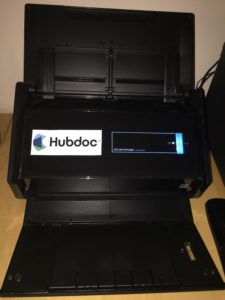
Help yourself, and grab ix1500. That is Fujistu’s own ScanSnap (workhorse) ix1500.
Plug it in, connect the USB to any PC or Mac, follow the simple instructions, and within 10 minutes or so, scan your first page(or receipt).
ScanSnap will use the AI and save the files (double scanned regardless of the same and sizes) and name the files by default, by reading the name of the document, date, amount…
All you have to do is to feed that workhorse and let it scan all.
Continue doing so, until every paper in sight is scanned*.

Step 4: You can search your entire file cabinet with CRTL+F

Sometime later you recall seeing a bill from Blue Shield or Blue Cross or Amex Blue… and want to take a look at it. All you need to do is open your ScanSnap Document Organizer, and in the search field you start typing “blue” and you watch as the documents are instantly filtered by “b”, then “bl”, then “blu” and “blue” and you pull that bill. Once you are done looking at it, you recall that you are mesmerized by instant search and you try to search for other bills too… Verizon, AT&T, ATT, DWP…
All your bills are searchable – ALL OF THEM!!!

Step 3: Your expenses are easily sorted and the receipts are digitally filed

Even though the bills are searchable, now we take it a step further and connect ScanSnap with Hubdoc, Dropbox, Google Drive…
By doing so, AI will help us determine the type of expenses.

Take it a step further and train your ScanSnap ix1500 and software of your choice to always recognize and sort the expenses and bills. That way, you can easily ‘push’ the receipts as a match to existing transactions and attach them into the accounting software of your choice, or add them bills to pay them via Bill.com.
So, any receipts that you might have from more than 6 months ago, that were printed on a thermal printer are now starting to fade. But yours won’t fade! Yours are now digital and readable! Those receipts are very much visible AND USABLE inside ScanSnap and other software of your choice.

Step 4 AND Step 5: Your Financial Statements are done by January 15th, 2020 and The 1099 MISC hare done and issued by January 15th, 2020

Yes, we saved that much time and were able to speed up the process so we combined two tasks into one.
Like any good bookkeeper, we are not going to say that AI will do everything for you. We are still a bit far from that day, but that day is coming.
Until then – here is where we are :

Your paper receipts are a thing of the past. Any paper that you see should be scanned and OCR’d (searchable) by a ScanSnap software
Let the data be extracted. There is absolutely no need for data entry. Let’s avoid the typos and allow the AI to fill and complete the data.
Pay close attention to data management. This is where the human is very much present and needed. This is where we, as bookkeepers, are needed and use our knowledge to the fullest. (i.e. loan payments splits, asset or expense qualifications, equity contribution vs income…. Just to name a few)
Review, review, review. Here at Books LA, we have a once-a-month meeting with our clients where we go over the current report and plan ahead. We also review quarterly and YTD reports as we go.
Therefore, once January arrives, all we have to do is do a final check. That’s why we CAN be done by January 15th

After you have scanned all your receipts, you are most likely to come across quite a few cash receipts. If you are like 95% of us, those receipts are usually forgotten about and rarely counted for at the year end, right?
On average, there are about 4 cash receipts per month, ranging between $6-$12 each, and some are even over $20. If we tally the total spent, on average, is between $288 and $576.
Now, by using a Fujitsu’s ScanSnap ix1500 to capture those receipts, your ScanSnap paid for itself within the first year or two. But, here is a $50 rebate as well! 


*This might seem like a tall order but wait until you are at your last piece of paper.  If you are slightly similar to me, you will be searching for papers to scan and be sad when you can’t find any. You are welcome!

1099s review can start TODAY!

1099s review can start TODAY!

Counting today, we are only 79 DAYS away from the 1099s filing deadline (box 7).


Therefore, it is much better to be prepared and ready, than to wait for the deadline, which is never a good idea! 


So, Quickbooks Online finally opened up the review option for the current year.  Just last week we were only able to view last year’s 1099’s reports. But, as of this month, we are now able to review the current year, and get ready ahead of the time for the upcoming tax season!


To review your 1099s, Go to your Quickbooks Online (QBO) file, and navigate to (1) Expenses > (2) Vendors > (3)Prepare 1099s*


(3*) One button is housing two other options, and if you don’t see the “Prepare 1099s” option, then click on the down error next to the “Pay Bills” or “Order Checks’ and you will be able to see Prepare 1099s option*


On the very next page, you will be able to read more about the 1099s filing, deadlines, and read through FAQs. It is a very good idea to read through at least once a year:


On the next page you will be able to review the following:


  1. Name of the company, business address, and Tax ID


2. Review, add or modify accounts that are currently checked for the 1099 reporting. Here you can also make sure that the correct accounts are marked correctly ( i.e. Legal Expenses are not marked in the Nonemployee Compensation group.. etc)


1099s review


3. View the list of ALL vendors and confirm that all 1099’s vendors are marked to be tracked. Also, it is a VERY GOOD IDEA to add emails for each contact as the email delivery of the 1099’s forms can be 1/10th of the cost of the snail mail delivery of the 1099’s.


Make sure you do have:


W9 from any vendor, regardless of the amount you have paid the vendor in one year!


Filing 1099s


4.  It’s now time to preview (review) the 1099s


Pay attention to:


  1. The correct year is selected!
  2. Gather the missing information for the vendors listed in red
  3. Review the amounts in boxes
  4. Review why there is a difference between the ALL PAYMENTS and the BOX (that was reported) (if any


prepare 1099s


Books LA is jumping on the review for all of our clients! And so should you!


We can never be too prepared.


Tips:


  • Ask for a fresh W9 every 3 years. It is always a good idea to have current W9 as the addresses, entity types or DBA names can change.
  • Obtain a W9 regardless of the amount! NO exception. Why? Besides many other reasons here are two very important ones:
    • Failure to report 1099 for the lack of W9 can result in the 28% in backup withholding, plus penalties, plus interest! That $1000.00 expense that was a good deal is now costing you $280.00 +( pen.+int%) * years!
    • Vendor received less than $600.00 this year, but the next one he receives over $600.00. A few months later it’s time to do 1099’s and the vendor is MIA. They got their money, and don’t feel its urgent to comply. What do you do? Refer to the previous bullet point, and be ready to pay!


So, GET THE W9!!!!


Happy Tax Season (almost)!

Ever wondered how much does it cost to hire an employee?

We are often asked what is the difference between the Independent Contractor and an employee. Often times employers are turned off by hiring an employee due to the cost. However, engaging an independent contractor that is actually classified as an employee can we very costly and usually involves additional audit, accounting and sometimes legal fees when addressed the misclassification few year later.


Our partner Gusto wrote a really good article about the difference an how to classify to either a new hire or a new contract.

The main difference is :

An employee:
  • Works at a specific time and place set by you, the employer
  • Generally works for just one company
  • May receive training
  • Uses your tools or other work-related resources
  • Is subject to a large degree of control by you
  • Is generally paid a salary or hourly wage
Why does it matter? Because employees…
  • Often receive employment benefits
  • Are subject to financial deductions such as income tax and Social Security tax, among others
  • May join a union
  • Are often protected by state and federal law for overtime and employment discrimination issues
An independent contractor:
  • Can work whenever and sometimes wherever they’d like
  • Can work for multiple companies
  • Usually trains on their own
  • Uses their own tools and resources
  • Controls their own method of work
  • Is often (but not always) paid by the project or on a flat-fee basis
Why does it matter? Because contractors…
  • Do not normally receive employment benefits
  • Pay their own self-employment tax and are not subject to other withholdings
  • May not join a union
  • Generally do not receive overtime or protection for employment discrimination


So regardless of the cost, the businesses should always follow the rules and the law, when determining the difference.

Employee Cost Calculator by Intuit

However, if you are just wondering what would be the cost alone, here is a really cool tool that our partner Intuit created to help us along.

Employee Cost Calculator


With this tool, you can plan better, and have a very good idea how will the new hire effect your budget. But the decision if you should hire or contract out should be made solely based on the type of the relationship, and not on the cost!

ScanSnap and Hubdoc are in #LOVE

We received a call today from a potential client; a law firm, looking for a new bookkeeper since their bookkeeper is retiring. Like with any other call, we asked them for the overview and a roadmap of the current process they have with their bookkeeper.

  • Currently using QuickBooks Desktop
  • Bookkeeper is working from their office
  • When she is not, they send her the documents via mail (not email!), she works on the files and send those back to the law office
  • They are using Bill4Time software (yay!) but it’s not currently linked to the QB file

Three years ago, I would have contemplated to take over the same workflow and would have thought that I am doing my clients a favor for not changing their rhythm.

Hubdoc ScanSnap Books LA Integration

Integration between ScanSnap and Hubdoc is what we were waiting for!

Instead, we have talked about what we can now do with the available technology:

  • We can move the company file over to the QuickBooks Online. We like QB Desktop a lot but are supporting QBO and Xero only because:
  • We can work offsite, not using their office space and being way more efficient by not ever being stuck in LA traffic.
  • Because now we can scan the files with one touch to Fujitsu ScanSnap and send it straight to Hubdoc – so no file will ever leave the office, but it would be accessible in cloud and searchable by CTRL+F
  • We would connect the Bill4time directly to QBO for a seamless and easy reporting.

Just a week ago, I wouldn’t be able to recommend this seamless workflow and offer such a convenience that we can offer today. Just a week ago, we used to scan all our documents to ScanSnap Cloud and then drag+drop the documents to Hubdoc. Now that has changed since ScanSnap and Hubdoc are in LOVE!

ScanSnap: We love our ScanSnap iX500!

A few months ago, we posted a blog on our website with a story of moving our entire HON 4 drawer lateral file cabinet to the cloud. Just imagine how much easier the life would be if you could search all your files with CRTL+F = ALL! Well, we can! And it’s an amazing time saver!

Yes, scanning the files with a regular scanner might seem like a good idea. However, scanning with a regular scanner will make your files readable. But could those files talk as well? No!

Using the ScanSnap scanner your files will talk! Yes, talk! With many, many programs and tools that are accessible now. How? Well, ABBYY USA Technology is now part of the Fujitsu ScanSnap

So files are scanned perfectly – regardless of the shape and size, and are easy to read!

Hubdoc: We love Hubdoc!

Hubdoc ScanSnap TOP 50 Books LA

Books LA was included in this prestigious list for the second year in the row

It is not a secret that we LOVE Hubdoc! Books LA is a hard-core fan, groupie even, of a Hubdoc. Besides the fact that the whole Hubdoc team is probably the best there is, with a super friendly and knowledgeable staff who are always super happy to help, Hubdoc SOLVED our problems

Since January 2015 using Hubdoc became a requirement for any of our clients.

If things could get better – they sure did!


Last week it was announced a ScanSnap and Hubdoc integration! AND IT’S A MUSIC TO OUR BOOKKEEPERS EARS!


ScanSnap is the best scanner out there 

ScanSnap + Hubdoc = #LOVE

That law office client that called today, we can simplify the workflow.

By having a ScanSnap scanner, they can easily scan all the necessary documents over to Hubdoc – DIRECTLY! Because the scan quality is superb, the Hubdoc can easily OCR the whole document, and easily extract the name, date, amount, type… And Hubdoc will file the document in the appropriate folder; one vendor- one folder.


From Hubdoc we can easily ‘push’ the documents over to QBO or Xero. That way we can attach the PDF, .jpg to a transaction and have the backup readily available in the QBO or Xero, and email the backup along with the invoice.

And it’s that simple!

With ScanSnap scanners your documents will talk + Hubdoc will listen and understand = jointly both will seamlessly communicate with your accounting software ( Quickbooks Online, Xero, Sage. Intacct..)

This is a marriage made in heaven!


Setup is super easy!


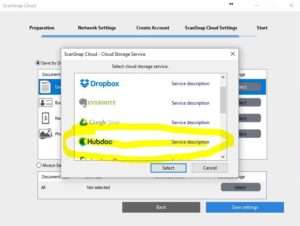
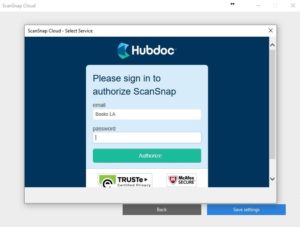
Step One: During the Setup select Hubdoc from the offered cloud storage options


Step Two: Login to Hubdoc with your credentials


 Step Three: CONNECTED!


#Done!

Meal and Entertainment – Travel meals – Employee meals – Office parties

What is the difference? Is there a difference? Why does it matter?

Mike Russo, from Less Taxing Services, LLC wrote a good, entertaining and clear guide when in comes to meals and the deduction parentage.


“When I talk to clients about the need for professionals being involved in their finances, I describe a box of donuts.

That simple box of donuts can be coded 10 different ways (another group came up with 11 or 12, but I can’t find that list…some of them were WAY off the wall, though, so we’ll stick with 10). Once coded, the donuts could then show up on at least 7 different tax forms. (Schedule C, 1120, 1120S, 1065, 990, Form 2106 and Schedule A)

It’s never as simple as just buying a box of donuts.


– No Deduction – I buy a box of donuts and eat the whole thing while in town at my tax home. (Note, this would be 50% deductible if you were out of town traveling for business.)

– 50% Deductible Business Expense – I buy a box of donuts and share them with the 10 people in my first sales meeting of the day

– 50% Deductible Non-Reimbursed Employee Expense – Same as above, but now I’m an employee and my employer requires me to supply food in my business meetings but doesn’t reimburse me for it. (While this is still 50% deductible, it’s an itemized deduction and won’t even begin to count until you’ve crossed the threshold of 2% of your income.)

– 100% Deductible Business Expense – I buy a box of donuts, takes them to my first sales call and leave them in their lobby by the coffee for all to enjoy…even people off the street.

– 100% Deductible Non-Reimbursed Employee Expense – Same as above, but now I’m an employee and my employer requires me to supply food in my business meetings but doesn’t reimburse me for it. (While this is still 50% deductible, it’s an itemized deduction and won’t even begin to count until you’ve crossed the threshold of 2% of your income.)

– 80% Deductible Business Expense – I buy a box of donuts that I use as breakfast and lunch while driving my big rig across the country. (I’m subject to DOT rules.)

– 80% Deductible Non-Reimbursed Employee Expense – Same as above, but now I’m an employee and my employer don’t have any provision for meals while I drive. (While this is still 50% deductible, it’s an itemized deduction and won’t even begin to count until you’ve crossed the threshold of 2% of your income.)

– 100% Deductible Personally – I buy a box of donuts and donate them to the church bake sale. (This is deductible, but it’s only on the personal return…even if you did this for a Corp, it would still pass through to the shareholders and wouldn’t be deductible at the corp level.)

– 100% Deductible as COGS – I buy a box of donuts to resell.

– 100% Deductible as an Ordinary and Necessary Business Expense – I buy a box of donuts to use as a prop during a tax talk where I discuss the ways a box of donuts can be coded. 🙂

Now, who wants a donut? :)”


The 33 Best Donut Shops in America –Huffington Post